Buyer Guide
Commercial-Grade Selection: Hospitality Tile That Holds Up
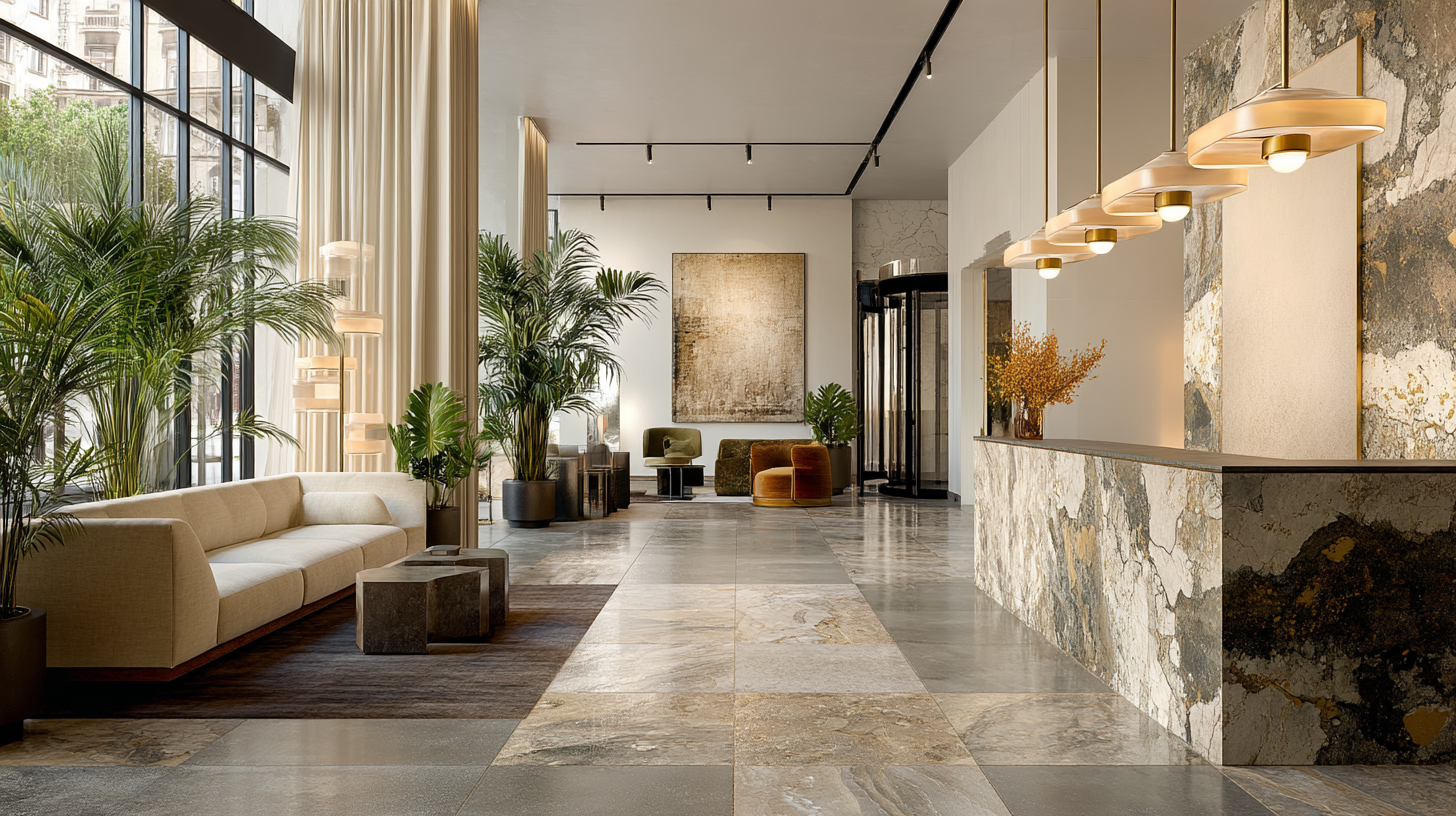
Commercial hospitality projects, boutique hotels, restaurants, spas, retail, professional service environments, operate under specific constraints that residential specifications don't face. Foot traffic is dramatically higher. Cleaning is more aggressive. Aesthetic standards remain residential-grade because clients want to read the space as luxurious. Maintenance windows are narrow. The materials that handle all of this consistently are a smaller subset than the broader residential catalog.
This guide walks through what commercial hospitality specification actually requires, where residential-grade materials fail, and how to specify surfaces that deliver the residential aesthetic at commercial durability standards.
The Hospitality Specification Constraints
Commercial hospitality projects face several constraints simultaneously.
Use intensity. A boutique hotel lobby may see 200-500 daily traffic events; a luxury restaurant entry may see 100-200. Compare to residential: 20-40 daily for a high-use family. The 5-10x multiplier compounds across years.
Cleaning regimes. Commercial facilities typically clean nightly, often with stripped-and-rebuffed or chemically-aggressive protocols. Residential cleaners (pH-neutral stone cleaner, mild dish soap) wouldn't survive the commercial cleaning calendar.
Aesthetic continuity. Despite the commercial use, the space must read as residential luxury. The materials that hold up to commercial use must simultaneously photograph and feel premium.
Liability and slip rating. Commercial spaces face liability risk for slip-and-fall incidents in ways residential doesn't. Slip ratings (DCOF, R-rating) are often code-required minimums rather than just recommendations. We cover the rating systems in our DCOF and R-rating guide.
Maintenance access. Commercial facilities can't always close for maintenance, replacement and repair must happen during limited windows, often at night or during low-traffic hours.
The Wear Rating Vocabulary
Tile abrasion resistance is rated on the PEI scale (Porcelain Enamel Institute):
- PEI 1, light residential use only (decorative wall tile)
- PEI 2, light residential foot traffic (bath, bedroom)
- PEI 3, moderate residential foot traffic (most residential applications)
- PEI 4, heavy residential and light commercial
- PEI 5, heavy commercial use (the commercial hospitality minimum)
For commercial hospitality flooring applications, specify PEI 4 or PEI 5 minimum. PEI 3 tiles in commercial use show visible wear within 1-2 years. The porcelain paver collection and ceramic and porcelain tile carry strong PEI 4 and PEI 5 specifications.
The Material Categories That Survive
Premium porcelain tile and pavers
The strongest commercial flooring category. PEI 4 and PEI 5 ratings widely available, slip ratings to R12+, freeze-thaw immunity, scratch resistance, easy cleaning compatibility. The 2026 commercial hospitality default for floor and wall surfaces.
For specific specifications: Arterra porcelain pavers for outdoor and indoor-outdoor commercial applications; broader ceramic and porcelain tile for indoor commercial.
Natural granite
Hard, durable, traditional commercial choice. Granite wears slowly, holds up to aggressive cleaning, and the dense igneous rock structure resists stains and damage. The tonal range covers contemporary and traditional applications.
Granite is more expensive than porcelain at material and harder to work, but specific commercial applications (hotel lobbies, premium restaurant flooring, executive reception) genuinely benefit from natural stone over porcelain. Browse granite tile and granite slabs.
Specific quartzites
Hard, durable, more visually distinctive than granite. The quartzite slab collection carries options for commercial counter and accent applications. The trade-off: natural stone requires sealing maintenance that engineered alternatives don't, and commercial sealing schedules add operational cost.
Premium luxury vinyl tile (Nove Reserve and similar)
For commercial hospitality applications where porcelain or stone aren't appropriate (private offices, less-trafficked private areas, low-noise applications), the premium 22mil-wear-layer LVT category, including Nove Reserve from the Nove line, handles light to moderate commercial use. See our Nove curator guide for the wear-layer details.
Standard residential LVT and lower-tier Nove products don't hit the commercial spec; the 22mil wear layer is the minimum for commercial hospitality applications.
What Doesn't Survive
Specific materials that consistently fail in commercial hospitality applications:
Marble in high-traffic lobby and restaurant applications. The patina trajectory that residential buyers accept reads as damage in commercial. Etching from acid spills (wine, citrus) accumulates faster than residential. Honed marble can work in lower-traffic premium applications (luxury hotel suites, executive bathrooms); strict commercial flooring is generally beyond marble's residential service envelope.
Engineered hardwood in high-traffic commercial. Refinishing intervals are too short, and the maintenance window (the floor is out of use during refinishing) is hard to coordinate. Hardwood suits residential and light commercial; heavy commercial use exceeds it.
Soft natural stones (limestone, sandstone, soft travertines). The wear rates are too high; commercial use accelerates aging dramatically.
Standard residential LVT (under 22mil wear layer). Service life is too short for commercial use intensity.
Cement-based materials without proper sealing. Concrete and cement-based surfaces require ongoing maintenance that exceeds most commercial maintenance budgets.
Slip Rating Requirements
Commercial hospitality slip rating requirements vary by jurisdiction but typical:
- DCOF wet ≥ 0.42 for any pedestrian surface (effective minimum)
- R-rating ≥ R10 for indoor residential-traffic applications
- R-rating ≥ R11 for indoor wet-area or higher-risk applications
- R-rating ≥ R12 for unprotected outdoor commercial, pool surrounds, exterior stairs
The slip rating affects both safety and liability. Commercial insurers and code officials specifically reference these ratings in approval decisions. Specify aggressively, meeting the minimum may not be sufficient if the application is genuinely high-risk.
For texture-vs-cleanability balance considerations, see our DCOF and R-rating guide.
Aesthetic Strategies for Commercial-Grade Materials
The challenge: deliver residential-luxury aesthetic with commercial-grade specifications. Three strategies that work.
Layered specification by zone
Different materials for different zones based on use intensity. Premium porcelain pavers in highest-traffic public areas (entry, lobby, restaurant); natural stone in feature locations where the visual matters most (reception desk, fireplace surround); premium LVT in private offices and back-of-house.
The strategy keeps the most-visible spaces premium while delivering durability where needed. See our Bidwell Consulting case study for an example of layered commercial specification.
Large-format reduces joint fatigue
Large-format porcelain (24×48, 32×64, slab cladding) has fewer grout joints than small-format alternatives. In commercial contexts, fewer joints mean less cleaning work, less visible wear, and a more contemporary read. The 2026 commercial hospitality direction is decisively large-format.
For slab applications including reception desks and feature walls, see our porcelain slab wall cladding 2026 guide.
Coordinated tonal palette
Even when multiple materials are used (porcelain in lobby, LVT in offices, granite at reception), tonal coordination across materials makes the space read as architectural language rather than as material patchwork. Same warm graphite tones across porcelain, LVT, and granite produce visual continuity that lets the multiple materials feel unified.
Maintenance Specifications
Commercial hospitality maintenance specifications matter as much as material specifications. The right approach:
- pH-neutral commercial cleaners only (avoid the aggressive cleaners standard in some commercial cleaning regimens)
- Daily damp-mop or auto-scrub with low-impact equipment
- Weekly or monthly more thorough cleaning with pH-neutral stone-and-tile cleaner
- Annual deep clean and reseal (for natural stone applications)
- Every 5-10 years professional restoration as needed (especially for high-traffic stone applications)
Document the maintenance specifications and provide them to the cleaning contractor. The wrong cleaning chemistry can damage materials within weeks; the right protocols extend service life dramatically.
The Hotel Lobby Specifically
Hotel lobbies are perhaps the highest-stakes commercial hospitality application. The space must:
- Read luxurious within 30 seconds of arrival
- Handle wet shoes, dragged luggage, and continuous foot traffic
- Photograph well for marketing
- Be cleanable during minimal-traffic windows
The specification that consistently delivers: large-format porcelain pavers (PEI 5, R11+, premium Arterra colorways) with stack-bond layout for contemporary read; matched porcelain slab reception desk; coordinated stone thresholds at major doorways; layered lighting (warm general, cool task at reception, accent at architectural features); restrained material vocabulary throughout.
The Restaurant Specifically
Restaurants face specific commercial challenges:
- Food and grease exposure on flooring
- High-noise operating environments needing acoustic consideration
- Slip risk during service hours
- Aesthetic that supports both daytime and evening reads
Specifications: porcelain or sealed natural stone flooring (porcelain handles grease better and is generally lower-maintenance), acoustic ceiling treatment to manage restaurant noise, slip ratings R11+ throughout dining and service zones, layered lighting with strong evening capability.
The Spa Specifically
Spas have the highest moisture exposure of typical commercial hospitality:
- Continuous high humidity
- Direct water exposure in treatment rooms and wet zones
- Need for acoustic isolation between rooms
- Aesthetic that supports relaxation and luxury
Specifications: porcelain or sealed natural stone flooring (avoid: any wood-based flooring in wet zones), high-grade waterproofing systems behind tile and slab installations, acoustic isolation between treatment rooms, lighting layered for warm-evening character. The spa bathroom guide addresses many of the same dynamics for residential applications.
Where to Start
For commercial hospitality projects considering material specification, the right starting framework: map the space by use zone (highest-traffic public areas, secondary public, private back-of-house), specify each zone against actual use intensity, coordinate tonal palette across material categories for visual continuity, and verify slip ratings, PEI ratings, and maintenance protocols for every selection. Browse porcelain pavers, ceramic and porcelain tile, granite slabs, premium luxury vinyl flooring, and countertops and slabs for the curated commercial-rated catalog. For specific application examples, our Bidwell Consulting commercial case study and showroom to site pieces.