Buyer Guide
Slip Resistance Explained: DCOF, R-Rating, and What Actually Matters
Slip resistance ratings sit in an awkward spot in residential specification. They're technical, they appear on tile spec sheets in numeric form, and most homeowners (and many designers) don't know how to read them. The result: tile gets specified that's safe-feeling for showroom evaluation but unsafe for the wet-area conditions where slip ratings matter most. This guide translates the ratings, explains what they actually measure, and makes specific recommendations by application.
The Two Standards You'll Encounter
Two rating systems dominate the residential and light-commercial market.
DCOF (Dynamic Coefficient of Friction) is the U.S. residential standard, adopted as ANSI A137.1. The test measures the friction between a standard test foot and the tile surface in wet conditions. DCOF readings range from 0 to over 0.6, with 0.42 the threshold for "safe wet residential use" per ANSI standards.
R-Rating is the European DIN 51130 standard, used worldwide for outdoor and high-slip applications. R-ratings run from R9 (lowest slip resistance, indoor dry only) through R13 (highest, industrial wet). The system uses a ramp test where a person walks on inclined wet tile until they slip; the angle determines the rating.
Most quality tile manufacturers publish both ratings. The systems aren't directly convertible (they measure different things in different conditions), but rough equivalents exist:
- DCOF 0.42 ≈ R10 to R11
- DCOF 0.50+ ≈ R11 to R12
- DCOF 0.60+ ≈ R12 to R13
What These Numbers Actually Predict
The ratings predict the likelihood of slipping under specific wet conditions. They don't measure absolute safety, wet floor tile is inherently more slippery than dry, regardless of rating. The numbers help compare relative safety across products.
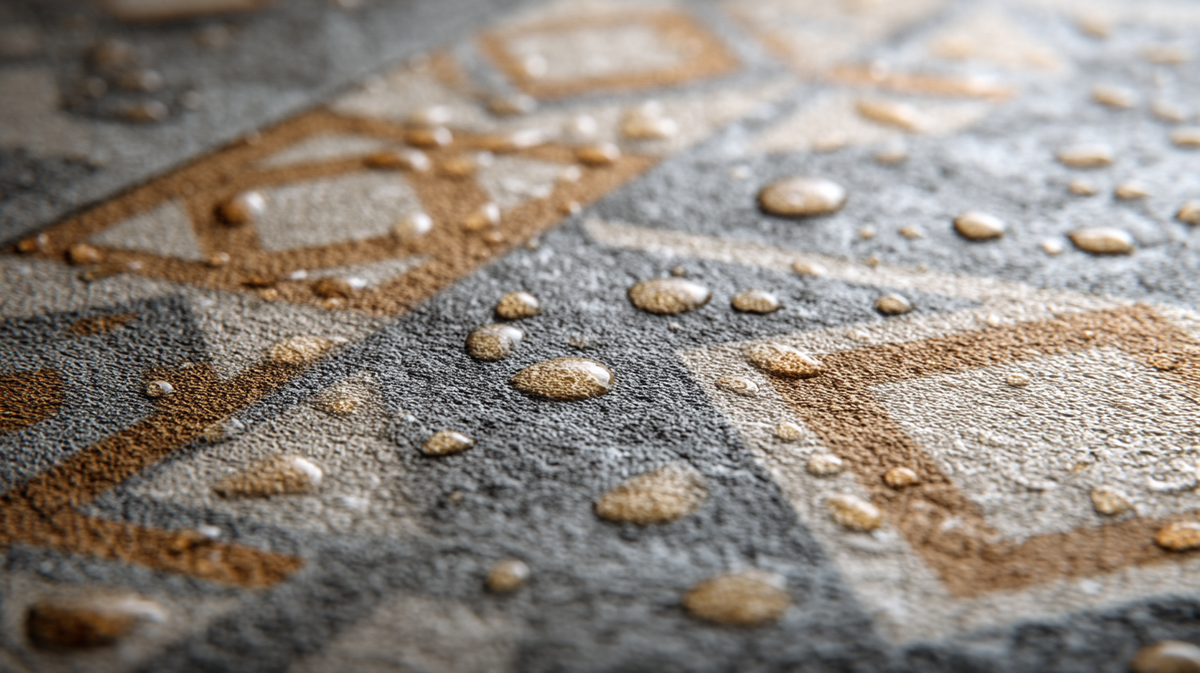
Higher numbers mean more aggressive surface texture relative to a smooth reference. That texture is the entire mechanism of slip resistance: micro-relief on the tile surface that water can't fully fill, leaving traction available to the foot. The trade-off: more aggressive texture means harder to clean, more visible dirt, and (for some ratings) less comfortable for bare feet.
The Application Recommendations
Indoor dry residential (living rooms, bedrooms, dry hallways)
Any rating works. R9 / DCOF below 0.42 is acceptable. Smooth honed floors, polished marble, and matte porcelain all serve. Slip resistance is rarely the deciding factor for these applications; the rating is informational rather than required.
Indoor wet residential (kitchens, bathrooms outside the shower)
Minimum DCOF 0.42, ideally R10 to R11. The kitchen floor takes the occasional spill and water near the sink; the bathroom floor takes splashes and the wet feet that come out of the shower. Smooth honed floors are technically acceptable but feel less safe; matte porcelain and honed natural stone with subtle texture serve better.
Showers and steam showers
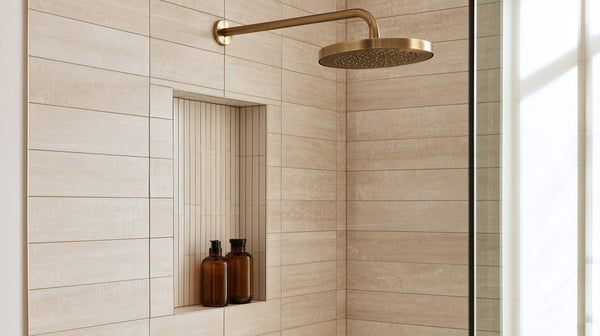
Minimum DCOF 0.42, R11 minimum, R12 strongly preferred. Shower floors take direct water, soap residue, and the kind of foot pressure that makes slipping likely. Most shower floors specify small-format mosaic tile (the grout joints add traction) or specifically slip-rated larger-format tile. Browse ceramic and porcelain tile for the full library.
Pool surrounds and pool decks
R11 minimum, R12 strongly recommended. The unprotected pool perimeter takes rain, splash, and chlorine residue regularly. The 2026 default for pool decks is sandblasted-finish porcelain pavers (R11-R12) or cleft natural stone (R12+). See our pool deck trends 2026.
Exterior stairs and stair treads
R12 minimum. Stair geometry concentrates risk: a slip on a stair is more dangerous than a slip on level ground. Specify aggressively-textured tile (sandblasted, cleft, or bush-hammered) for any exterior stair tread. See our pool coping and tread guide.
Mudrooms and entries (wet-shoe traffic)
R10 to R11. Wet shoes track water and grit; the floor needs traction without being uncomfortable for socked feet. Matte porcelain and lightly-textured natural stone serve well. Avoid: high-gloss porcelain in entry applications; the wet-shoe slip risk is real.
Commercial-residential and light commercial
R11 minimum across all wet-area applications, with R12 in high-frequency public areas. Insurance carriers in some jurisdictions specifically reference these ratings for liability purposes.
The Texture-vs-Cleanability Trade-Off
Slip-rated texture comes at the cost of cleanability. Smooth tile cleans easily; aggressively-textured tile traps dirt in the surface relief. This is one reason aggressive ratings (R13, very high DCOF) aren't universal residential specifications, the cleanability problem outweighs the marginal slip resistance gain in most home contexts.
The right balance for most residential wet applications is moderate slip rating (R11, DCOF 0.45-0.55) with surface relief that's textured enough for traction but smooth enough to clean with normal stone or tile cleaning protocols.
The Surface-Texture Vocabulary
Specific surface treatments correlate to specific slip ratings.
- Polished, DCOF below 0.42, R9. Smooth, reflective, slippery wet. Indoor dry only.
- Honed, DCOF 0.40-0.45, R9-R10. Matte but smooth. Indoor dry, light indoor wet acceptable.
- Matte glazed, DCOF 0.42-0.50, R10. The residential default for kitchen and bath floors.
- Sandblasted, DCOF 0.50-0.65, R11-R12. Outdoor and pool default.
- Cleft natural, DCOF 0.55-0.70, R11-R13. Mountain residential and exterior applications.
- Bush-hammered, DCOF 0.60-0.75, R12-R13. Heavy commercial and industrial applications.
- Tumbled, DCOF varies widely (0.40-0.65). Read individual ratings; tumbled travertine often runs R10.
Verifying Ratings Before You Buy
Three protections against unrated or mis-rated tile:
Request the manufacturer spec sheet. Quality manufacturers publish DCOF and R-ratings on every outdoor and wet-area-rated product. The absence of published ratings is a flag.
Don't accept "outdoor-rated" without specific numbers. The marketing language and the actual rating aren't always aligned.
For pool deck and stair applications, specifically require R12. Don't accept R11 with the explanation that "it should be fine." The standards exist for a reason.
The Slip-Resistance Trade-offs in Premium Contexts
One specific tension: premium polished surfaces (polished marble, polished granite) have very low slip ratings. The aesthetic is what the application wants; the slip rating is what the application needs. The resolution depends on context:
- Polished marble in a powder room, the visual premium is the point; slip risk is minimal in that small dry-traffic zone. Acceptable.
- Polished marble in a primary bath floor, slip risk is real. Specify honed marble instead, which keeps most of the visual but adds traction.
- Polished outdoor stone of any kind, never. The slip risk is too high.
The 2026 trend toward honed and matte finishes (rather than polished) is partly aesthetic and partly a response to the recognition that polished surfaces don't have the slip ratings residential applications need.
Where to Start
When specifying tile for any wet or outdoor application, get the slip rating before you fall in love with the colorway. The tile that looks beautiful in the showroom but rates R9 isn't appropriate for your shower, regardless of how it looks. Browse the outdoor tile collection for tile-rated outdoor products, the porcelain paver collection for pedestal and sand-set outdoor applications, and ceramic and porcelain tile for the indoor wet-area library. For broader application reads, our pool deck trends 2026, outdoor tile guide, and pool coping guide.
Next step: compare kitchen flooring at Citadel Spaces, then use the flooring and tile coverage calculator to work out how much to order.
From the guide
Shop the surfaces in this guide