Buyer Guide
Arterra Porcelain Pavers: Why We Built a Whole Outdoor Catalog Around Them

Some outdoor materials earn a catalog slot. Arterra porcelain pavers earned a whole outdoor wing. The reason is straightforward: across 56 active colorways, the line meets the standards we hold every outdoor surface to, finish that reads honest in raking light, edge profiles that survive handling and install, freeze-thaw behavior that doesn't ask you to apologize, and a color library deep enough to specify a whole project from a single source. Most porcelain paver lines hit one or two of those marks. Arterra hits all four.
This spotlight reads the line closely, what's actually true about the material, where it earns the specification, and where it doesn't.
What Arterra Actually Is
Arterra is a 20mm-thick porcelain paver line, twice the thickness of standard interior porcelain tile, engineered for outdoor pedestal-set, mortar-set, and sand-set installations. The body is fully vitrified through-color porcelain, meaning the surface texture and color extend through the slab rather than sitting only on the top face. Chip a corner and the body underneath reads the same as the surface, a forgiveness real stone shares and many lower-grade outdoor porcelain lines fake.
The line spans large-format pavers (24×24, 24×36, 16×24), coordinated copings, and matching outdoor tile in the same colorways at 10mm thickness for indoor-outdoor continuity. That last detail, the same colorway running from kitchen to terrace at two different thicknesses, is what makes Arterra the connector for indoor-outdoor rooms in a way most paver lines can't match.
Finish Reads That Hold Up
Arterra's finish vocabulary covers honed travertine, cleft-face slate, weathered limestone, board-formed concrete, and contemporary smooth-with-grain looks. Each is engineered against the natural reference rather than imitating it crudely. The travertine reads honed, not pearlescent. The slate reads cleft, not embossed. The board-formed concrete reads as concrete with wood-grain memory, not as wood-pretending-to-be-concrete.
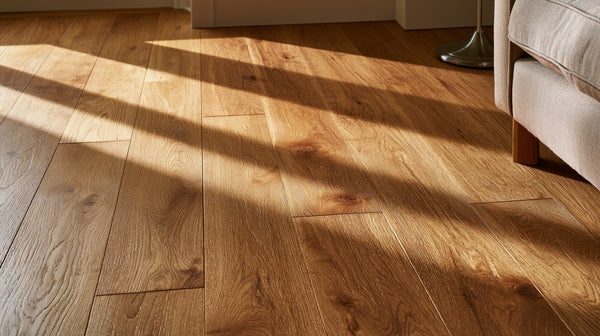
The honest test for any porcelain paver finish is raking light at golden hour. Cheap porcelain reveals its mold pattern under that light, the same surface relief repeating every third tile. Arterra's mold variation is deep enough that the repeating pattern is essentially invisible at viewing distance. That's not free; it's the difference between a high-end porcelain line and a low one.
Edge Profiles and Why They Matter
An outdoor paver lives or dies at its edges. Sharp factory edges chip on first install. Bullnose-style rounded edges read residential. Eased edges, a slight micro-bevel that softens the corner without making it visually rounded, survive install and read clean.
Arterra ships with eased rectified edges as standard. That single detail is worth more than most spec lines admit: rectified means each paver is mechanically squared after firing to within tight tolerances, so 24-inch pavers actually measure 24 inches, not 24 plus or minus a quarter. The grout joint or sand gap reads consistent across the whole field. The geometry of a deck stays clean. Compare that to a non-rectified product where the joint widths drift across the field and you've got the difference between a deck that reads designed and one that reads laid.
Freeze-Thaw and Hot-Climate Behavior
The standard absorption rate for outdoor-rated porcelain is below 0.5%. Arterra's published rate is below 0.05%, an order of magnitude below the threshold. What that means in practice: water doesn't enter the paver body, freeze, expand, and crack the surface. In freeze-thaw climates, this is the difference between a 30-year deck and a 10-year deck.
In hot climates, the same density is doing different work. The paver doesn't absorb solar heat the way porous stone does, so it stays meaningfully cooler underfoot than travertine on a 100-degree afternoon. Combined with lighter-tone colorways, Arterra is one of the few outdoor surfaces that genuinely earns the "barefoot-friendly in summer" claim. We go deeper in our heat reflectance guide.
The Colorway Library
Across 56 active colorways, Arterra covers the full premium-residential outdoor spectrum: warm cream travertines, honed graphite limestones, weathered driftwood reads, board-formed concrete in three tones, contemporary smooth taupes. The depth of the library is what makes it possible to spec a whole outdoor project, pavers, copings, accent tile, outdoor kitchen counters when paired with companion porcelain slab, in a single coordinated palette.
Browse the full porcelain paver collection to see Arterra in context, alongside the matching outdoor tile library for indoor-outdoor continuity at the doorway.
Installation: Pedestal vs Mortar vs Sand
Arterra installs in three meaningfully different ways, each with its own design implications.
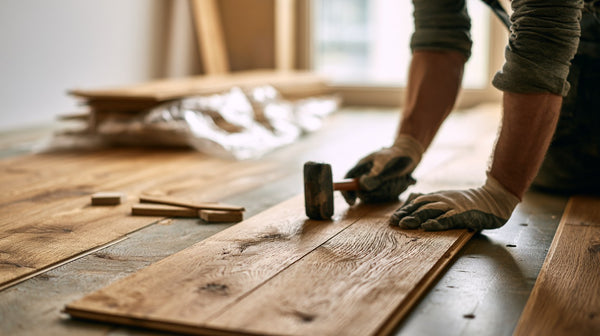
Pedestal-set floats the pavers on adjustable plastic pedestals over a graded sub-base, leaving an air gap below. Drainage is instantaneous, the pavers are individually liftable for substrate access, and the deck reads "modern" because of the small even gaps between pavers. Best for rooftops, raised terraces, and contemporary architecture. Covered in depth in our pedestal vs mortar pool deck guide.
Mortar-set bonds the pavers to a poured concrete sub-slab with thin-set adhesive and grouted joints. Reads more traditional, transmits sub-slab cracks if the sub-slab fails, harder to access utilities below. Right for permanent installations where the sub-slab is engineered correctly.
Sand-set beds the pavers directly into a compacted sand layer over a graded gravel base, with polymeric sand in the joints. The most flexible system, easy to lift and reset individual pavers, no sub-slab cost, naturally drains through the joints. Best for ground-level patios and walkways where the architecture doesn't demand the rigid look of mortar-set.
Pairing Arterra with the Rest of the Outdoor Catalog
The Arterra colorways pair cleanly with our natural stone paver collection where projects want both materials in conversation, porcelain at the high-traffic core, natural stone at the perimeter and accents. Companion copings (both Arterra-line and natural-stone) handle pool edges, stair treads, and wall caps.
For projects that run pavers up to a turf zone or planting bed, see how the system reads in our pet-first backyard design and pool deck trends 2026 guides.
Where Arterra Doesn't Fit
Two cases where Arterra isn't the answer. First, projects that specifically want the patina trajectory of natural stone, travertine that softens into cream, limestone that develops a visible weather pattern over decades. Porcelain doesn't age that way; it stays exactly what it is on day one. That's a feature for some projects and a missing dimension for others.
Second, projects with extreme dimensional irregularity in the existing deck or sub-slab, Arterra's rectified edges and tight tolerances expect the substrate to be reasonably planar. Heavily uneven existing concrete may want a more forgiving natural stone with field-cut variability rather than a precision-edged porcelain product.
Where to Start
Specifying Arterra at scale starts with the colorway question, warm or cool, traditional or contemporary, single-tone or multi-tone variation. From there, the install method and the companion materials follow. Browse the porcelain paver collection for the full Arterra library, and pair with copings and outdoor tile for the full outdoor system. For the cost and longevity comparison against natural stone, see our porcelain vs natural stone pavers guide.
Next step: compare porcelain pavers at Citadel Spaces, then use the flooring and tile coverage calculator to work out how much to order.