Buyer Guide
The Best Carpet for Noise Reduction: Pile, Pad and Sound Ratings
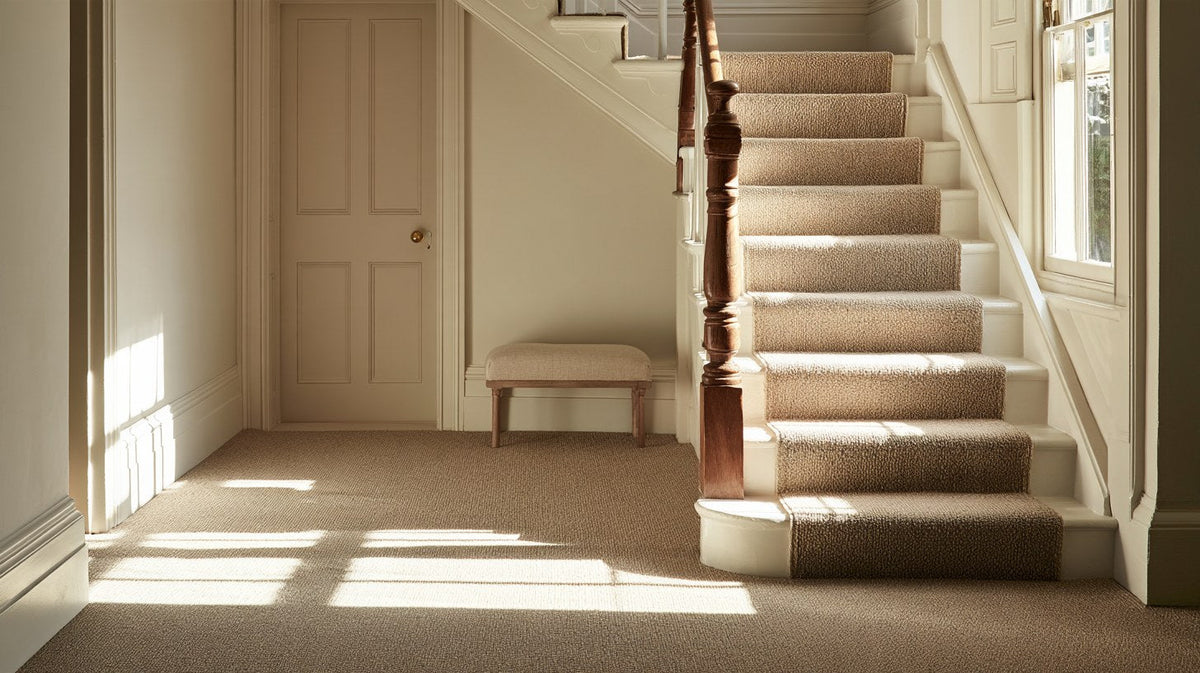
Carpet is the most effective floor finish for a quieter home. It works on two kinds of noise at once: the sound of footsteps and dropped objects that travels down through a floor to the room below, and the echo of voices, music and television inside the room itself. How much quieter a room gets depends far more on the pile and the pad underneath than on the brand or the fiber. This guide explains how carpet controls sound, how that is measured, and which combination to choose for bedrooms, stairs, home offices and rooms above living space.
Two Kinds of Noise, Two Ratings
Acoustic engineers separate household noise into two problems, and each has its own rating.
- Impact noise is the thud of footsteps, a chair dragged across the floor or a toy dropped on it. It travels through the floor structure into the room below. It is rated by IIC (Impact Insulation Class). Higher is quieter.
- Airborne noise inside the room is voices, music and the clatter that bounces off hard surfaces as echo. A floor's ability to absorb it is rated by NRC (Noise Reduction Coefficient), from 0, which reflects everything, to 1, which absorbs everything.
Hard floors do little for either. Carpet over a pad improves both, which is why it remains the standard in bedrooms, upstairs hallways and multifamily buildings with strict sound requirements.
| Floor build | Echo absorption (NRC) | Footstep noise to the room below |
|---|---|---|
| Tile or stone | About 0.02 | Loud without an acoustic underlayment |
| Hardwood or laminate | About 0.05 to 0.15 | Loud to moderate, depending on the underlayment |
| Low-profile loop carpet on a firm pad | About 0.25 to 0.35 | Much quieter |
| Dense cut-pile carpet on a quality pad | About 0.40 to 0.60 | The quietest common residential floor |
These are approximate ranges from published acoustic testing. Exact values depend on the product, the subfloor and the room, so read the table as a ranking.
Why Pile and Density Decide How Quiet a Carpet Is
Sound is absorbed when it enters a porous material and loses energy moving through it. In carpet, that porous layer is the pile. Taller pile gives sound more fiber to pass through, and higher density keeps that layer intact once furniture and foot traffic press on it.
- Plush and saxony cut pile: tall, closely packed tufts. The best echo absorption of any carpet style and a soft landing for footsteps.
- Textured cut pile and frieze: slightly shorter, twisted yarns. Nearly as quiet as plush, and better at hiding footprints in family rooms.
- Cut and loop: a patterned mix of heights. Good sound absorption with more visual texture.
- Low-profile loop and berber: short, tight loops. Durable, but the thin pile absorbs less, so the pad has to do more of the work.
Fiber makes less difference than most buyers expect. Wool, nylon, triexta and polyester absorb sound in similar amounts at the same pile height and density. Choose the fiber for traffic, softness and stain resistance, and choose the pile for quiet. A soft, dense cut pile such as Mohawk Apollo III gives the depth that absorbs echo, with stain resistance built into the fiber.
The Pad Controls Footstep Noise
If the pile handles echo, the pad handles impact. A good pad separates the carpet from the subfloor and absorbs the energy of each footstep before it reaches the floor structure. Upgrading the pad is the single most cost-effective change for a quieter floor, especially in rooms above a living area or a bedroom.
- Bonded urethane (rebond): the most common residential pad and a strong all-round performer for impact noise at a modest price.
- Prime and frothed urethane foam: uniform foam with a consistent feel. Frothed foam is very dense and resists flattening, so it holds its acoustic performance for years.
- Rubber: dense and heavy, which makes it one of the best options for impact noise, particularly in condos and apartments.
- Fiber and felt: firm pads made for loop and berber carpet. They reduce impact noise less than foam or rubber.
For most bedrooms and upstairs rooms, a 7/16 in bonded urethane pad at 6 to 8 pound density is the reliable choice. Where noise is the main concern, step up to a denser rubber or frothed foam pad made for sound control, and keep within the carpet manufacturer's specification so the warranty stays valid.
Where Quiet Carpet Matters Most
- Rooms above living space: an upstairs bedroom or playroom over a living room or kitchen. Impact noise is the complaint, so the pad matters as much as the carpet.
- Stairs and upstairs hallways: the loudest paths in a two-story home. A dense, lower pile on a firm pad keeps them quiet without wearing out at the stair nose. See our stairs flooring page and the guide to carpet for high-traffic areas and stairs.
- Bedrooms: where quiet is the point of the room. A plush cut pile absorbs echo and softens every step. Compare options on our bedroom flooring page.
- Home offices and media rooms: echo makes video calls and films harder to hear. Carpet here does the job of an acoustic treatment across the whole floor.
- Condos and apartments: many buildings set a minimum IIC for floors. Carpet with a rated pad usually meets it with room to spare. Check the association's rule before you buy.
The same build has a second benefit. The air held in a deep pile and a good pad also slows heat loss through the floor, which is why the quietest rooms are often the warmest. Our guide to the best carpet for winter insulation covers that side in detail.
When Carpet Is Not Enough
Carpet absorbs sound at floor level. In tall rooms, rooms with large windows, or spaces with hard ceilings and bare walls, voices still reflect off the upper surfaces. Pair carpet with soft furnishings and wall treatment where echo persists. Our article on whether acoustic wood slat panels work explains where wall panels help, and the acoustic panel calculator sizes them for a room. For offices and basements with frequent spills, carpet tile gives similar sound absorption with tiles that can be replaced one at a time.
How to Choose Carpet for a Quieter Home
- Name the noise. Footsteps heard below call for a better pad. Echo inside the room calls for a deeper pile. Many rooms need both.
- Choose a dense cut pile. Plush, saxony or textured cut pile for bedrooms and living areas; a lower, dense pile for stairs.
- Specify the pad, never accept a default. A 7/16 in, 6 to 8 pound bonded urethane pad for most rooms; dense rubber or frothed foam where impact noise matters most.
- Check the building's rules. Condos and apartments may require a minimum IIC rating for the full floor assembly.
- Measure before you order. The carpet calculator sizes the order, including seams and waste.
Frequently Asked Questions
Does carpet really reduce noise?
Yes. Carpet over a pad is the most sound-absorbing common floor finish. It softens footsteps heard in the room below and absorbs echo within the room, where tile and hardwood reflect almost all of it.
What type of carpet is best for noise reduction?
A dense cut pile such as plush or saxony absorbs the most sound, because the tall, closely packed pile gives sound the most fiber to pass through. Paired with a quality pad, it is the quietest common residential floor.
Does carpet padding help with sound?
Yes, and for footstep noise it matters as much as the carpet. Dense rubber and frothed foam pads reduce impact noise the most. Bonded urethane is a strong, economical choice for most homes.
Is carpet quieter than luxury vinyl or laminate?
Yes. Hard floors reflect sound and transmit footsteps unless they sit on a dedicated acoustic underlayment. Carpet on a pad absorbs far more echo and impact than vinyl or laminate.
What is a good IIC rating for a floor?
Many building codes and condo associations set a minimum IIC of 50 for floors between units, and quieter buildings often ask for 60 or higher. Carpet with a good pad typically reaches those levels on a standard floor assembly; confirm the rating for your specific build.
Shop Quiet Carpet at Citadel Spaces
A quiet floor comes from a deep, dense pile working with the right pad. Browse our carpet collection and broadloom selection for cut piles suited to bedrooms, stairs and upstairs rooms, compare room by room on our living room and bedroom pages, and see them in person at the showroom to judge the feel underfoot. When you are ready, size the project with the carpet calculator.