Buyer Guide
Do Acoustic Wood Slat Panels Work?
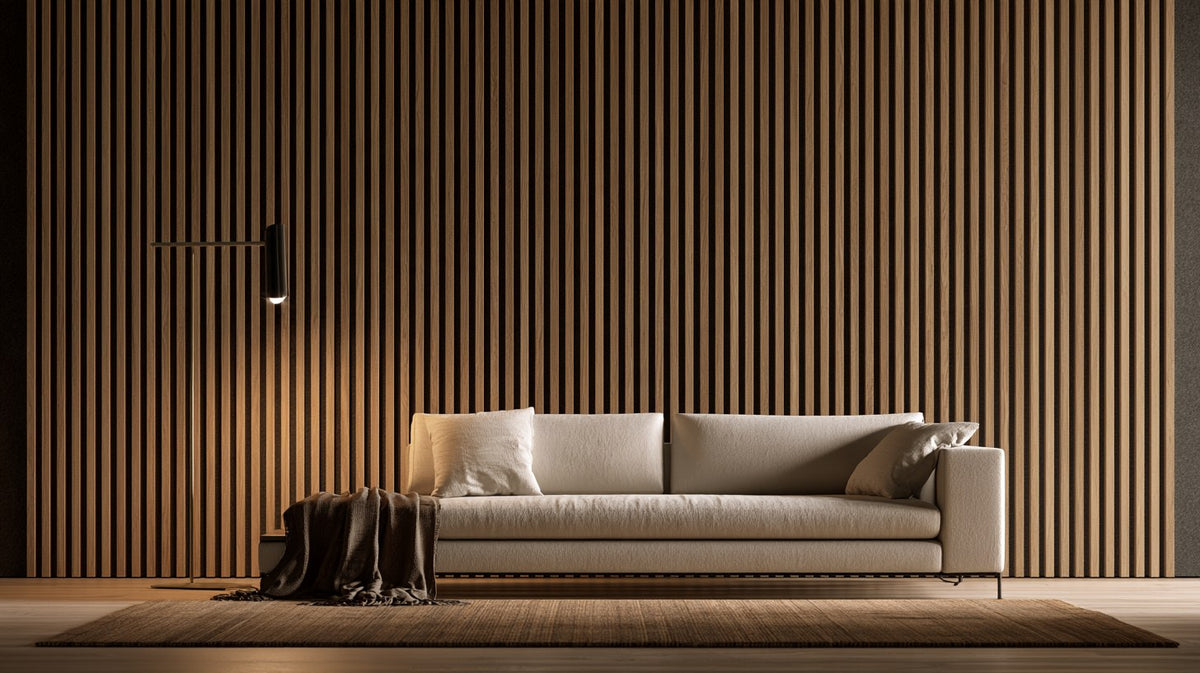
Do acoustic wood slat panels work? Yes, for what they are designed to do: they absorb sound inside a room and cut echo, which makes a hard, lively room sound calmer and speech clearer. What they do not do is soundproof a room. They will not stop your neighbor's music or the television in the next room. Knowing that difference is the key to using them well.
How they work
An acoustic slat panel is made of wood slats mounted over a soft acoustic backing, usually felt. Sound waves pass through the gaps between the slats and are absorbed by the backing instead of bouncing back into the room. The slats also scatter some of the sound that hits them. Together they reduce the reflections that make a room sound echoey.
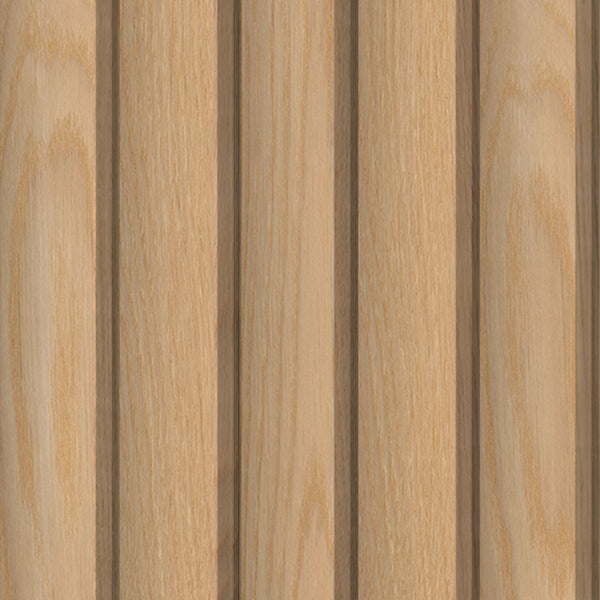
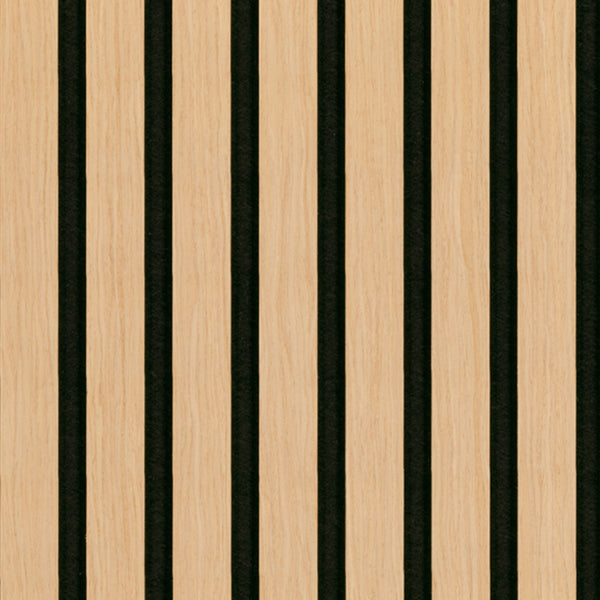
Our acoustic wood slat panels are real wood slats milled over an acoustic backing, in tones from white and blonde through natural, tawny and ebony, and in reeded and macro profiles.
What they do well
- Reduce echo in rooms with hard floors, bare walls, tall ceilings and large windows.
- Make speech clearer in living rooms, dining rooms and home offices, especially on video calls.
- Soften the sound of a television or music within the room.
- Add warmth and texture as a design feature, which is half of why people choose them.
What they do not do
Blocking sound from passing between rooms is a different job, called sound isolation. It depends on mass, sealed gaps and wall construction: dense drywall layers, insulation inside the wall, and decoupled framing. An absorptive panel on the surface of a wall adds very little of that. If the goal is to keep sound in or out of a room, the wall itself needs to change.
Absorbing vs blocking
| Acoustic slat panels | Soundproofing construction | |
|---|---|---|
| Goal | Less echo inside the room | Less sound passing between rooms |
| How | Soft backing absorbs reflections | Mass, insulation, sealed gaps, decoupling |
| Where | On the wall or ceiling surface | Inside the wall, floor or ceiling |
| Effort | Screw or glue panels in place | Rebuild or add to the wall |
Where to place them
- Opposite a hard, parallel surface: two bare parallel walls bounce sound back and forth. Treating one of them helps most.
- Behind or opposite seating: in a living room or office, the wall behind the sofa or the desk is a natural place.
- In large, open rooms: more coverage gives more effect. A full feature wall does more than a single panel.
- On ceilings: in rooms with tall or vaulted ceilings, ceiling panels can calm a very lively space.
Combine panels with soft furnishings, such as a rug, curtains and upholstered furniture, for the biggest improvement. Each soft surface absorbs a little more.
Installation
Most slat panels screw directly to the wall or ceiling, into studs or with suitable anchors, and can be cut to length and around outlets. Some installers add a thin layer of insulation behind the panel for a little extra absorption. Plan the layout so slats run continuously and panels line up at the edges, and follow the manufacturer's installation instructions.
Choosing the look
Because slat panels are as much a design feature as an acoustic one, the finish matters. Light tones such as white, blonde and almond keep a room bright and suit Scandinavian and coastal interiors. Natural and tawny tones bring warmth to a living room or bedroom. Dark tones such as ebony and navy create a dramatic feature wall behind a bed or television. Profile changes the texture too: a standard slat gives clean vertical lines, while reeded and macro profiles add depth and shadow. Vertical slats make a ceiling feel higher; panels can also run horizontally to widen a narrow wall.
Panels can wrap a whole wall or frame a single zone, such as the area behind a desk or a headboard. A partial treatment still helps the room acoustically and gives the eye a focal point.
How much wall to cover
There is no single right amount, but the effect grows with coverage. A single panel beside a desk helps a little; a full feature wall behind a sofa or bed makes a clear difference in a hard-surfaced room. Measure the wall, divide by the panel size, and plan the layout so panels end neatly at corners, windows and doors. Order a spare panel for cuts around outlets and switches.
Frequently Asked Questions
Do acoustic slat panels soundproof a room?
No. They absorb sound inside the room and reduce echo, but they do little to stop sound passing through walls. Soundproofing requires changes to the wall construction itself.
Where should acoustic panels go in a living room?
Start with a large hard wall, such as the wall behind the sofa or opposite the television, and add soft furnishings like a rug and curtains for more effect.
How many acoustic panels do I need?
It depends on the room's size and how hard its surfaces are. Covering a significant part of one large wall, such as a feature wall, makes a noticeable difference in most living rooms.
Can acoustic wood panels go on the ceiling?
Yes. Ceiling panels are effective in rooms with high or vaulted ceilings. Fasten them securely into framing and follow the manufacturer's instructions.
Do acoustic slat panels help on video calls?
Yes. Reducing echo in a home office makes your voice clearer on calls, especially in a room with hard floors and bare walls.
To take this from reading to ordering, browse acoustic wall panels at Citadel Spaces, and size the order with the acoustic panel calculator.
From the guide
Shop the panels in this guide