Investment
Why Outdoor Living Now Outranks the Kitchen on Resale
For decades, residential investment wisdom held that the kitchen was the highest-return remodel in the house. The numbers supported it, kitchen remodels consistently recovered 70 to 90% of cost at resale, higher than nearly any other improvement. That conventional wisdom is shifting. Recent appraisal and market data suggests outdoor living improvements are now matching or exceeding kitchen remodels for resale recovery in most warm-climate markets, and the gap is widening.
This guide walks through what changed, why outdoor living is now competing with the kitchen for ROI dominance, and the specific outdoor specifications that drive the highest recovery.
The Shift in the Numbers
Recovery percentages from recent industry surveys (Remodeling Magazine "Cost vs Value" reports, NAR Remodeling Impact reports, regional appraisal studies):
- Minor kitchen remodel (mid-range): 70-85% recovery
- Major kitchen remodel (mid-range): 60-75% recovery
- Major kitchen remodel (upscale): 50-65% recovery
- Outdoor living additions (pavers, fire features, lighting): 80-110% recovery
- Outdoor kitchen integrated with covered space: 70-90% recovery
- Comprehensive landscape and hardscape design: 100-150% recovery in select markets
The crossover is real. In warm-climate markets, comprehensive outdoor living investments now recover at higher rates than equivalent-budget kitchen remodels. For a $50,000 budget, the outdoor investment often produces more appraised value than the kitchen investment.
Why the Shift Happened
Three drivers behind the change.
The pandemic permanently shifted residential lifestyle. Outdoor space went from "nice to have" to "essential" during the 2020-2021 period, and the shift has stuck. Buyers who learned to value outdoor space haven't forgotten. Markets where outdoor living was already valued (Sun Belt) saw the demand intensify; markets where it wasn't (Northeast, Pacific Northwest) saw demand emerge.
Kitchen design has stabilized while outdoor design is innovating. The kitchen has matured, open plan, island-centered, slab counter, premium appliances. New kitchens look meaningfully like kitchens of 5 years ago. Outdoor design, by contrast, is innovating rapidly: pedestal pool decks, outdoor-rated porcelain slab counters, integrated indoor-outdoor architectural systems. The "wow factor" has shifted to outdoor.
Square-footage cost arbitrage. Building a covered outdoor room costs roughly half what building equivalent indoor square footage costs (no insulation, simpler MEP, fewer finishes), but appraises at 50-70% of indoor square-footage value. The cost-to-value ratio is more favorable than indoor square footage in most markets.
What "Outdoor Living" Actually Means in This Context
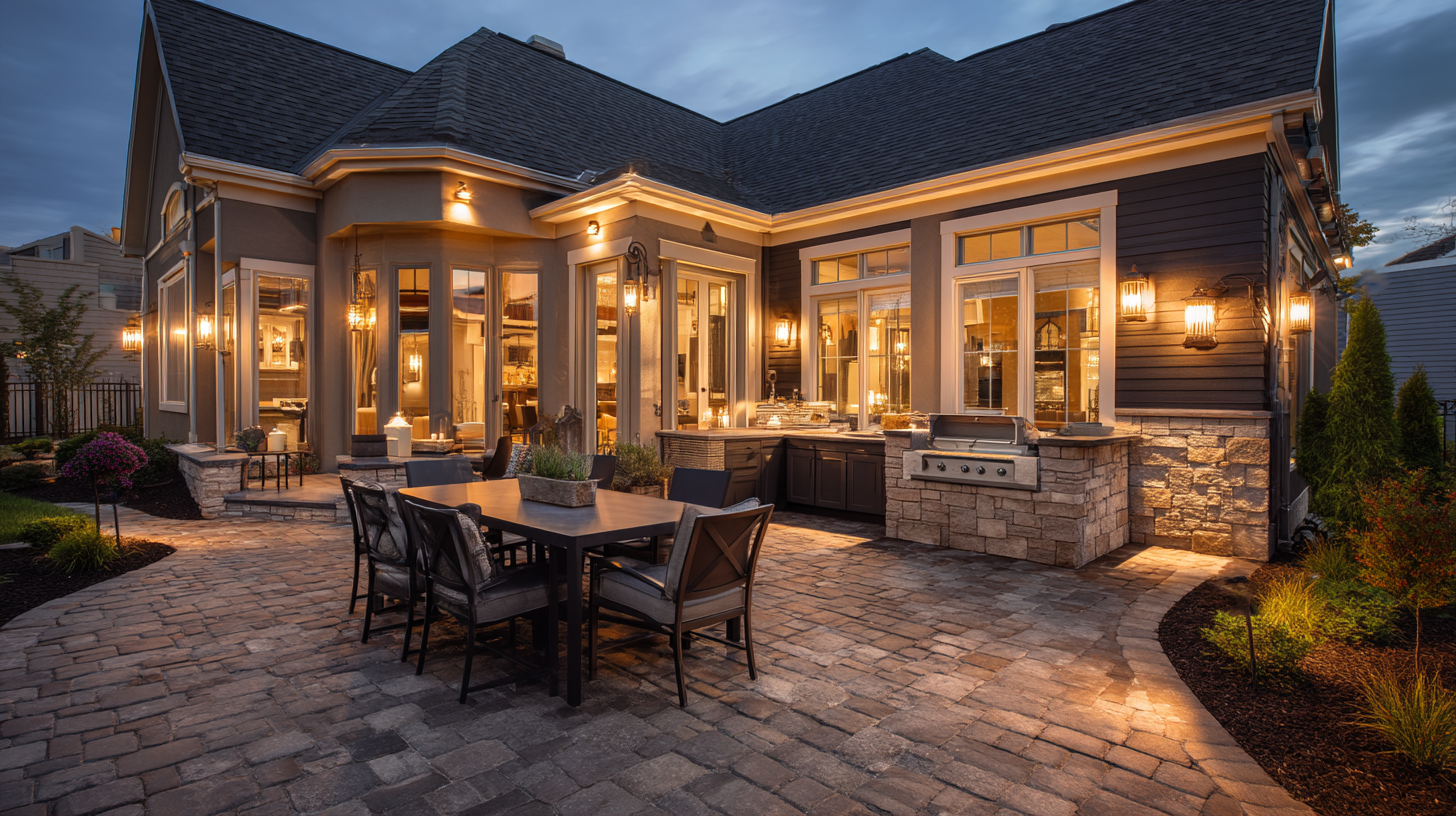
The high-recovery outdoor investments aren't just "patios." They're integrated outdoor living systems with several specific characteristics:
- Defined outdoor rooms (covered or pergola-shaded) rather than open-air patios
- Integrated lighting (functional and atmospheric)
- Integrated cooking and dining spaces (outdoor kitchen, covered dining)
- Premium hardscape materials (see our investment case for premium hardscrape)
- Cohesive design language with the architecture (matched materials, complementary palette)
- Plant integration (mature landscaping, designed planting beds)
A simple uncovered concrete patio doesn't deliver the same recovery. The integration is what creates the value.
Specific High-Recovery Outdoor Specifications
Covered outdoor living rooms
The single highest-recovery outdoor specification. A roofed outdoor space with proper drainage, ceiling fans, integrated lighting, and finished flooring (premium pavers or outdoor tile, see our outdoor tile guide) appraises near 70% of indoor square footage value. The construction cost is roughly half indoor square footage. The recovery math is exceptional.
Integrated outdoor kitchens
Built into a covered structure (not freestanding), with porcelain slab counters, stainless or weather-rated cabinetry, integrated grill, prep sink, and refrigeration. The high-recovery version is functional for actual entertaining, sized for 6-10 people, with adequate prep space and seating proximity. See our outdoor kitchen materials guide.
Pool perimeter premium upgrades
For homes that already have pools, upgrading the pool deck (from concrete to porcelain pavers, adding premium coping, integrating outdoor lighting) delivers strong recovery. The upgrade is cosmetic-but-perceptual; buyers respond to premium pool perimeters with meaningfully higher offers. See the coping collection and our pool coping guide.
Comprehensive landscape integration
Mature plantings, designed planting beds, irrigation systems, and integrated low-voltage lighting compound the hardscape's effect. A premium patio without surrounding landscape reads as added-on; the same patio with mature landscape integration reads as architectural.
What Reduces Recovery
Three outdoor investments that consistently recover poorly.
Specialized features that limit buyer appeal. Heavily themed outdoor spaces (Mediterranean villa, Japanese garden, etc.), elaborate water features that require maintenance expertise, or feature elements that read as personal preferences rather than universal amenities. These can subtract from value because they limit the buyer pool.
Pools without warm-climate cultural support. In Northern climates with limited swim seasons, pools often appraise neutrally or negatively. The high maintenance cost and short use season deter some buyers; without the cultural expectation of pool ownership, the asset can be a liability.
Over-improvements for the neighborhood. Premium outdoor specifications that significantly exceed neighborhood norms recover at lower rates because the market signal is mismatched. A $200,000 outdoor living investment in a neighborhood of $500,000 homes recovers worse than a $50,000 investment in the same neighborhood.
The Climate Variable
The outdoor-living recovery story is meaningfully geography-dependent.
Hot/warm climates (Sun Belt, California, Florida, Texas): The strongest outdoor-living recovery markets. Year-round usability, cultural expectation, and limited heating requirements for outdoor spaces all support the math.
Mediterranean climates (coastal California, parts of the Southwest): Even better recovery in some markets, outdoor space is genuinely usable for 9-10 months of the year.
Mid-Atlantic and Southeast humid climates: Strong recovery, with caveat that outdoor space wants screen integration to handle insect pressure.
Mountain and continental climates: Variable. Outdoor space is highly used in summer but has short season; covered outdoor space with warming features (fireplace, heaters) extends the season and improves recovery.
Cold climates (Northeast, Upper Midwest, Pacific Northwest): Weakest outdoor-living recovery. Limited use season, depreciation from snow/ice/freeze cycles. Indoor improvements may still outperform outdoor in these markets.
The Kitchen Still Matters
The shift in outdoor's favor doesn't mean kitchens have stopped mattering. A neglected kitchen still drags down a house's appraised value, and a thoughtfully renovated kitchen still recovers well. The shift is at the margin: when budget forces a choice between equivalent-cost kitchen remodel or outdoor improvement, the outdoor improvement increasingly wins.
The strongest residential strategy in 2026 is balanced investment, keep the kitchen current (avoid neglect) while investing meaningfully in outdoor living systems.
The Curated-Materials Advantage
One specific recovery driver worth attention: premium materials in the outdoor space disproportionately drive perceived value at resale. The reason: outdoor materials are visible from MLS photos in ways that interior materials sometimes aren't. A patio with premium pavers reads visually different from concrete in listing photos; the difference influences buyer interest before any walk-through. Premium materials specifically are the line item with the most disproportionate visual impact.
For the curated paver libraries, browse porcelain pavers, natural stone pavers, copings, and stacked stone veneers.
Long-Horizon vs Short-Horizon Owners
For long-horizon owners (10+ years), the math favors high-quality outdoor investment because the investment compounds across decades of personal use plus eventual resale value.
For short-horizon owners (3-7 years before sale), the math still favors outdoor investment provided the specifications are mainstream and the integration is strong. The recovery percentages cited are for typical owner timing; quicker resales sometimes recover slightly less.
Where to Start
For homeowners considering significant outdoor investment in 2026, the right starting point is integration: how does the outdoor space relate to the architecture, and what would make it read as architectural extension rather than as added-on amenity? From there, premium hardscape materials, covered outdoor structures, and integrated lighting create the recovery multiplier. For specific guidance, see our investment case for premium hardscrape, 2026 outdoor living trends, and designing for resale Sacramento pieces.
Browse hardscapes and turf to see the current range, and size your order with the flooring and tile coverage calculator.