Design Trends
2026 Outdoor Living Trends: Warm Graphite, Stone, and Quiet Edges
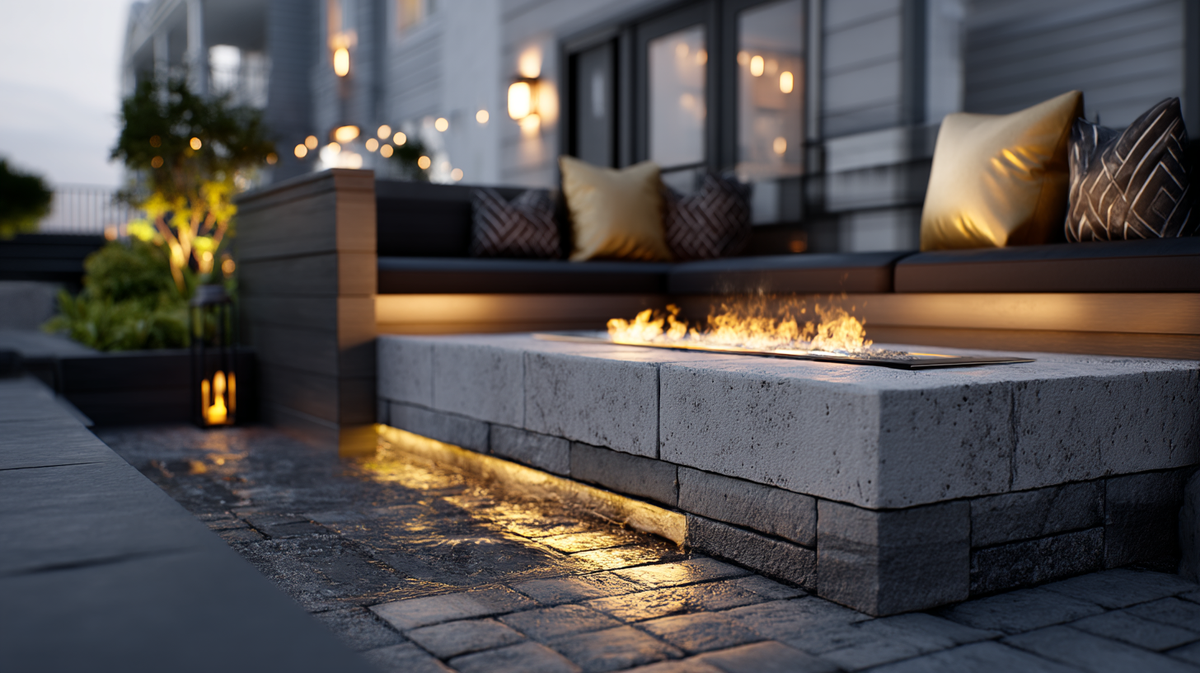
Most "design trends" pieces are aggregations of what magazines wrote about last year, presented as forecasts. This isn't that piece. The actual 2026 outdoor direction, what's shifting at the architect-and-builder level, what's appearing in the most-considered residential projects, what's moving away from 2023's defaults, is more specific and more interesting than the predictable trend-report fare.
This is what we're seeing in 2026 specifications: the directions that earn real budget weight, the moves that read as forward in 2026 rather than as 2024 catching up.
Warm Graphite Over Cool Grey
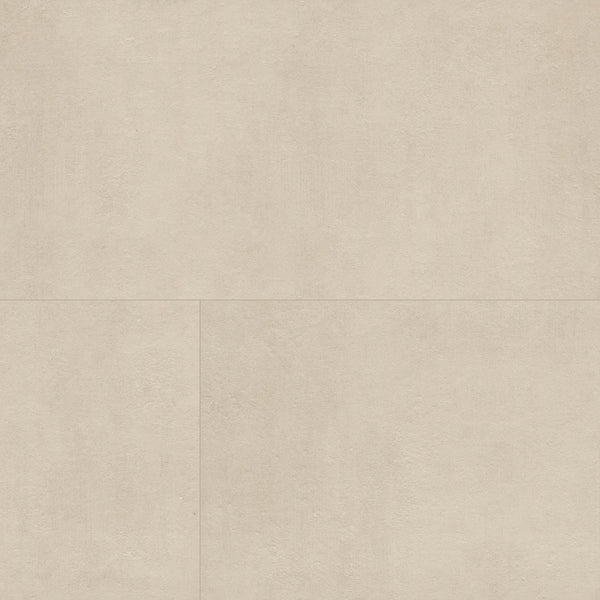
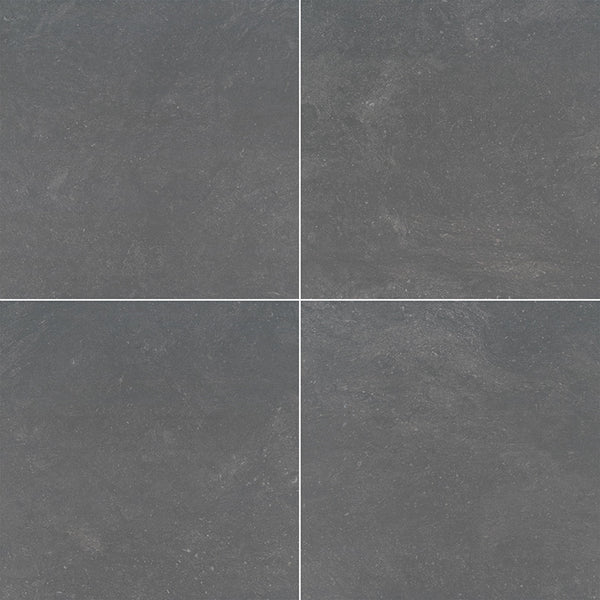
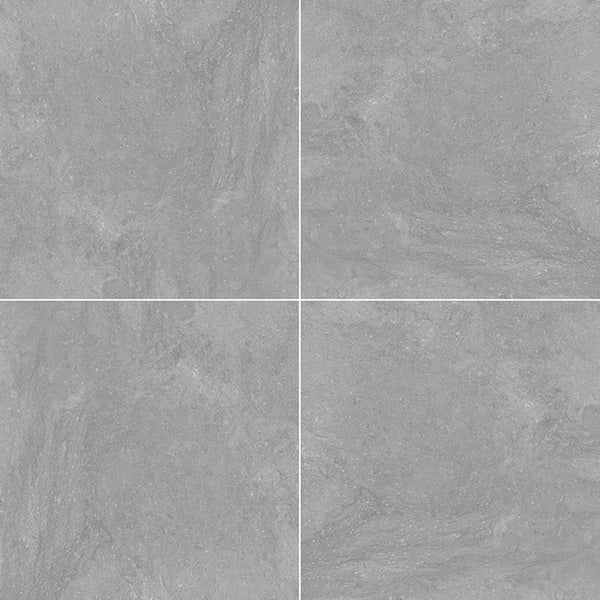
The single largest color shift in 2026 outdoor specification is the move from cool grey to warm graphite. The early-2020s outdoor palette ran toward Belgian-grey paver, charcoal-grey decking, cool-grey limestone, the cool-modern reading that paired with white-painted exteriors and minimal landscape. That palette has tipped toward warm: warm graphite, deep walnut-toned travertine, cream-with-graphite-veining quartzite, and the warm-with-gold-undertone porcelain pavers from the Arterra library.
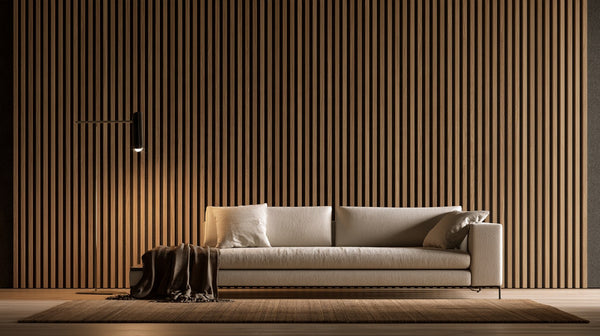
The move is partly a fatigue with cool minimalism and partly an architectural response to indoor-outdoor continuity (warm stone reads better against the warm wood, cream walls, and unlacquered brass that's dominating interior 2026). The cool-grey outdoor palette is becoming a regional signature rather than a universal default.
Layered Stone Reading Replaces Single-Material Decks
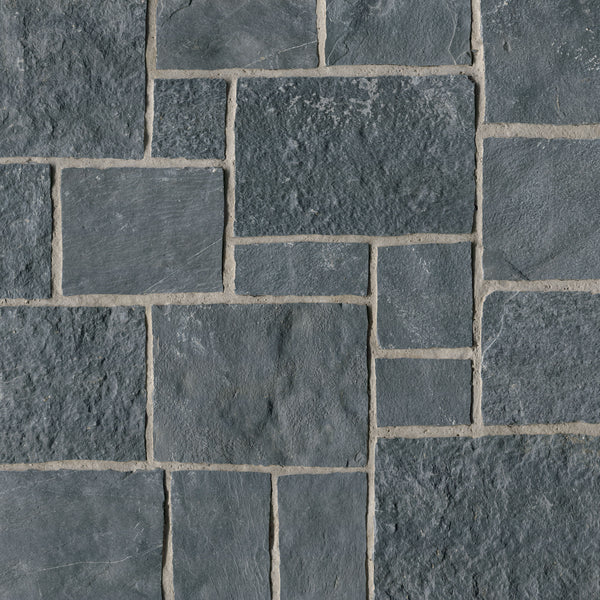
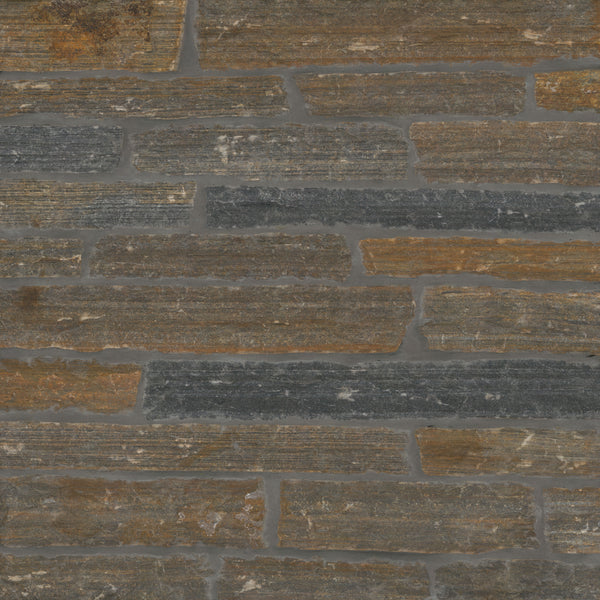
2024's outdoor look ran toward single-material clarity, a porcelain paver deck of one color, edge to edge, treated as a continuous architectural surface. 2026's evolution adds layered material reading: the same porcelain field with a natural-stone coping at the pool, a stacked-stone accent wall on the perimeter, a different paver for the driveway. The result reads more designed and less monolithic.
The technique that holds layered stone together is restraint, typically two or three material families maximum, repeated consistently across the project. The driveway material reappears in a small entry-court detail. The perimeter coping reappears as the wall-cap material on the planter. The repetition turns layered material into vocabulary.
Sculpted Coping and Edge Detail
The 2026 pool deck pays meaningful attention to coping geometry, bullnose, eased, cantilever, as a deliberate design move. The "thin-slab cantilever" coping (the coping projects 1 to 2 inches beyond the pool wall, reading as a knife-edge floating over the water) is the strongest contemporary 2026 specification. We cover the geometric question in our pedestal vs mortar pool deck guide and the deeper coping vocabulary in our pool coping guide.
Pedestal Pool Decks
Floating pedestal pool decks, pavers raised on adjustable plastic pedestals over a graded sub-base, with hidden drainage below, are moving from contract-and-rooftop applications into mainstream residential. The advantages compound: instantaneous drainage, individually liftable pavers for substrate access, the contemporary geometry of small even gaps between pavers. The technique pairs especially well with Arterra porcelain pavers (which have the dimensional precision the system requires).
Indoor-Outdoor Continuity at Real Scale
The 2026 indoor-outdoor moment is no longer a single set of large doors opening to a patio. It's the full architectural commitment: pocketing door systems that disappear into walls, matched flooring inside and outside (interior tile and matched outdoor pavers, see our outdoor tile guide), drainage details engineered to handle weather coming in, and the result reads as a single continuous volume that happens to have weather on one side. Where this is executed well, it changes how a house feels at scale that's hard to describe and easy to recognize.
Outdoor Kitchens That Earn the Specification
Outdoor kitchens have moved beyond the "BBQ on a stand" era and the early-2010s "second kitchen" overbuild. The 2026 outdoor kitchen is purpose-built for outdoor use: porcelain slab counter (see our outdoor kitchen materials guide), stainless or weather-rated cabinetry, integrated grill, prep sink, refrigeration, and a covered roof or pergola structure. Sized to the actual use, entertaining a regular crowd of 6 to 10, rather than to the marketing of "as-good-as-the-indoor-kitchen."
Plant Companions Move Toward Mediterranean
The 2026 outdoor planting palette runs toward Mediterranean and dry-tolerant: olive trees, lavender, rosemary, sedum, ornamental grasses. The shift is partly aesthetic (warm grey-green foliage pairs beautifully with warm graphite stone) and partly water-use (Mediterranean palettes use a fraction of the water of traditional residential lawns). For projects in California, the Southwest, and increasingly the Texas hill country, this is the dominant direction.
Turf Returns as Considered Element
Turf, after a decade of "looks fake / looks great" oscillation, has settled into considered residential as a defined zone, pet runs, play areas, putting greens, rather than as a wall-to-wall lawn replacement. The integration with hardscape is what makes it read intentional: turf zones bordered with paver soldier-courses, drainage stone at the perimeter, the rest of the yard handled by stone and plantings. Browse the turf collection and see our pet-first backyard design guide.
Fire Features Move Toward Architectural
The freestanding fire pit ("the round bowl in the middle of the gravel area") is being replaced by built-in fire features that read as architecture: long linear fire troughs in stone, fire walls with stacked-stone surrounds, fire bowls integrated into pool decks. The fire glass and pebble collection carries the surface materials; the architectural integration is what reads new.
Lighting Moves Quieter
2026 outdoor lighting is moving away from the "uplight everything" path-light density of the 2010s. The current direction: fewer, more carefully placed fixtures with warmer color temperature (2700K to 3000K rather than the cool 4000K that dominated mid-2010s), more linear and integrated installations (LED tape under coping edges, integrated step lights), and a willingness to leave parts of the landscape darker for contrast.
Stone-Look Porcelain Wood
Wood-look porcelain pavers, porcelain printed and textured to read as weathered teak, ipe, or oak, are the fastest-growing outdoor flooring category in 2026. The product solves a specific problem: outdoor wood decking demands annual maintenance, weathers visibly, and rots eventually. Wood-look porcelain delivers the wood reading without any of those maintenance trades. For projects that want the wood look outdoors but the porcelain performance, the technology has arrived. See our indoor-outdoor continuity guide (in queue).
Sustainability as Specification, Not Marketing
"Sustainable" outdoor products have moved from claim-on-the-marketing-sheet to actual specification consideration. Embodied carbon, sourcing chains, and end-of-life recycling are showing up in genuine specifications, particularly at the architect level. Porcelain has a more complicated sustainability profile than buyers often realize (high firing energy, but extremely long service life). Natural stone has a simpler one (low embodied energy at quarry, but transportation can be significant). We cover the full picture in our sustainable stone guide.
Where 2026 Isn't Going
Three trends from 2023-2024 that are now visibly retreating:
The "gravel-and-fire-pit" minimalist backyard. Read as too austere; budgets are returning to layered material and considered planting.
The "pure white limestone" pool deck. The cool minimalist look has tipped warmer.
The "wall-to-wall artificial lawn" backyard. Replaced by zoned turf as architectural element.
Where to Start
The strongest 2026 outdoor projects start with the architectural question, what does this outdoor space want to read as, and let the material decisions follow. For ROI, materials, and the long-view investment case, see our investment case for premium hardscrape and outdoor living vs kitchen resale pieces. For the specific surface decisions, browse porcelain pavers, natural stone pavers, and copings.
Ready to compare in person? Browse hardscapes and turf at Citadel Spaces, and use the flooring and tile coverage calculator to turn room dimensions into an order quantity.
From the guide
Shop the pavers in this guide