Buyer Guide
The Threshold & Sill Story: 43 SKUs of Quiet Luxury
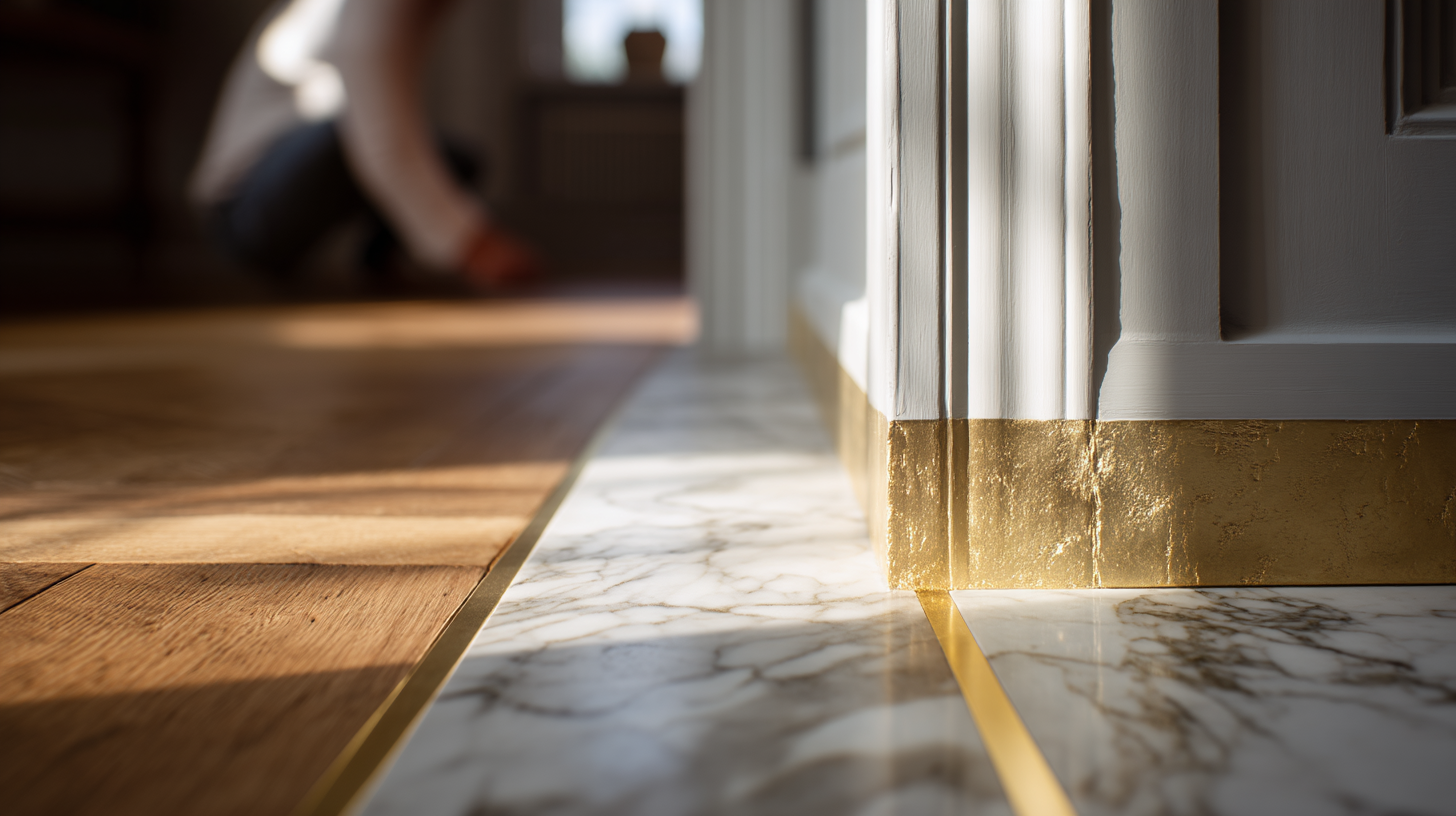
Walk through a luxury home and the things that read most expensive often aren't the things the house was designed around. They're the small, quiet decisions in places most people never look, the threshold under a doorway, the sill at the base of a window, the saddle between two flooring materials. These details are what separate a home that reads considered from one that reads decorated, and they're almost universally the first thing value-engineering eliminates from a budget. Their absence is silent. Their presence is the difference between a $500,000 house and a $5,000,000 house, in a single architectural detail.
Citadel carries 43 SKUs of natural-stone thresholds and sills, marble, granite, limestone, and travertine, in the dimensions that actually matter. This guide explains why this is one of the most undersold premium-buyer categories on the market, and how to specify thresholds and sills well.
What a Threshold Actually Does
A threshold is a transition piece, typically a 4-inch-wide by ¾-inch-thick stone bar. That sits at a doorway between two flooring materials. It does three jobs: it physically resolves the height difference between flooring types (a hardwood and a tiled bathroom often live at slightly different heights), it cleans up the visual moment where two materials meet, and it provides a wear surface at the most-trafficked transition in the house.
A window sill, the horizontal stone surface at the base of a window opening, is the same idea applied to a vertical opening. The stone keeps water out of the wall framing, provides a cleanable hard surface where the window meets interior finish, and gives the window a visual base.
Both details exist because the alternative, wood trim, painted MDF, or simply running flooring up to the casing, produces a moment that is acceptable but never beautiful. Stone is what makes the moment beautiful.
The 43-SKU Library
Citadel's thresholds and sills collection covers four primary stone families.
Marble thresholds
The largest sub-group. Carrara, Calacatta, Crema Marfil, Botticino, Statuary, the colorways span cool white-and-grey through warm cream and into honey-toned classical Italian marbles. Marble is the standard for residential thresholds; it cuts and polishes cleanly, reads premium, and ages with character.
Granite thresholds
Specified for high-traffic and wet-area transitions where marble's softer surface might suffer. Black galaxy, absolute black, baltic brown, kashmir white. Reads more contemporary and more durable; used commonly at exterior doorway thresholds and in commercial residential.
Limestone and travertine sills
Softer stones better suited to window sills than to doorway thresholds. The reduced foot-traffic exposure lets the more porous, more characterful stones earn the slot. Cream limestone and honed travertine sills age beautifully alongside light-painted millwork.
Specialty profiles
A subset of the library covers non-standard dimensions: 6-inch-wide thresholds for wider doorways, taller window sills, double-bullnose profiles for openings that need finished edges on both sides, and saddle thresholds with a raised center for specific door-sweep details.
Where Thresholds Earn the Specification
Bathroom doorway transitions
The single most-used application. The threshold isolates the wet-area flooring from the dry-area flooring, gives a clean visual stop where tile meets hardwood, and provides a cleanable hard surface at the highest-frequency transition in the house. A marble threshold at every bathroom doorway is the residential standard; its absence is what reads most as a value-engineered house.
Front and exterior door thresholds
The front door transition wants either granite (for harsh-climate exterior exposure) or thick marble in milder climates. The threshold is what makes the front-door moment read as architecture rather than as construction. Pair with a coordinated stone trim profile where carpet or wood meets the entry tile field.
Material transitions within the house
Where two interior flooring materials meet, hardwood to tile, tile to LVT, a stone saddle resolves the height and reads as a deliberate moment rather than a compromise. Particularly important in open-plan kitchens where tile flooring meets adjacent room hardwood.
Window sills in stone-finished interiors
A natural-stone window sill is the right detail in any room that has stone or tile already in the architectural vocabulary, bathrooms, kitchens, mudrooms, or any room with a stone fireplace or feature wall. The sill repeats the material language and grounds the window opening in the same palette.
The Specification Details That Matter
Thickness. Standard residential threshold thickness is ¾ inch; window sills are typically ¾ to 1¼ inches depending on the window-frame depth. Thicker reads more substantial; thinner reads more contemporary.
Edge profile. Standard double-bevel reads classical and is the residential default. Eased (slight micro-bevel) reads more contemporary. Bullnose (rounded edge) reads softer and is preferred in some bathroom applications. Square edge, no bevel at all, is the most modern and the most demanding to install cleanly; any out-of-square install reads immediately.
Length and seam strategy. Doorway thresholds typically come in 36-inch lengths for standard doorways. Wider doorways and patio-door openings use 60-inch and 72-inch lengths. For very wide openings, two pieces with a seamed joint are common, the seam should be centered and grouted with a color-matched fine stone grout.
Sealing. Marble thresholds want a penetrating stone sealer applied before grouting and reapplied every 2 to 3 years thereafter. Granite thresholds are essentially maintenance-free. Limestone and travertine sills want sealing both before installation and during use. We cover the sealing details in our sealing natural stone guide.
Aging, Patina, and the Decade-Out Read
A marble threshold installed today will look subtly different in 10 years, a softening at the corners from foot traffic, a slight matte where polish has worn, perhaps a small etched ring where someone set a wet glass. None of that reads as damage; it reads as patina, the same way an unlacquered brass faucet earns its character. We cover the aging trajectory across stone families in our material aging playbook.
This is the case for natural stone over engineered alternatives at the threshold: the engineered piece looks identical in year 10 to year zero, which is a feature for some buyers and a missing dimension for others. The natural stone reads more lived-in over time, more honest, more tied to the house.
Pairing Thresholds with the Rest of the Detail Vocabulary
A house that uses marble thresholds well usually uses them everywhere they belong, not in some doorways and not others. The detail reads as a vocabulary the house speaks, not as a one-time flourish. Pair with coordinated marble tile or marble slab elsewhere in the architecture, a coordinated bath floor, a kitchen backsplash, a fireplace surround. The repetition is what turns the detail into language.
For aging-in-place and accessibility-first installations, see our aging-in-place thresholds guide, flat transitions, ADA-compliant profiles, and the stone choices that read as luxury rather than as accommodation. Wait. That article is in our queue. While we wait, the return of the threshold piece covers the broader trend.
Where to Start
If you're specifying thresholds for a project, the question isn't "do we use them?", the answer to that is yes, in every doorway transition, every bathroom, every interior material change. The question is which stone family and which edge profile. Browse the full thresholds and sills collection for the 43 SKUs, and pair with companion marble tile or granite tile to keep the material language coherent through the rest of the architecture.