Buyer Guide
Pet-First Backyards: Turf, Paver Gaps, and Shade Strategy
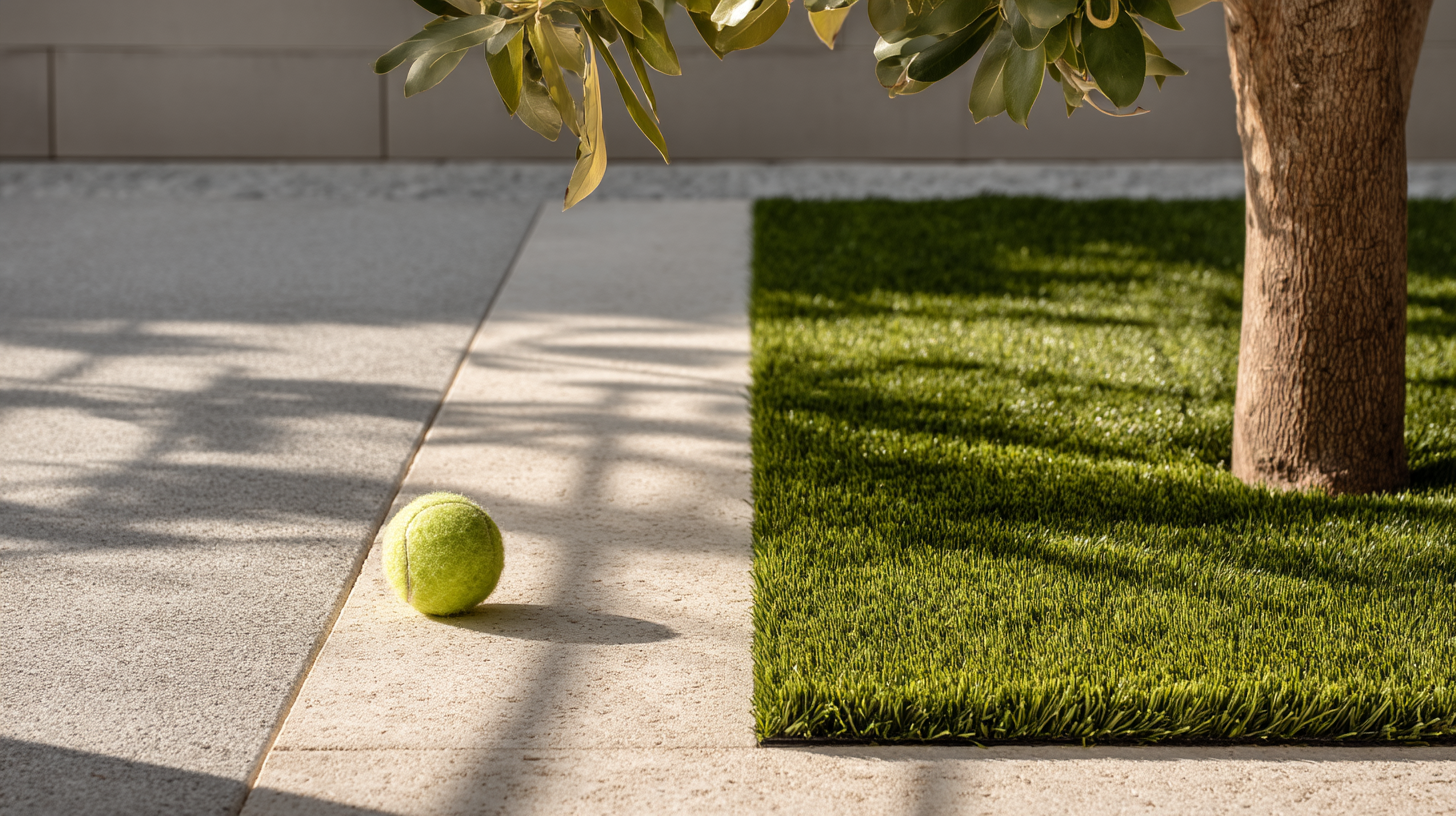
Backyards designed around pets are increasingly valued specifications. The trade-offs, turf vs lawn, paver gaps that don't catch claws, drainage that handles a high-use pet zone, shade strategies for hot climates, the small details that make a yard genuinely pet-friendly, get less attention than they deserve. Most "pet-friendly" backyards are general residential backyards with pets included as afterthought; the specifications can be meaningfully better when pets are the design driver.
This guide walks through the specifications that make pet-first backyards work, from the dominant material decisions to the small details that decide whether the yard is functional or perpetually frustrating.
The Turf Zone
The single most-impactful specification: a defined turf zone sized to the pet's actual use. Three details that matter.
Sizing
Most pet turf zones are too large. The typical residential dog needs a substantially smaller dedicated turf area than buyers usually install, often 200-400 square feet for a single medium-large dog, scaled appropriately for multiple dogs or smaller dogs.
Larger turf zones cost more, drain less efficiently in concentrated use, and read less integrated with the rest of the backyard. Smaller defined zones often work better.
Pile and density
For pet zones specifically, the spec is short to medium pile (1¼ to 1¾ inches) at high density (60+ ounces per square yard). Tall lush-pile turf (the showy 2½ inch turf) lays flat under repeated pet traffic within months. The turf collection carries Meadow Green Pet Turf and similar pile-density specifications. See our pet turf buyer's guide for the full spec discussion.
Drainage and infill
Pet turf demands a specific drainage system: 3-4 inches of compacted ¼-inch crushed stone base, perforated turf backing, and antimicrobial zeolite infill (rather than crumb rubber). The infill specifically handles ammonia compounds from urine; without it, pet turf can develop persistent odor over years.
The Paver Surrounds
The hardscape around the turf zone matters as much as the turf itself. Specifications that work well:
Paver gap width
Most paver installations specify joint widths between 1/8 and 1/2 inch, appropriate for adult human feet but problematic for dog claws. Joints wider than 3/8 inch can catch dog claws during running movement; the result is occasionally torn nails and almost-always cautious dog behavior on the surface.
Pet-first specifications use tight joints, 1/16 to 1/8 inch. That don't catch claws. The dog moves freely; the human eye still reads as an intentional joint pattern.
Paver material
Porcelain pavers are the strongest pet-first material. The smooth surface doesn't catch claws, the dimensional precision allows tight joints, and the cleaning resistance handles muddy paws and the occasional pet accident without staining. Natural stone works well too with proper sealing maintenance.
Concrete pavers are functional but show grease and pet stains over years; less premium choice for high pet exposure.
Heat reflectance
Light-tone pavers run cooler than dark in midday sun. For pet-first backyards in hot climates, light cream or warm taupe colorways stay barefoot-and-paw-friendly through more of the day. We cover the heat physics in our heat reflectance guide.
The Borders Between Turf and Pavers
Where turf meets hardscape is where most pet-first installations succeed or fail. Three approaches that work well.
Soldier-course paver edge
A single course of pavers laid perpendicular to the field, separating the turf from the broader paver field. Reads as deliberate transition; provides visible edge for the turf to terminate against; handles moving puppy/dog claws better than soft transitions.
Stone coping-style edge
A precast or cut-stone edge piece (typically 4-6 inches wide) defining the turf zone. Provides architectural punctuation, holds the turf tightly to its zone, and provides a clean visual that the rest of the yard reads against.
Drainage gravel buffer
A 4-6 inch buffer of decorative drainage gravel between turf and pavers. Provides drainage at the boundary, reads as deliberate landscape element, and prevents turf-into-paver migration over years.
Shade Strategy
Hot-climate pet-first backyards need shade strategy that works through the hottest part of the day. The pet's body temperature regulates less effectively than the human's; shade is genuinely a comfort and safety specification, not just preference.
Mature trees
The strongest shade source. Established oaks, elms, sycamores, or appropriate-to-climate species provide canopy across substantial yard areas. New planting is the long-horizon investment; existing mature trees are an immediate value add. Sacramento and similar mature-tree markets reward properties with established canopy.
Pergola or shade structure
A built shade structure provides predictable shade in a defined zone, typically the area where pets and humans gather. Proper specifications: open lattice or louvered roof for partial light filtering, integrated lighting for evening use, structural sufficient for shade material attachments.
Shade sails
Tensioned-fabric shade sails provide partial shade in flexible patterns. Less permanent than pergolas, more flexible for adjusting based on sun direction. The fabric typically lasts 5-10 years before replacement.
Plant selection that creates shade pockets
Strategic planting of mid-height shrubs and small ornamental trees creates "shade pockets" where pets can find midday relief. Mediterranean-modern planting palettes (olive trees, rosemary, lavender) provide both filtered shade and the drought-tolerant water management that hot climates need.
Drainage and Water
Pet-heavy backyards generate water-related considerations beyond what general residential needs.
Yard-wide drainage grading
The yard should grade away from the house by minimum 1% slope. The grading routes water, from rain, irrigation, hose use, pet rinsing, to drainage exit points without pooling.
Dedicated dog rinse station
A small dedicated zone with a wall-mounted hose, drainage gravel, and possibly a hand-held sprayer for dog rinsing. Particularly valuable in muddy climates and for households with large or active dogs. The rinse station uses hardscape rather than turf as substrate.
Water bowl placement
Outdoor water bowls should be placed in shaded zones (water gets warm in direct sun) and on hardscape rather than turf (water spillage saturates turf base over time).
Plant Selection
Pet-first plant palettes have specific exclusions and inclusions.
Avoid (toxic to dogs and cats)
- Sago palm (highly toxic, common in residential)
- Oleander (highly toxic)
- Foxglove and lily of the valley
- Many lily species
- Castor bean and rhubarb
- Some hydrangeas in significant quantity
Pet-Safe and Aesthetic
- Lavender, rosemary, sage (Mediterranean palette favorites)
- Olive trees (canopy and Mediterranean architecture)
- Ornamental grasses (most species safe)
- Succulents and most cacti (mind the spines but safe)
- Most ferns
- Camellias, magnolias, japanese maples
Verify any specific planting against ASPCA toxic-plant database for the household's specific pets before final specification.
Fencing and Boundaries
The fence specification matters meaningfully for pet-first backyards.
- Minimum 6 feet for medium-large dogs (4 feet is often insufficient)
- Solid bottom (no gaps for digging escape) or buried perimeter
- Material: wood, composite, or specifically pet-resistant metal. Avoid: chain link (some dogs climb, all dogs can stress against it)
- Gate hardware that closes positively and latches automatically
The fence is essentially a pet-safety specification before it's an aesthetic one. Premium specifications coordinate the fence with the rest of the architecture (matching wood tones, complementary geometry) without compromising the security function.
Lighting
Backyard lighting affects pet usability:
- Path lighting along walkways (so pets can navigate the yard at night)
- Step and stair lights (preventing missed steps that could injure pets)
- Avoid: aggressive bright security lighting (stresses pets and humans both)
- Warm color temperature (2700K-3000K) throughout, dimmable
The Indoor-Outdoor Transition
Where the house meets the backyard, transitions matter.
- Mud-handling area at the door (entry tile or stone, not carpet) for paw-cleaning
- Adjacent storage for towels and pet supplies
- Doggie door or pet-access door if appropriate, sized for the specific pet, weather-rated
- Threshold detail (see thresholds and sills) that handles the dirt and moisture transition
Where to Start
For backyard projects with pets as the design driver, the strongest starting moves: define the turf zone and size it appropriately (not too big), specify tight joints in the surrounding hardscape, plan the shade strategy from the start, choose pet-safe plants throughout, and integrate the fence specification with the architectural language. Browse turf, turf accessories, porcelain pavers, natural stone pavers, and decorative gravel for the surface materials. For broader pet-context, our pet turf buyer's guide; for outdoor design context, 2026 outdoor living trends.
When the choice is made, browse turf and size the order with the turf calculator.