Buyer Guide
Heat Reflectance: Cool Surfaces for Hot Climates
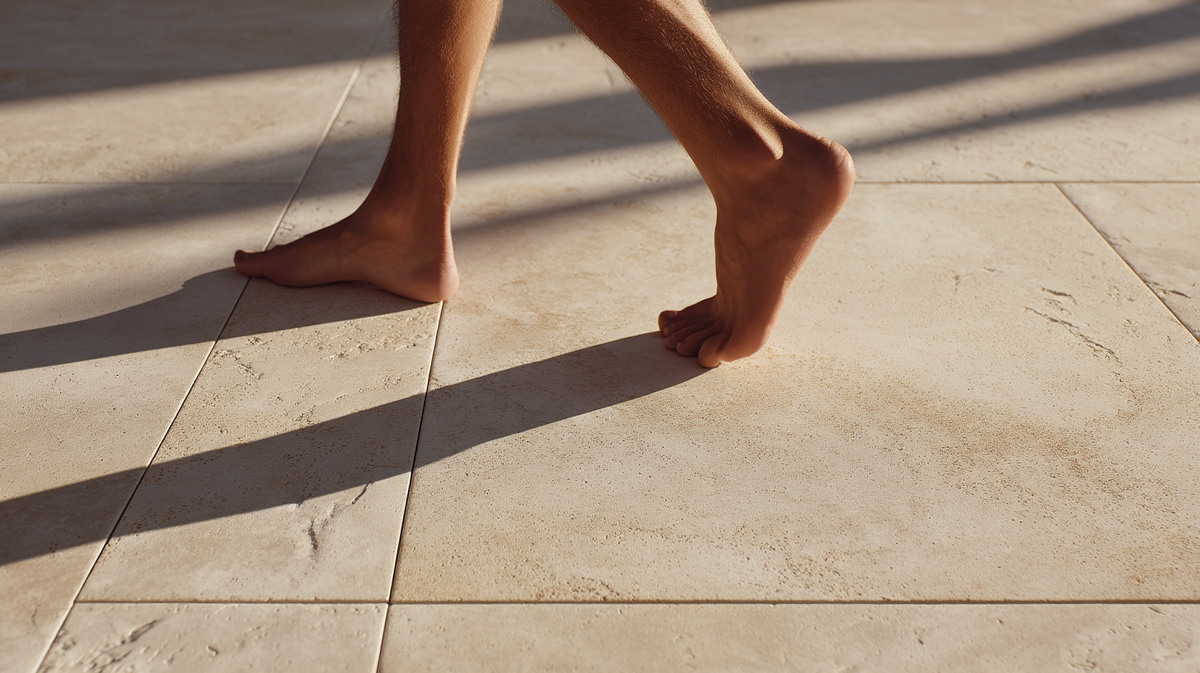
Anyone who's stood barefoot on dark slate at 2pm in July knows that outdoor surfaces don't behave the same in the sun. A travertine pool deck reads cool and inviting. A black porcelain deck of identical thickness, in identical sun, reads "you can't stand here." The physics behind that gap, why one surface stays comfortable and another bakes, is straightforward, and the implications for material specification in hot climates are larger than most homeowners account for.
This guide covers the heat-reflectance math for outdoor surfaces, the specific material choices that earn comfortable hot-climate specifications, and the small details that change a hot-climate outdoor space from theoretically usable to actually usable.
The Physics, Briefly
Sunlight hitting an outdoor surface has three possible fates: reflection (the energy bounces back to the sky), absorption (the energy enters the material as heat), and transmission (the energy passes through, irrelevant for opaque pavers). What determines the split is the surface's albedo, the fraction of incident solar radiation that the material reflects.
White and light-colored surfaces have high albedo (0.5 to 0.85). They reflect most incident light, absorb little, and stay cool. Dark surfaces have low albedo (0.05 to 0.20). They absorb most incident light, store it as heat, and radiate that heat as infrared. The temperature difference between high-albedo and low-albedo surfaces in the same midday sun can exceed 50°F.
For pool decks, walkways, and outdoor surfaces walked barefoot, the comfort difference is dramatic. A light cream travertine deck might run 95°F at midday in 95°F ambient air. A dark slate deck nearby might run 145°F. The travertine is comfortable barefoot. The slate is not.
Material Categories by Heat Behavior
Cool-running materials (high albedo, low heat absorption)
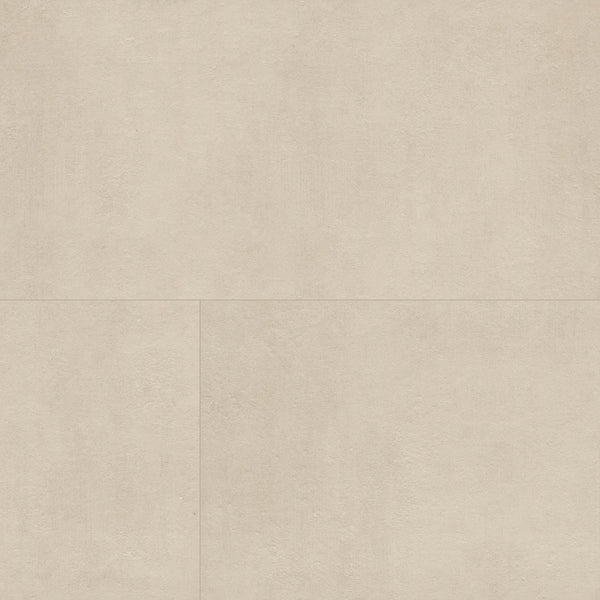
- Light-tone porcelain (cream, ivory, warm white), see porcelain pavers
- Cream and ivory travertine (honed and tumbled), natural stone pavers
- Light limestone
- White marble (limited outdoor use)
These materials can run 15 to 25°F below ambient air at midday in direct sun. Comfortable barefoot through most of the day in most hot climates.
Moderate-running materials
- Warm-tone porcelain (warm graphite, warm taupe)
- Walnut and warm-tan travertine
- Medium-tone bluestone
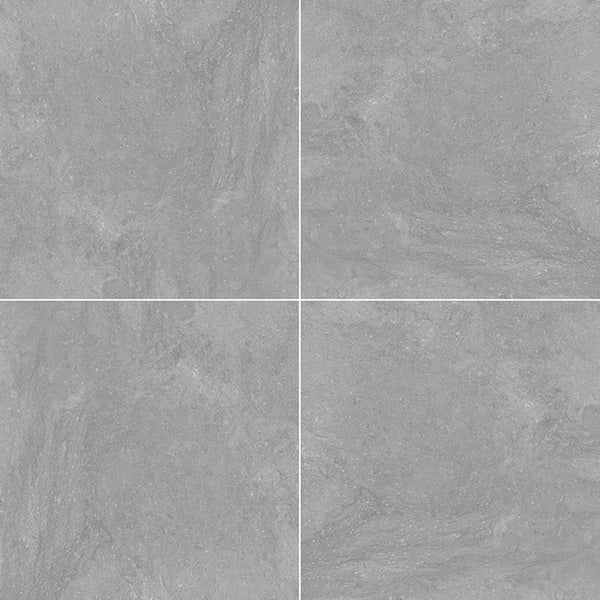
- Mid-grey natural stone
These materials run roughly equal to ambient air. Comfortable barefoot through morning and evening, warm but tolerable through midday.
Hot-running materials
- Dark slate
- Black granite and dark granite
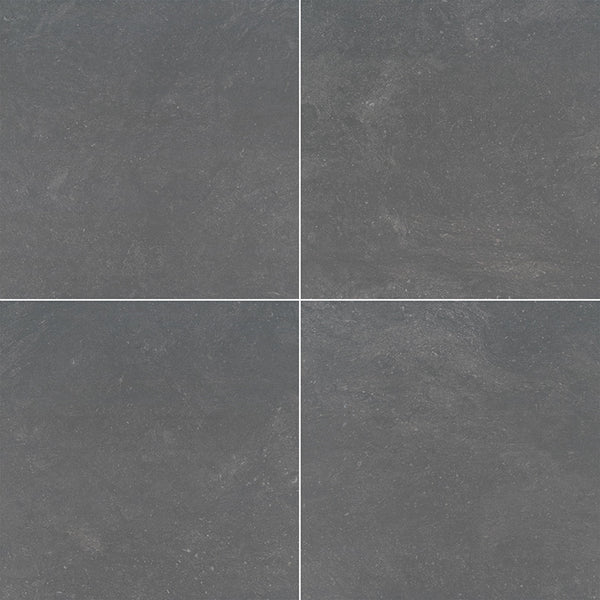
- Dark porcelain (black, very dark grey)
- Dark bluestone
- Dark stained concrete
These materials run 20 to 40°F above ambient air at midday. In hot climates, they become walking surfaces only when shaded or rinsed.
Beyond Color: The Texture and Density Question
Color isn't the only factor. Two other variables affect heat behavior.
Surface density. Dense materials (porcelain, granite) absorb heat slowly and release it slowly. Less dense materials (travertine, sandstone, limestone) absorb and release heat faster. This means dense materials in hot climates can stay hot well into the evening; less dense materials cool more quickly after the sun moves off.
The implication: a dark-color porcelain deck in a hot climate is doubly punishing, high heat absorption from the dark color, slow heat release from the high density. By 8pm, when the surface should be cool, it's still uncomfortable. Travertine of similar dark tone would have cooled faster.
Surface texture. Highly textured surfaces (cleft, sandblasted, tumbled) trap small air pockets at the surface, which slightly insulates the foot from the underlying material temperature. Smooth surfaces transfer heat directly. The difference is small but real, perhaps 5°F at midday between identical-color smooth and textured pavers.
Pool Deck Specifications by Climate
Cool to moderate climates (Pacific Northwest, Northeast, mountain elevations)
Heat reflectance is rarely the binding constraint. Material color choice is essentially aesthetic, dark stone, light stone, all comfortable in available summer heat. Specify based on architectural intent.
Warm climates (most temperate zones)
Light to medium-tone materials are comfortable. Dark stone is acceptable for shaded portions but uncomfortable in unshaded zones during peak summer afternoons.
Hot climates (Southwest US, Texas, Southeast humid summers, Mediterranean equivalents)
Light-tone porcelain or light-tone natural stone is the right answer for unshaded pool decks. Cream travertine is the classical Mediterranean choice; light Arterra porcelain is the contemporary equivalent. Avoid: dark stone in unshaded pool deck applications. Even if the visual preference is dark, the deck won't be usable in summer.
Extreme hot climates (Phoenix, Las Vegas, Death Valley equivalents)
Even light materials run hot in midday summer sun. The full-system response: light materials, plus afternoon shade (sails, pergolas, dense canopy), plus rinse-and-cool routine for the few hours that justify outdoor use. The material spec is part of a larger climate-management strategy.
The Underrated Variable: Surface Reflectivity Affects Adjacent Surfaces
Light-colored pool deck doesn't just stay cool itself. It reflects light back into the pool and surrounding plantings, creating a cooler microenvironment than dark deck would. This is one reason traditional Mediterranean pool decks (white-cream stone, white-painted walls, light-colored cabinetry) feel measurably cooler than identical-architecture pool decks built in dark materials. The radiant heat math compounds across the whole space.
Dark-colored decks do the opposite: they absorb solar heat and re-radiate it as infrared into the air around them, raising ambient temperature in the pool zone. The pool itself heats faster. The chairs adjacent to the deck heat up. The full microenvironment is warmer.
Indoor Implications
The same heat-reflectance math applies indoors, particularly to surfaces that get direct sun through south or west windows.
Dark-floor rooms with heavy direct sun exposure heat faster and cool slower than light-floor equivalents. In hot-climate residential, this is a meaningful HVAC consideration, dark floors in sun-exposed rooms increase cooling loads. Light-floor or mid-tone alternatives reduce that load.
For interior specifications in hot climates with significant direct-sun exposure, consider light-tone hardwood (white oak natural-finished), light wide-plank LVT (Bayhill Blonde Nove, see our Nove curator guide), or honed cream marble. Dark interior floors work fine but ask more from the cooling system.
Surface Treatment That Helps in Hot Climates
Three specifications that meaningfully improve hot-climate outdoor surface comfort:
Lighter colorways within whatever material family you're committed to. If the project is committed to porcelain pavers, the cream and warm-taupe Arterra colorways run dramatically cooler than the warm graphite and dark colorways.
Sandblasted or textured finishes. The surface relief traps air; the foot reads several degrees cooler than identical smooth surfaces.
Pedestal-set installation. The air gap below the paver provides thermal break from the sub-base and allows heat dissipation. Pedestal-set decks run measurably cooler than mortar-set decks of identical material in identical sun. See our pedestal vs mortar pool deck guide.
The Watering Cooling Trick
Brief surface rinse during peak afternoon heat, 30 to 60 seconds of light spray from a hose, drops surface temperature 20 to 30°F immediately and keeps the deck comfortable for the next 30 to 60 minutes. The water evaporates and the material cools through evaporative cooling.
This isn't a maintenance routine; it's a use-pattern adaptation that turns marginally-comfortable hot-climate decks into reliably-comfortable ones. Some hot-climate residential installations include automated misters that cycle briefly during peak heat.
Heat Behavior of Turf
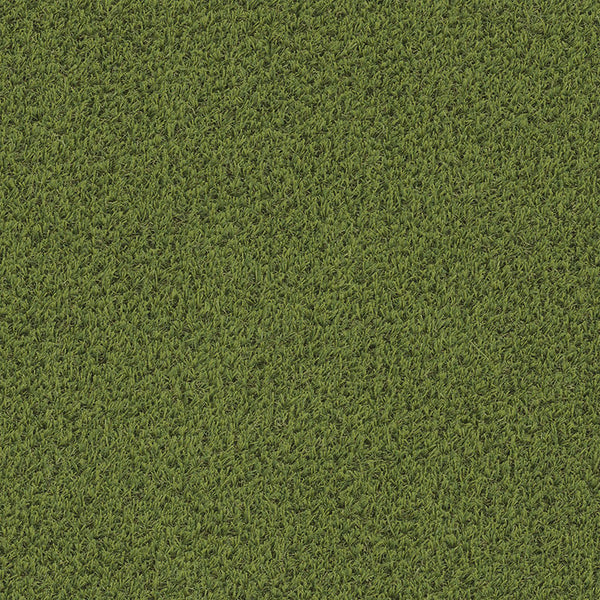
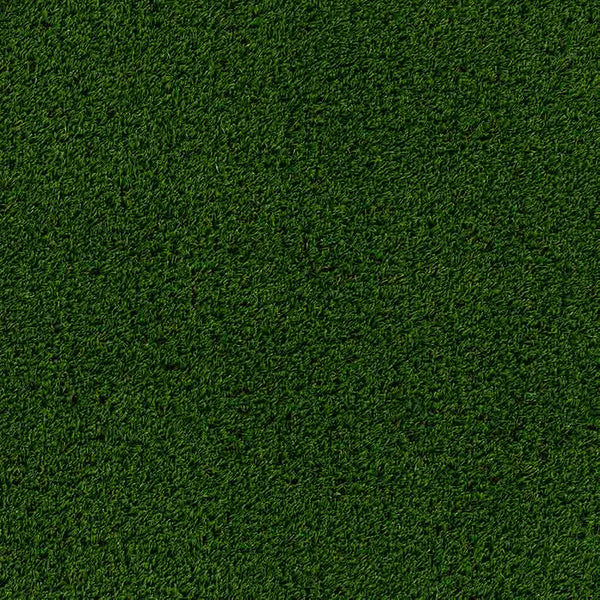
One footnote worth attention: synthetic turf runs hotter than natural lawn in midday sun, sometimes 20 to 30°F above ambient. The factor matters for pet-friendly hot-climate backyards. Lighter-tone turf colorways (warm green-and-tan blends rather than deep emerald) run measurably cooler. The turf collection carries the lighter blends; see our pet turf guide for the full pet-comfort discussion.
Where to Start
For hot-climate outdoor specifications, start with the climate constraint and work backward to color and material. Light-tone porcelain pavers, cream-tone natural stone, and Mediterranean-palette plantings are the proven combination. Browse porcelain pavers, natural stone pavers, and copings for the surface materials, and our pool deck trends 2026 and 2026 outdoor living trends pieces for the broader approach. For the relationship between floor reflectivity and indoor comfort, our light, surface, and cortisol guide.
Next step: compare porcelain pavers at Citadel Spaces, then use the flooring and tile coverage calculator to work out how much to order.
From the guide