Buyer Guide
Pet Turf, Honestly: A Backyard Material That Earns Its Place
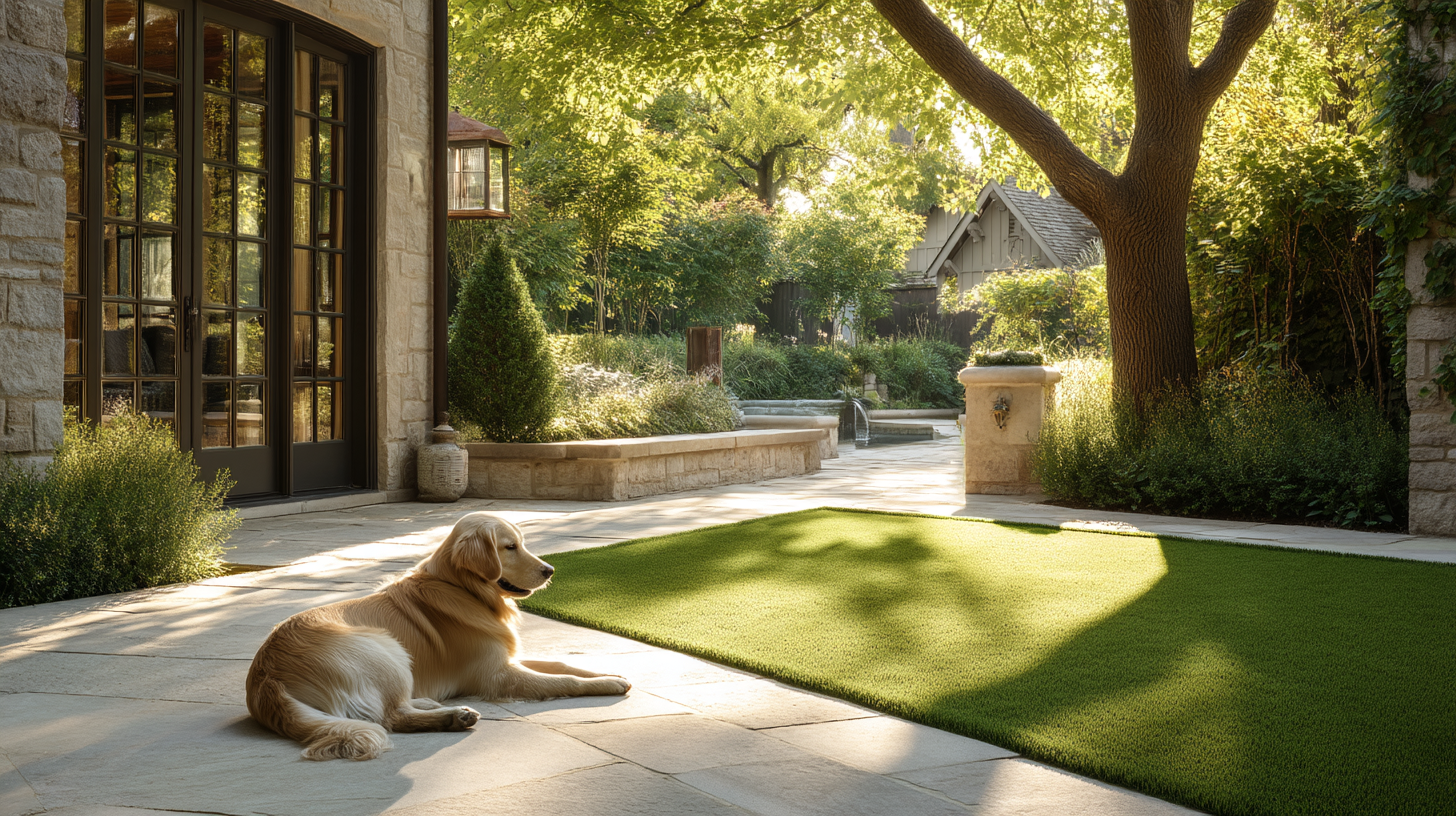
Pet turf is the rare backyard material that gets oversold and undersold at the same time. Oversold because the marketing leans heavily on "looks just like real grass" when no honest installation does. Undersold because the actual case for it, drainage that handles a pet's full lifecycle, a surface that doesn't turn to mud after rain, a paw-friendly pile that stays cooler than concrete, gets buried under aesthetic claims that miss the point.
This guide is honest about what pet turf does well, what it doesn't, and where it belongs in a considered backyard. We're not selling you a perfect lawn replacement. We're explaining the material decisions that separate a turf zone you'll love for a decade from one you'll regret in two seasons.
What Pet Turf Actually Does Well
The case for pet turf rests on three specific behaviors that real grass can't match in a high-use backyard.
Drainage. Quality pet turf is built on a perforated backing, typically polyurethane with a regular grid of drainage holes. That lets liquid pass straight through to the substrate below. Combined with a properly graded base of crushed stone and sand, urine drains in seconds rather than puddling. The lawn doesn't develop yellow burn spots because the nitrogen never sits on the surface long enough to react. Real grass under a frequent-pet load loses this fight quickly.
No mud. The most underrated benefit. After rain, after sprinkler overspray, after the dog comes in from running. There is no mud, because the substrate is engineered drainage stone, not soil. Paws come back into the house cleaner. The transition between turf and patio doesn't track grit. For households with light-colored interior flooring, this is not a small thing.
Predictable surface. The pile stays consistent. There are no bare patches where the dog has dug. There are no dead zones from foot traffic in the same line. The surface reads even, season after season, which makes the rest of the backyard, pavers, plantings, copings, read more intentional by contrast.
What It Doesn't Do (Be Honest)
Pet turf doesn't smell like grass after a rain. It doesn't grow. It doesn't soften a hot afternoon the way a deep healthy lawn does, and on direct midday sun it runs warmer than real grass, a paw concern in hot climates that we'll cover below. It also doesn't last forever; quality residential pet turf has a 12 to 18 year service life depending on traffic, sun exposure, and rinse routine.
If you're trying to recreate a country lawn for a five-pound dog who steps outside twice a day, you don't need turf. If you're managing a high-use backyard with a pet that lives outside half the day, the math changes.
Pile Height, Density, and Why Both Matter
Pile height is the length of the synthetic blade, how tall the grass reads. Density is how many of those blades are stitched per square inch.
For pets specifically, the right combination is shorter pile and higher density. A pile in the 1¼-inch to 1¾-inch range is short enough to recover quickly from heavy paw pressure and long enough to read like grass at viewing distance. Density above 60 ounces per square yard packs the blades tightly enough that the surface stays even under repeated traffic, pet runs, play patterns, the same path back to the door.
Tall, low-density pile (the showy "looks like a meadow" 2½-inch turf) lays flat under pet traffic within months. It looks beautiful in photos and tired in practice. Browse the full turf collection for the residential pile heights that hold up.
Drainage Math
The turf is only half of the drainage system. The base under it does the actual hydraulic work. A correctly built pet turf installation uses a 3-to-4-inch base of compacted crushed stone (typically ¼-inch minus or class II road base), topped with a thin sand leveling layer, with the entire pad graded at a minimum 1% slope away from the house and toward a drainage outlet, a French drain, a deck drain, or a permeable border into a planting bed.
For high-use pet zones, an antimicrobial infill, typically a zeolite-based granule rather than crumb rubber, sits between the blades and absorbs ammonia compounds before they release as odor. The infill needs occasional refresh (every 3-5 years in heavy use) but is the difference between a pet turf zone that smells fine and one that doesn't.
Heat Behavior
Synthetic turf runs warmer than real grass under direct sun. On a 95-degree day in full midday sun, a darker pile can reach surface temperatures uncomfortable for paws. Three mitigations make this manageable: choose a lighter-toned colorway (warm green-and-tan blend rather than deep emerald), provide shade during the hottest hours of the day (a sail, a tree, a pergola), and rinse the pile briefly during peak heat, water cools the blades quickly. We go deeper on heat reflectance for outdoor surfaces in our heat reflectance guide.
For households with shade through the hottest part of the day, heat is a non-issue. For full-sun yards in hot climates, plan around it from the start.
Where Pet Turf Belongs in a Backyard System
The mistake most pet turf installations make is treating turf as a wall-to-wall lawn replacement. The better approach: turf as a defined zone within a hardscape system, with intentional borders and meaningful transitions.
A typical considered installation pairs a turf zone, sized to the pet's actual use, not the yard's full footprint, with natural stone paver or porcelain paver surrounds, a coping or soldier-course edge between turf and patio, and a drainage gravel border where turf meets a fence or planting bed. The turf reads as a deliberate element, not as a synthetic carpet thrown over the whole yard. We cover the integrated approach in our pet-first backyard design guide.
Cleaning and Maintenance Reality
The honest maintenance schedule for pet turf is small, regular rinsing, once a week in moderate use, every few days in heavy use, with a hose and a perimeter spray. Solid waste is picked up the same way it would be from a real lawn. Every several months, an enzyme-based turf cleaner handles deeper rinse. That's the routine.
What pet turf doesn't need: mowing, watering, fertilizing, weed treatment, edging, seeding, aeration. The labor that real grass demands is gone. What replaces it is a rinse routine. For most owners, that's a meaningful trade in the right direction.
Choosing Between the Specific Lines
The Meadow Green Pet Turf in our catalog is purpose-built for this use case, short-medium pile, high density, perforated backing, lighter-tone blade blend that runs cooler in sun. Viridian and Verdura sit nearby as broader-use turf options that handle pets well in moderate-traffic households. Browse the full turf collection to see the pile heights side by side, and pair with turf accessories for the infill, seam tape, and edge treatments that make the install read clean.
For a complete read on turf options across the full pile-height range, putting greens, play areas, lawn-replacement grades, see our complete turf buyer's guide.
Where to Start
If you're sizing a pet turf zone for a real backyard, the first decision is the boundary, where does turf belong, and where do pavers, plantings, and gravel take over? That decision shapes everything else: the drainage plan, the size of the install, the way the rest of the backyard reads against the turf. Browse the turf collection alongside the natural stone pavers and porcelain paver libraries, the system, not the surface alone, is what makes a pet-first backyard read considered rather than improvised.
Next step: compare turf at Citadel Spaces, then use the turf calculator to work out how much to order.