Bath
Quartz vs Marble Vanity Tops: Which Belongs in Your Bathroom
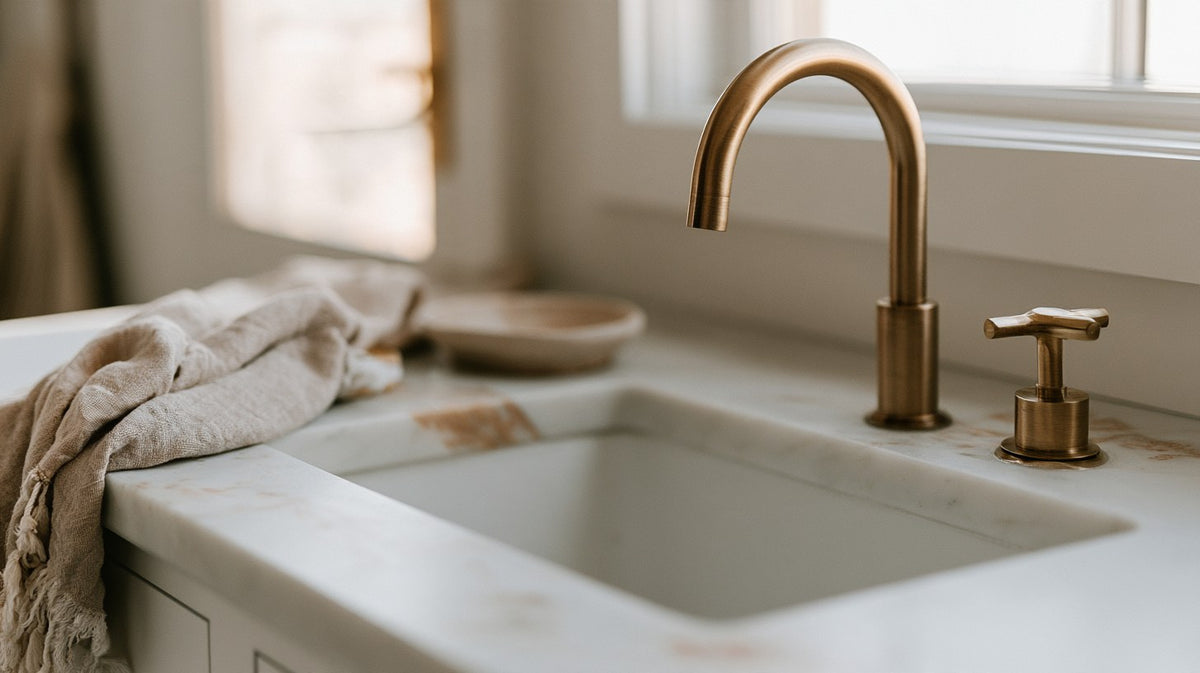
Quartz vs marble vanity tops comes down to one question: do you want a surface that asks nothing of you, or one that changes with use and asks for a little care? Quartz is an engineered surface that resists stains and never needs sealing. Marble is natural stone with depth no engineered surface fully copies, and it reacts to acids and needs periodic sealing. Both belong in bathrooms. This guide lays out the differences so you can choose with open eyes.
What each material is
Quartz is made from crushed natural quartz bound with resin and pigment, pressed into slabs. Because it is engineered, the color and veining are controlled, the surface is non-porous, and one slab looks much like the next.
Marble is a natural metamorphic stone, quarried in blocks and cut into slabs. Every slab is different. It is softer than quartz and porous, and because it is a calcium-based stone it reacts to acids.
Side by side
| Quartz | Marble | |
|---|---|---|
| Staining | Resists stains; non-porous | Porous; can absorb makeup, oils and dyes if unsealed |
| Etching | Not affected by mild acids | Acids such as some cleaners, toothpaste and hair products can leave dull marks |
| Sealing | Never needed | Needed periodically |
| Look | Consistent veining, controlled color | Unique veining and natural depth in every slab |
| Heat | Avoid hot tools resting directly on the surface | Tolerates heat well |
| Aging | Stays close to new | Develops a softer, lived-in patina |
The bathroom is a special case
A kitchen counter sees wine, lemon and tomato; a bathroom vanity sees toothpaste, hair dye, perfume, nail polish remover, and cleaners. Several of those are acidic or strongly pigmented, and they sit on the counter for hours. That is why the bathroom is where the difference between quartz and marble is felt most.
- If the vanity is shared, busy, or used by children, quartz is the calmer choice. Spills wipe away and nothing needs sealing.
- If the vanity is in a guest bath or powder room, marble's lighter use makes its care easy to keep up with, and it brings natural stone to a small room where it will be noticed.
- If you love marble and it is a primary bath, choose a honed finish, which shows etching less than polished, and keep a tray for bottles.
Integrated tops: the simplest route
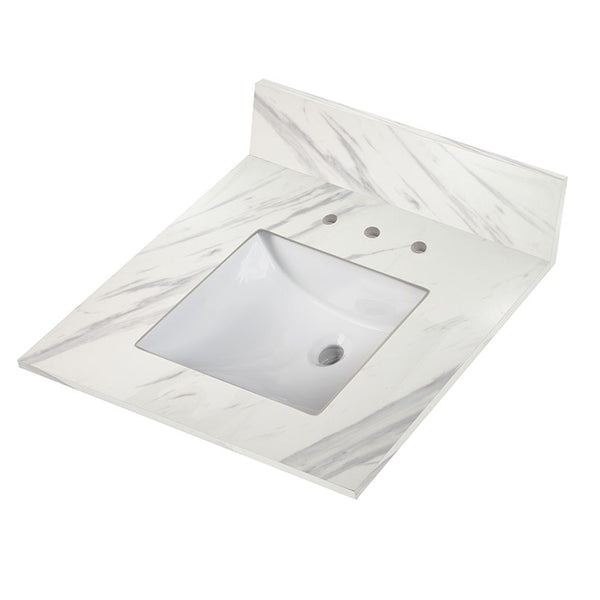
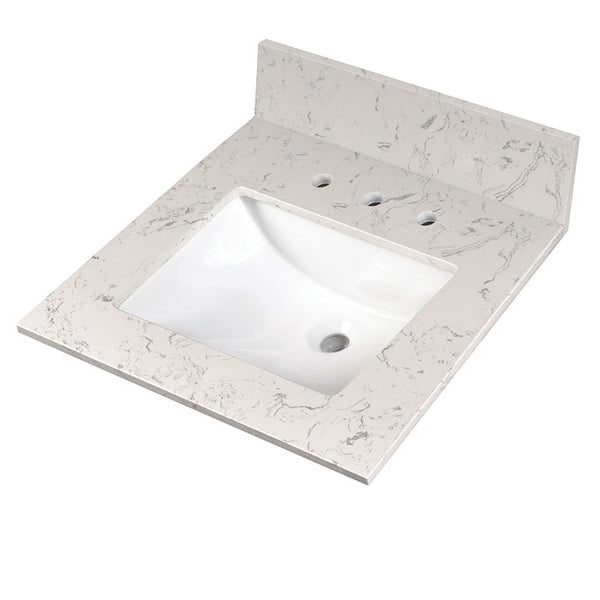
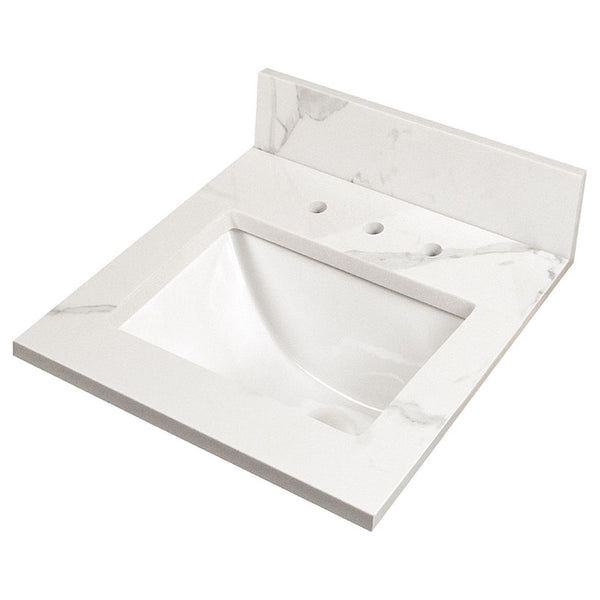
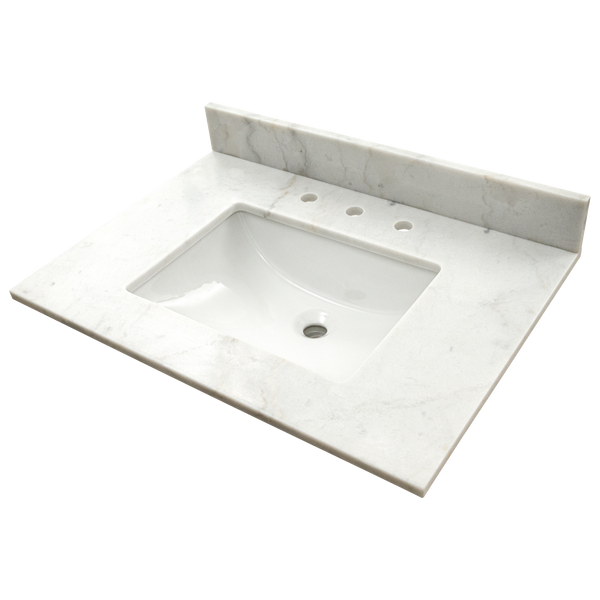
A vanity top can be fabricated from a full slab, or bought as a ready-made top with the basin already formed into it. Our range of vanity tops is the second kind: MSI tops with an integrated bowl, pre-drilled for faucet hardware and ready to mount, 2 cm thick. Most are engineered marble, made from marble with resin, in looks from soft whites to marble-style veining; MSI Arabesque Carrara is natural marble. They come 22 inches deep in 31, 37, 49 and 61 inch widths, with the 61 inch size offered in single-bowl and double-bowl versions in many colors. An integrated top has no seam between bowl and counter for grime to collect in, which is part of why it is easy to live with. For care, follow MSI's guidance for the specific top.
Matching the top to the base
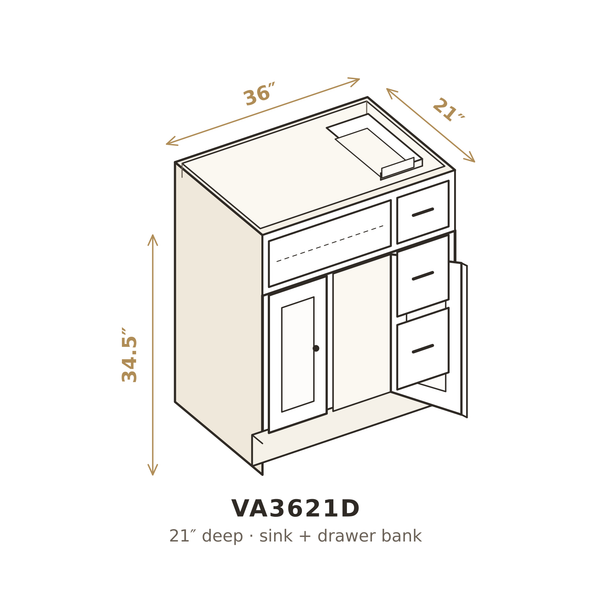
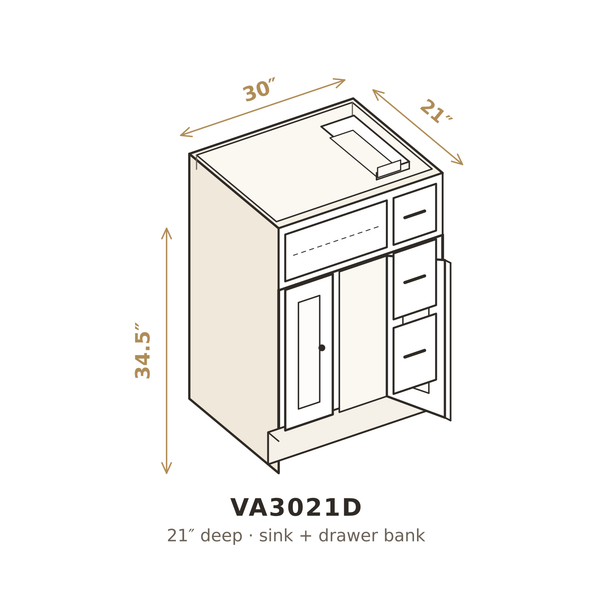
- Choose the vanity base first. Its width sets the top width. Our vanity bases run from 12 to 60 inches wide and 21 inches deep.
- Order the top about one inch wider than the base, so it overhangs slightly at each side: a 31 inch top on a 30 inch base, 37 on 36, 49 on 48 and 61 on 60. Our tops are 22 inches deep over a 21 inch deep base. Choose the number of bowls to suit the base.
- Check the faucet drilling. Make sure the pre-drilled holes suit the faucet you plan to use, whether single hole or widespread.
- Plan the backsplash. Many installations add a matching or tiled backsplash at the wall to keep water off the drywall.
Cost
Price depends more on the specific stone and the fabrication than on the category. A ready-made integrated top usually costs less than a custom-fabricated slab top because there is no templating or cut-out work. A rare marble fabricated from a full slab can cost far more than either. Compare the finished, installed cost, not the price of the material alone.
Caring for each
Quartz: mild soap and water, a soft cloth, and no abrasive pads. Keep hot styling tools on a mat.
Engineered marble tops: follow the manufacturer's care guidance for the specific top; a soft cloth and a mild, non-abrasive cleaner are the usual starting point.
Marble: a pH-neutral stone cleaner, wiping spills promptly, a periodic sealer, and trays under bottles and jars. Etch marks on honed marble can often be blended back by a stone professional.
Looks up close
From across the room, a good marble-look engineered top and real marble can read alike. Up close, the difference is depth. Marble has a slight translucency, so light seems to sit a little way into the surface, and its veins fade in and out as they travel. Engineered surfaces are more even: the veining is designed, and the surface reflects light from the top. Some people prefer that calm evenness, especially in a small bathroom where a bold slab can overwhelm; others want the life of the natural stone. Seeing a large sample under your own bathroom light is the only reliable test.
Frequently Asked Questions
Is quartz or marble better for a bathroom vanity?
For a busy bathroom, quartz is usually the easier choice because it resists stains and never needs sealing. Marble suits lighter-use bathrooms and people who value natural stone's character and are happy to care for it.
Does marble stain in a bathroom?
It can. Marble is porous, so pigments and oils can soak in if the surface is not sealed, and acidic products can leave dull etch marks. Sealing and quick wiping reduce both.
Do quartz vanity tops need sealing?
No. Quartz is non-porous, so it does not need a sealer. Clean it with mild soap and water.
What is an integrated vanity top?
It is a vanity top with the sink bowl formed into the same piece, so there is no seam between basin and counter. It usually comes pre-drilled for the faucet and is ready to mount on a vanity base.
How do I choose the right size vanity top?
Choose a top about one inch wider than the vanity base below it, such as a 31 inch top on a 30 inch base, so it overhangs slightly at each side. Choose single or double bowl to suit the base, and confirm the faucet drilling fits the faucet you plan to install.
To take this from reading to ordering, browse vanity tops at Citadel Spaces, and size the order with the countertop and slab calculator.
From the guide
Shop the vanity tops in this guide