Bath & Kitchen
Kitchen Sink Materials: Stainless Steel, Quartz Composite and Fireclay
What is the best kitchen sink material? For most kitchens it is one of three: stainless steel, quartz composite, or fireclay. Stainless steel is the practical workhorse, quartz composite is quiet and comes in solid colors, and fireclay is the classic white farmhouse sink. Each handles heat, knocks, stains and noise differently. This guide compares them and helps you match the sink to how you cook.
Stainless steel
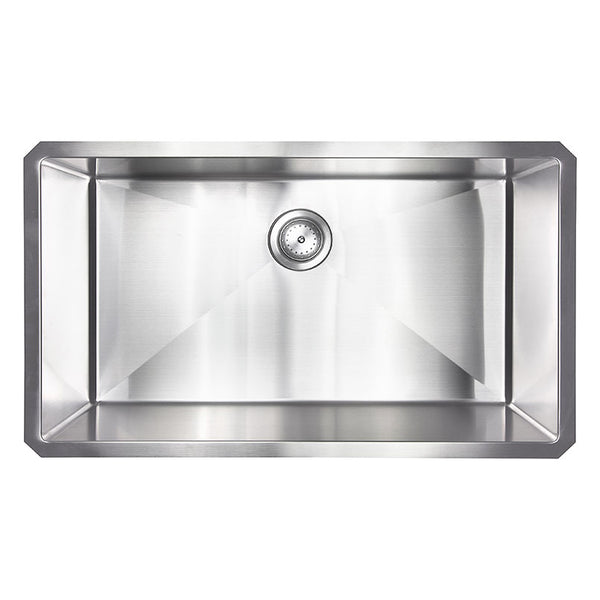
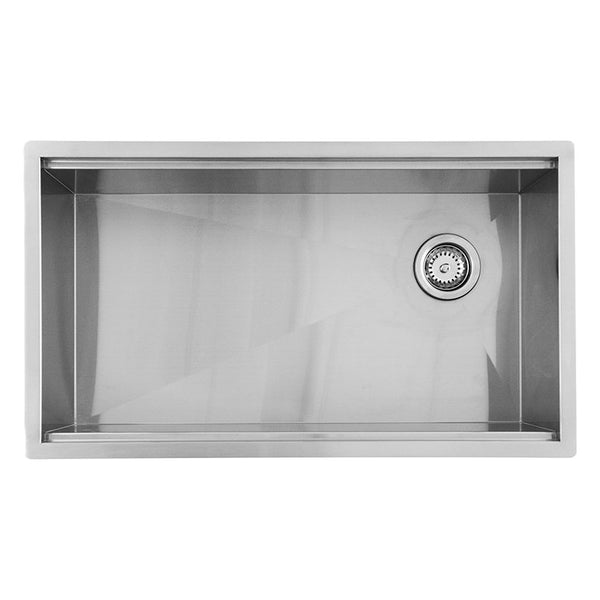
Stainless steel is the most common kitchen sink for good reason: it is durable, light, heat tolerant and easy to clean. Its thickness is measured in gauge, and a lower gauge number means thicker steel. A 16 gauge sink is thicker and more resistant to denting and drumming than an 18 gauge sink. Our range includes handcrafted 16 gauge sinks, including apron-front and workstation models, as well as 18 gauge sinks.
- Strengths: durable, forgiving of dropped pans, heat tolerant, easy to clean.
- Trade-offs: shows water spots and fine scratches; thinner sinks can be noisy without sound pads.
Quartz composite
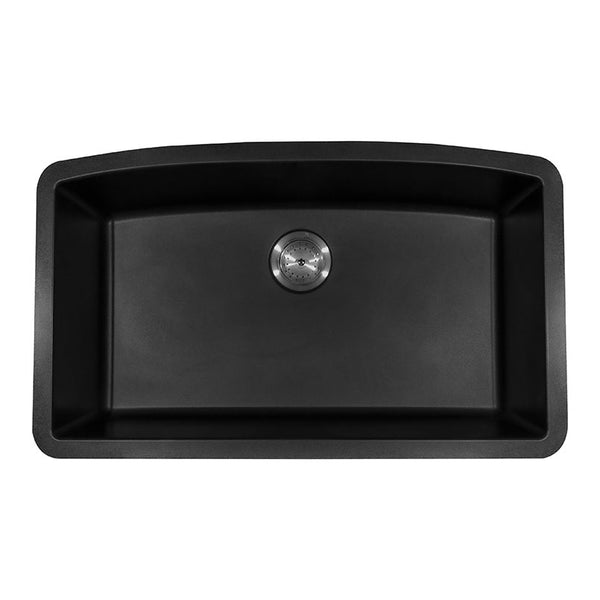
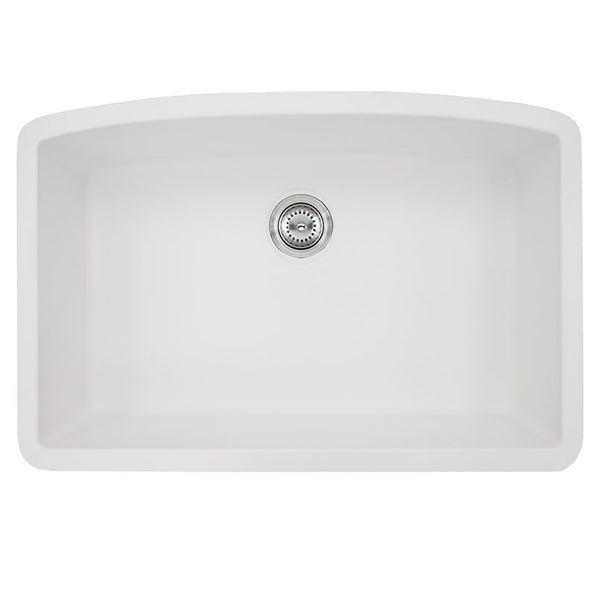
Quartz composite sinks are made from crushed quartz bound with resin, formed into a solid-colored sink. They are dense and quiet, and the color runs through the material. Our composite sinks come in black, gray and white, in single and double bowl sizes.
- Strengths: quiet, solid color that hides water spots, resists scratches and stains well.
- Trade-offs: very hot pans should not sit directly in the bowl; mineral deposits show on dark colors in hard water.
Fireclay
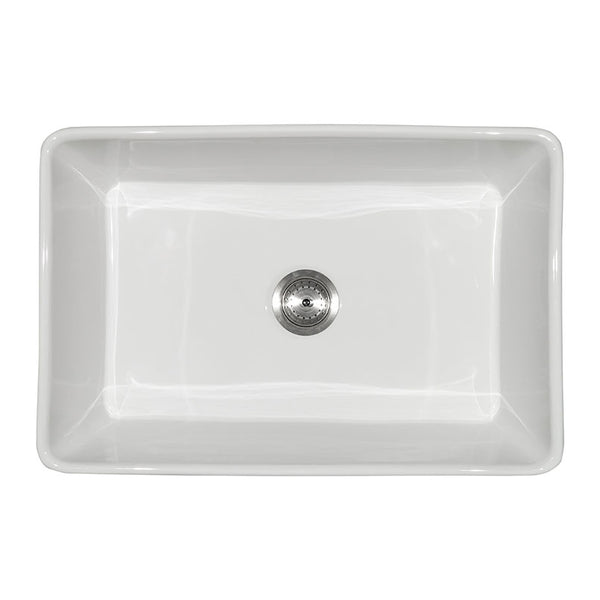
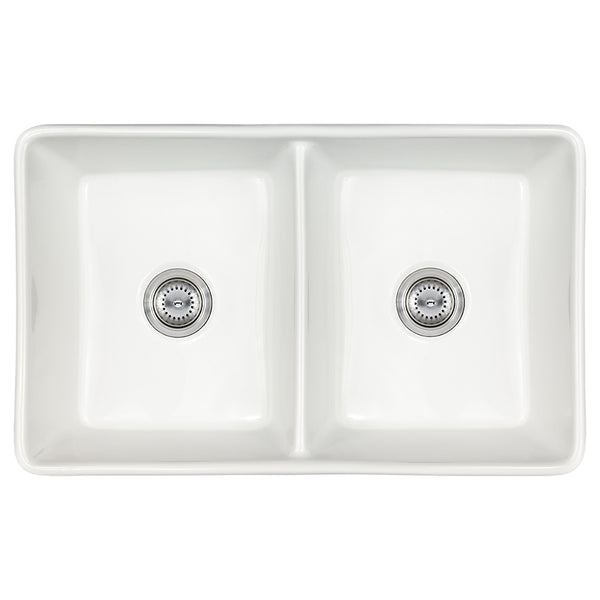
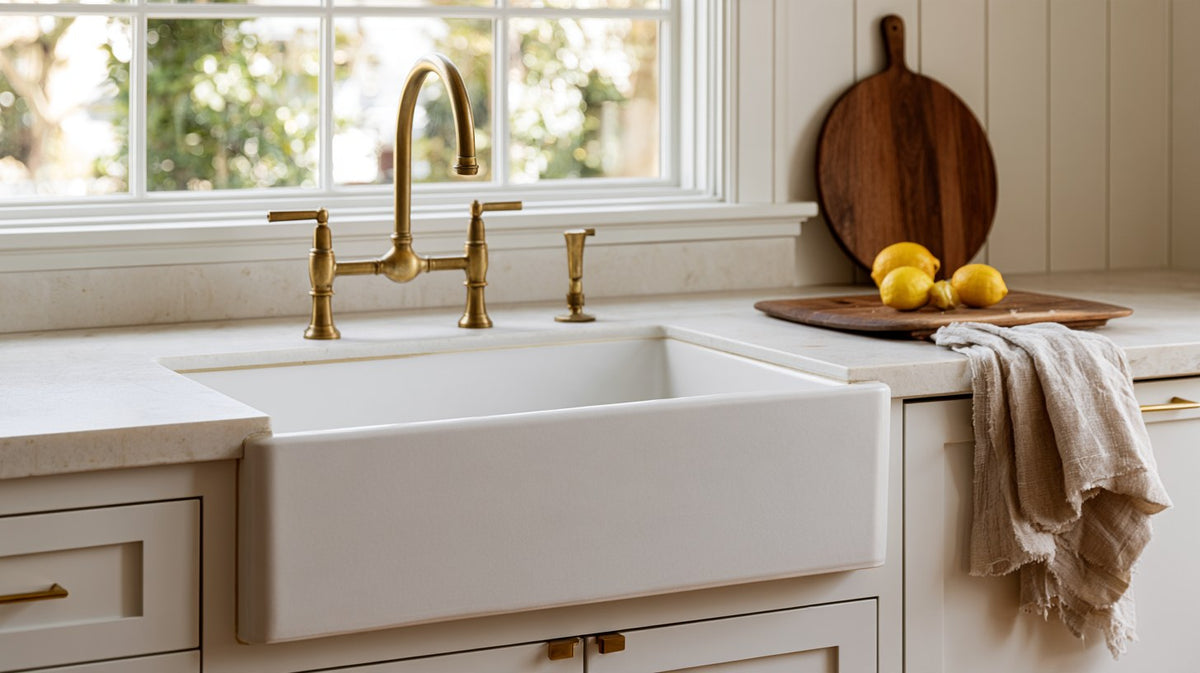
Fireclay sinks are made from clay fired at very high temperature and glazed, producing a hard, glossy surface. They are the classic white farmhouse sink with an exposed front apron. Our fireclay farmhouse sinks come in white, in single and double bowl.
- Strengths: timeless look, glossy surface that resists staining, heavy and solid.
- Trade-offs: heavy, so the cabinet below needs proper support; a hard knock from cast iron can chip the glaze; dishes dropped on it are more likely to break.
Side by side
| Stainless steel | Quartz composite | Fireclay | |
|---|---|---|---|
| Durability | Excellent; dents on thin gauges | Very good | Very good; glaze can chip |
| Noise | Louder; better with sound pads | Quiet | Quiet |
| Heat | Very heat tolerant | Avoid very hot pans in the bowl | Heat tolerant |
| Stains and spots | Shows water spots | Hides spots; mineral marks on dark colors | Glossy glaze resists stains |
| Weight | Light | Medium | Heavy |
| Look | Modern, professional | Solid color, contemporary | Classic farmhouse |
Mounting: undermount, drop-in and apron front
Undermount sinks sit below a stone or quartz counter, so crumbs wipe straight in. Drop-in or overmount sinks rest on top of the counter and suit laminate counters and simpler replacements. Apron-front or farmhouse sinks show their front face below the counter and need a sink base cabinet made for them. Choose the mounting before the cabinet, because it sets the cabinet and the counter cut-out.
Single, double or workstation?
- Single bowl: room for large pans and sheet trays; the most flexible for cooks.
- Double bowl: one side to soak, one side to rinse. A 60/40 split keeps one bowl large enough for big pans.
- Workstation: a single bowl with ledges for boards, racks and colanders that slide across the top.
Matching the sink to the faucet and counter
A sink and faucet work as a pair. Deep bowls suit tall pull-down faucets, which reach every corner and fill large pots. Check the faucet's reach against the bowl so water lands near the drain rather than on the back wall. With an undermount sink, the faucet mounts through the counter, so the counter fabricator drills the holes; with a drop-in sink, the holes are usually in the sink deck. Match the finish to the room: stainless sinks pair naturally with stainless or black faucets, while a white fireclay sink sets off brass and polished nickel. Finally, measure the sink base cabinet before choosing, since the sink's outside dimensions must fit inside it.
Before you order
Choose the sink before the countertop is templated, so the fabricator can cut the opening to the exact sink. Confirm the sink base cabinet width, the bowl configuration you want, and the faucet it will pair with. For an undermount sink, make sure the counter material can support it; for a farmhouse sink, confirm the cabinet is made for an apron front. Keep the sink's specification sheet for the installer, since it lists the cut-out and mounting details. If a garbage disposal is planned, check the bowl it will mount under and allow room in the cabinet below for it.
Frequently Asked Questions
What is the most durable kitchen sink material?
Stainless steel, especially a thicker 16 gauge sink, is among the most durable and forgiving. Quartz composite and fireclay are also very durable but can chip if struck hard.
Is a 16 gauge or 18 gauge sink better?
A lower gauge number means thicker steel, so a 16 gauge sink is thicker than an 18 gauge sink. It resists dents better and is usually quieter.
Do quartz composite sinks stain?
They resist stains well, and the color runs through the material. In hard-water areas, mineral deposits can show on dark colors and wipe away with regular cleaning.
Are fireclay sinks worth it?
If you want the classic white farmhouse look, yes. Fireclay has a hard, glossy glaze that resists stains. It is heavy, so the cabinet must support it, and a hard knock can chip the glaze.
Do farmhouse sinks need a special cabinet?
Yes. An apron-front sink needs a sink base cabinet designed for it, so the front apron sits correctly and the weight is supported.
When the choice is made, browse kitchen sinks at Citadel Spaces.
From the guide
Shop the sinks in this guide