Buyer Guide
Natural Stone Pavers: 22 Curated Colorways and How to Pick One
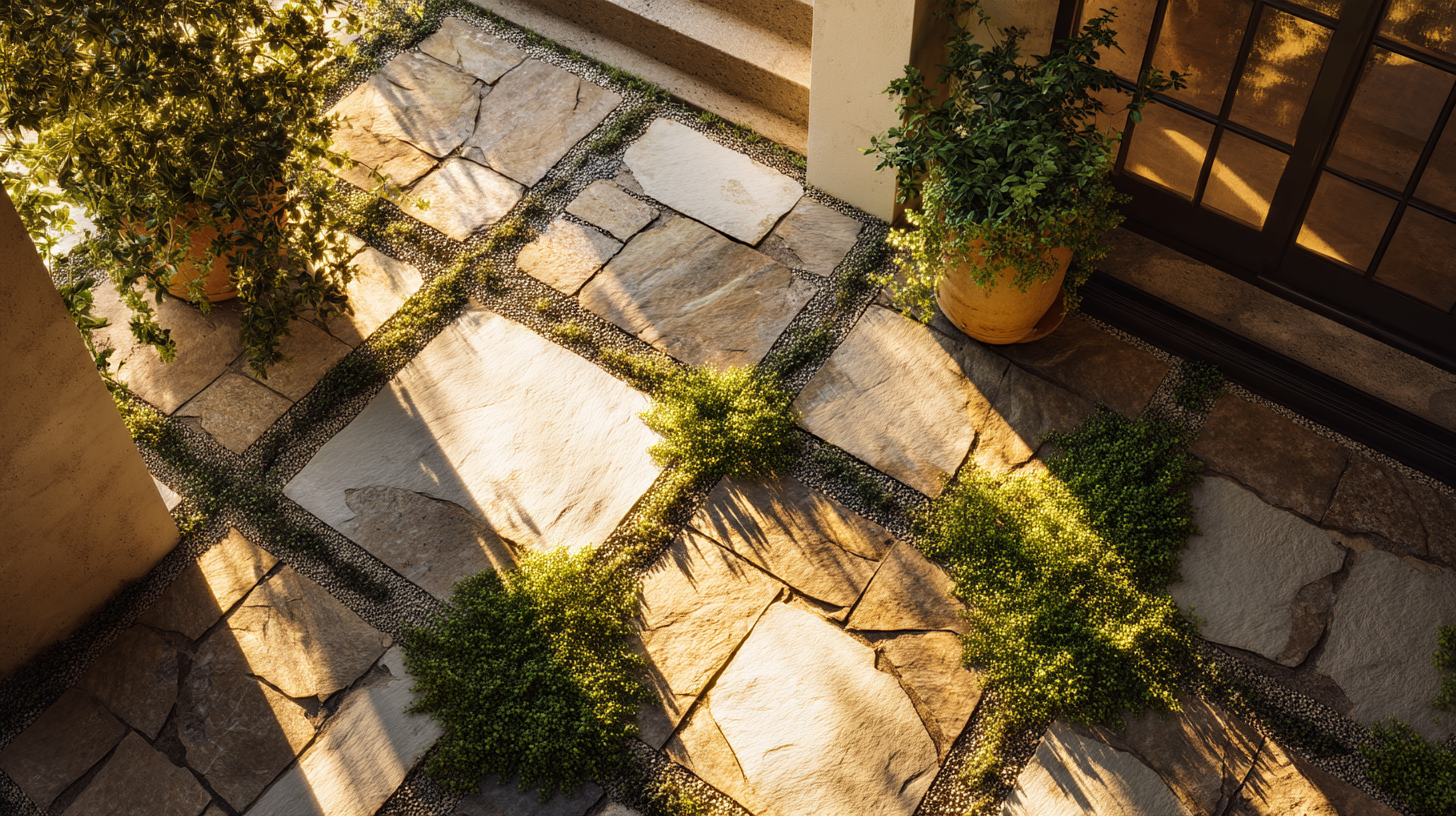
Natural stone pavers are the older, slower, more grounded sibling of porcelain pavers. The porcelain library dominates contemporary outdoor specification because porcelain delivers consistency, dimensional precision, and freeze-thaw immunity at a level natural stone can't match. But where the brief calls for honest material, patina that develops over decades, surface character that varies stone to stone, the kind of weight and presence engineered material can't fake, natural stone is the answer. The 22 colorways in Citadel's natural stone paver collection are curated for that brief.
This guide reads the library closely, what each stone family does well, where it lands wrong, and the specification details that decide whether the install reads timeless or tired.
Why Natural Stone Pavers
The case for natural over porcelain comes down to four characteristics that engineered products approximate but don't replicate.
Patina. Travertine softens and develops tonal warmth over decades. Limestone takes on a slight cream haze. Granite acquires the kind of weathered character that signals age in the best sense. Porcelain doesn't do this; the surface at year 30 is essentially identical to install.
Stone-to-stone variation. Each natural paver carries the geological identity of its specific block, slight color variation, distinct mineral inclusions, the small character of having been quarried from a particular face of stone. The deck reads as material variation rather than as repetition. Premium porcelain reduces the repeating-pattern read to near-invisibility, but doesn't eliminate it.
Weight and presence. Natural stone reads heavier in a room than porcelain of identical dimensions. The denser mineral content, the surface depth, the way light behaves on cut stone, all communicate "stone" in a way porcelain never quite achieves. For projects where the architectural read is meant to be substantial, this matters.
Honest material. Some buyers and architects specifically want natural materials for their own sake, the sense that the deck is what it appears to be rather than a high-quality imitation. That's a real preference and the right answer for some projects.
The Stone Families in the Collection
Travertine
The most-specified natural stone paver in residential. Honed cream travertine for the warm-Mediterranean read, tumbled travertine for traditional, walnut travertine for autumn-toned warm-modern. The colorways pair especially well with stacked stone fireplaces and warm cream architecture. We dedicate a full piece to the 2026 travertine comeback.
Limestone
Softer than travertine, with finer grain and less surface variation. Reads more uniform and more contemporary. Strong choice for projects that want natural stone but a quieter, less-veined surface. Cream and warm-tan limestones dominate the library; cooler grey limestone is available for modern architectures.
Bluestone (and Pennsylvania bluestone)
A specific class of dense, fine-grained sandstone, primarily quarried in the American Northeast. Cool blue-grey base color with subtle variation, natural cleft top surface for slip resistance, weathered edge profile. The traditional Northeastern and mid-Atlantic outdoor stone; reads native in those architectures and slightly displaced in others.
Granite
Hardest and most durable of the natural pavers, true granite handles freeze-thaw, salt, foot traffic, and decades of weather without measurable degradation. Reads more contemporary and more architectural than the softer stones. The right choice for projects in harsh climates, high-traffic commercial-residential, and anywhere the stone needs to read substantial.
Quartzite
Less commonly specified as paver than as countertop, but the same hard, durable, low-maintenance material works well outdoors in dramatic veined colorways. More expensive than granite or travertine; specified where the specific colorway justifies the premium.
Sandstone
The warmest, softest of the paver stones. Strong character, soft warm color, real patina trajectory. Best suited to climates without aggressive freeze-thaw and to architectures that want the warmest possible read.
Finish Choices
Natural stone paver finishes are mostly named after the surface treatment.
Honed, flat matte finish, contemporary read, lower slip resistance. Right for covered or low-traffic outdoor applications.
Tumbled, soft rounded edges and weathered top surface, traditional and warm. The Mediterranean default.
Sandblasted, flat surface with a fine sand-blasted texture for slip resistance. Reads contemporary while delivering high traction. Strong choice for pool decks and stair treads.
Bush-hammered, heavily textured surface created by mechanical hammering. Reads industrial-traditional. Strong slip resistance, weathered character.
Cleft (natural), the natural surface of split stone, irregular and textured. Strongest slip resistance but variable surface plane.
Flamed, high-heat treated for weathered, slightly rough top surface. Common on granite paver applications.
Thickness and Format
Standard outdoor paver thicknesses:
- 1¼ inch (30mm), common for adhered installation over concrete sub-slab and for pedestrian-only walkways.
- 1½ inch (40mm), the residential standard for most patio and pool deck applications.
- 2 inch (50mm), the heavier-duty option, also standard for stair treads and any free-spanning installation.
- 3 inch (75mm), for sand-set ground-level installations where the paver does its own structural work.
Format ranges from 12×12 (small format) through 24×36 (large format), with rectangular formats (8×16, 12×24) producing different visual reads than square formats.
Pattern: How the Pavers Are Laid
The five common paver layouts each carry different connotations.
Running bond, each row offset by half a paver. Most traditional and most forgiving of dimensional variation.
Stack bond, perfect grid alignment. Most contemporary, most demanding of dimensional precision.
Random ashlar, multiple paver sizes laid in a coordinated random pattern. Reads as the most natural, traditional and architectural at once. The pattern most commonly specified for premium European-residential outdoor work.
French pattern, a specific four-piece repeating pattern with multiple sizes. Traditional and Mediterranean.
Herringbone, 45-degree chevron pattern. Decorative and emphatic; reads busy at large scale.
Joint Strategy
Three options for the gap between pavers.
Tight joints (1/16 to 1/8 inch), for adhered installation over concrete sub-slab. Reads contemporary and architectural. The joint gets a fine color-matched grout.
Sand-swept joints (1/4 to 3/8 inch), for sand-set installation. Polymeric sand fills the joint and locks in place when wet. The most weather-tolerant option for ground-level patios.
Wide planted joints (1/2 to 1 inch), for the most-traditional and the most-modern installations. Plants like creeping thyme, Irish moss, or sedum fill the joints. Reads as an integrated landscape element.
Pairing Natural Stone with the Rest of the Outdoor Vocabulary
Natural stone pavers pair especially well with:
- Matching natural-stone copings (the same stone family at the pool edge and on stair treads)
- Stacked stone veneer on accent walls and fireplace surrounds
- Turf zones bordered with the same stone
- Flagstone accent paths and stepping stones
The strongest installations use a single natural stone family throughout the outdoor vocabulary, same travertine for the deck, the coping, and the wall caps. The repetition reads as architectural language, not as repetition.
Sealing and Maintenance
Natural stone outdoor pavers want sealing at install (penetrating sealer, not topical). The reseal interval depends on the stone:
- Travertine and limestone, every 2 to 3 years
- Granite, every 5 to 10 years (essentially low-maintenance)
- Sandstone, annually, especially in wet climates
- Bluestone, every 3 to 5 years
Cleaning: occasional pressure-washing for accumulated debris, otherwise pH-neutral stone cleaner. Avoid acidic cleaners on calcium-carbonate stones (travertine, limestone, marble); they etch. See our sealing natural stone guide.
The Decade-Out Read
Natural stone paver decks at year 10 read meaningfully different from year 0. The travertine has softened. The grout joints have darkened. The stone itself has acquired the small marks of weather and use. For most residential projects in the architectures these stones suit, that aging is the design intent, the deck reads more beautiful and more present at year 10. For projects that want unchanging, porcelain is the answer.
Where to Start
Specifying natural stone pavers starts with the architectural context. These stones read native in some contexts and displaced in others. From there, the climate (freeze-thaw or hot-only), the use intensity (residential or commercial), and the design intent (patina or unchanging) drive the material choice. Browse the natural stone paver collection for the curated 22-colorway library, and pair with our porcelain vs natural stone pavers guide for the comparative read.
To take this from reading to ordering, browse porcelain pavers and run your measurements through the flooring and tile coverage calculator.