Buyer Guide
Calacatta Quartz: Which Looks Most Like Real Marble
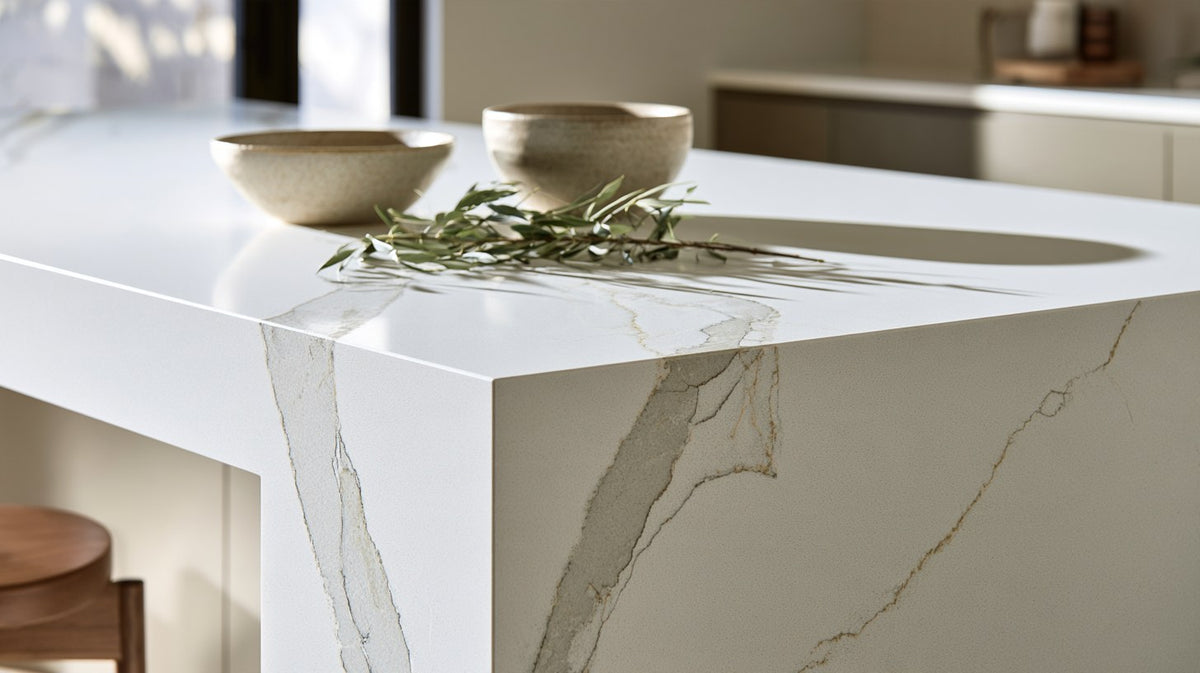
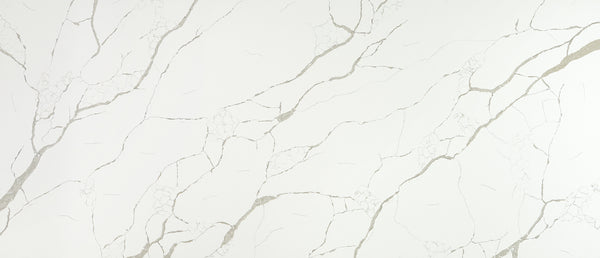
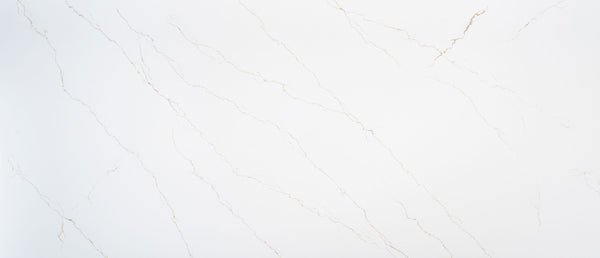
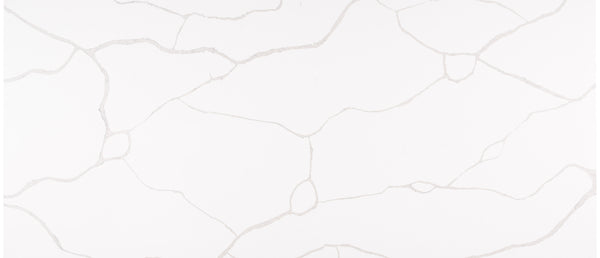
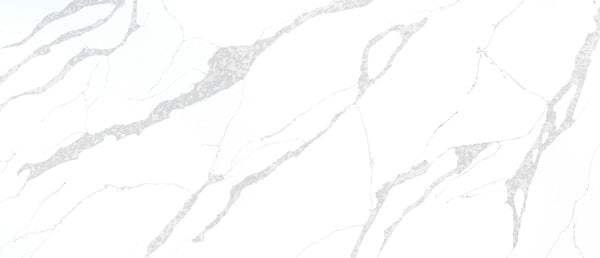
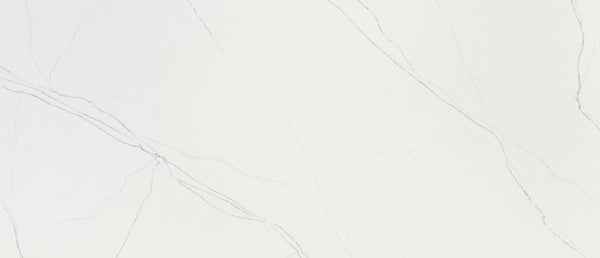
Calacatta quartz that looks like real marble is what most people are after when they choose a white quartz countertop: the drama of Calacatta marble, without the etching and sealing. There is no single answer to which quartz looks most like marble, because Calacatta marble itself varies widely. What you can do is learn what makes a marble look convincing, and judge each quartz on those points. In our range there are around sixty Calacatta quartz designs, so the right one is a matter of matching these details to your kitchen.
What makes Calacatta marble recognizable
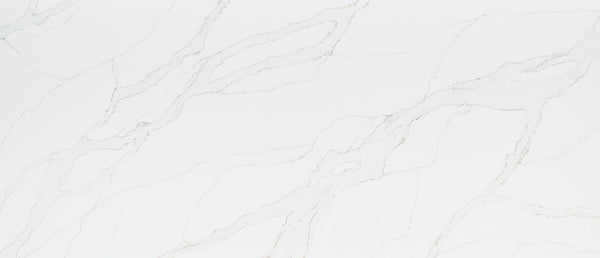
Calacatta is a white marble known for a bright white background and bold, often thick veining, usually in gray with warm gold or taupe tones. The veins wander in large, irregular movements rather than repeating patterns. That combination of bright ground and bold, irregular veins is what a Calacatta-look quartz is trying to capture.
The five details to judge
1. Vein scale and movement
Real marble veins vary in thickness along their length, split and rejoin, and fade in and out. A convincing quartz has the same variation. Veins that are uniform in width or repeat at regular intervals give the engineered origin away.
2. Background tone
Calacatta marble reads bright white to warm white. Some quartz backgrounds lean cool or slightly gray, which can look flat beside warm cabinets and wood floors. Look at the sample next to your cabinet door and floor.
3. Vein color
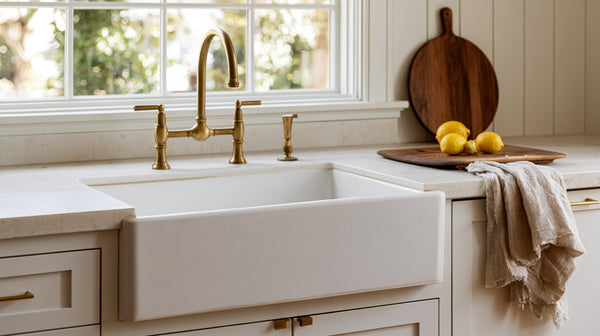
Gray veins read classic; gold or taupe veins read warmer and more like the prized varieties of Calacatta. Choose the vein color to suit your hardware and cabinet tones, since brass and gold hardware pick up warm veins beautifully.
4. Finish
Polished quartz is glossy and bright. Honed quartz has a soft matte finish, which many people find reads more like natural stone, because much of the marble people admire in older homes has worn to a soft sheen. Our range includes honed options, such as the Calacatta Miraggio honed designs.
5. How the veining handles edges and seams
On a real marble island, the veins continue over the edge and across a waterfall. On quartz, check how the pattern behaves at the edge profile and plan the layout so seams fall where the veining can be matched. A good fabricator will lay out the slab to keep the strongest movement in view.
Quartz and marble, side by side
| Calacatta-look quartz | Calacatta marble | |
|---|---|---|
| Look | Designed veining; consistent from slab to slab | Unique veining in every slab |
| Stains | Resists stains; non-porous | Porous; needs sealing |
| Etching | Not affected by mild acids | Etches with lemon, wine and some cleaners |
| Care | Soap and water | pH-neutral cleaner and periodic sealing |
| Heat | Use trivets; resin can mark | Tolerates heat well |
Consistency is a feature
One practical advantage of quartz is predictability. Many of our Calacatta quartz slabs are listed with low color variation from slab to slab, so a kitchen that needs several slabs will match. With natural marble, every slab is different, and a large project means choosing slabs in person to keep the look together.
How to choose in practice
- Narrow to three or four designs by vein color and scale.
- View large samples or full slab photos, not just small chips, because bold veining only reads at size.
- Put each sample beside your cabinet door, floor and hardware in daylight.
- Choose polished or honed, then ask how the veining will be laid out on the island and around the sink.
Where the look matters most
The island is where a Calacatta look earns its keep, because it is seen from every side and often carries a waterfall edge. For a large island, choose a design with enough movement to fill the surface without repeating, and ask how many slabs the layout needs. On perimeter counters broken up by a range and a sink, a quieter vein often looks better, because bold veins get chopped into short pieces between cut-outs. Some kitchens pair a dramatic island with a softer perimeter in the same color family. A full-height backsplash in the same quartz extends the veining up the wall behind the range, the most marble-like move of all.
Thickness and edges
Quartz slabs come in different thicknesses, commonly 2 cm and 3 cm. A 3 cm slab gives a solid, substantial edge on its own; a 2 cm slab is often built up at the edge to look thicker. Simple edge profiles, such as an eased or square edge, suit a marble look best, because they let the veining run cleanly to the edge. A mitered edge carries the pattern down the face of the counter and is the classic detail on a waterfall island.
Frequently Asked Questions
Which quartz looks the most like Calacatta marble?
The most convincing designs have a bright white background and bold, irregular veins that vary in width and do not repeat. Compare large samples beside your cabinets rather than relying on a single name.
Is Calacatta quartz real marble?
No. Calacatta quartz is an engineered surface designed to look like Calacatta marble. It is made mostly from natural quartz bound with resin.
Does Calacatta quartz stain or etch like marble?
No. Quartz is non-porous and resists stains, and it does not etch from mild acids such as lemon juice or wine the way marble does.
Is honed or polished quartz more like marble?
Many people find honed quartz reads more like natural marble because of its soft matte finish. Polished quartz gives a brighter, glossier look.
Will several quartz slabs match each other?
Quartz is made to a controlled design, so slabs of the same design are generally consistent. Many of our Calacatta quartz designs are listed with low slab-to-slab color variation.
To take this from reading to ordering, browse quartz slabs at Citadel Spaces, and size the order with the countertop and slab calculator.
From the guide
Shop the countertops in this guide