Buyer Guide
20mm Porcelain Pavers vs Concrete Pavers: Which to Choose

20mm porcelain pavers vs concrete pavers is a choice between two very different outdoor surfaces. Concrete pavers are thick, molded units, familiar and economical. 20mm porcelain pavers are thin, dense slabs of fired porcelain, about three quarters of an inch thick, with a finish that holds its color and shrugs off stains. This guide compares the two so you can choose for your patio, walkway or pool deck.
What each paver is
Concrete pavers are made from cement, sand and aggregate, molded into shapes and cured. They are thick, often around two and a half inches or more, and are usually laid on a compacted gravel and sand base with joint sand between them.
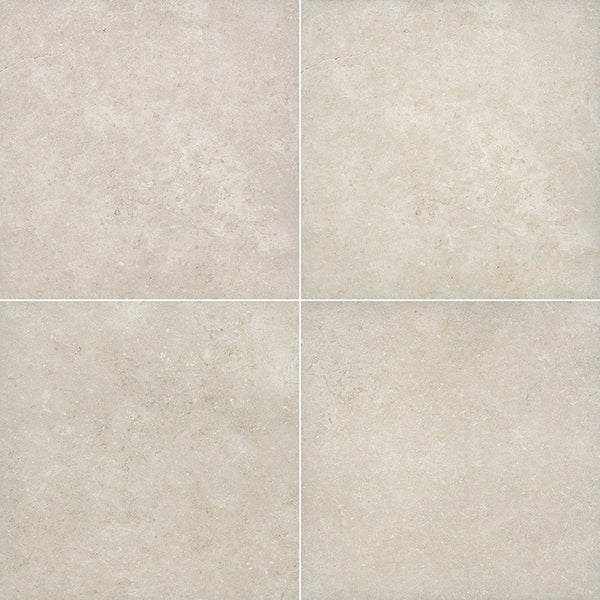
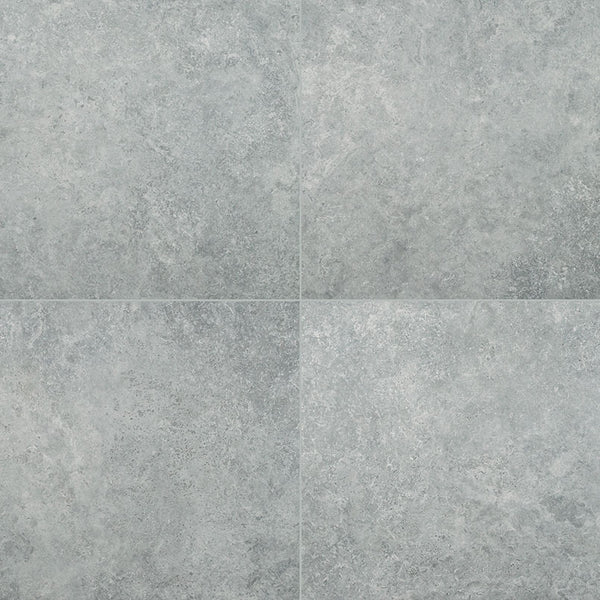
20mm porcelain pavers are fired at very high temperature from refined clays and minerals, producing a dense material with very low water absorption. At 2 cm thick they are much thinner than concrete, but they are made specifically for outdoor floors. They come in large formats with printed stone, wood, and concrete looks and textured, slip-resistant surfaces. Our outdoor porcelain pavers are listed at 2 cm.
Side by side
| 20mm porcelain pavers | Concrete pavers | |
|---|---|---|
| Thickness | About 3/4 in (2 cm) | Commonly around 2 3/8 in or more |
| Water absorption | Very low; dense and non-porous | Porous; usually sealed |
| Stains | Resist oil, wine and grill stains; wipe clean | Can absorb stains unless sealed |
| Color | Fired color does not fade | Can fade with sun over time |
| Look | Large formats, realistic stone and wood looks | Classic molded shapes and colors |
| Installation | Several methods: mortar bed, gravel or sand base, pedestals | Compacted base with sand joints |
| Cost | Higher material cost | Lower material cost |
Why porcelain has become popular outdoors
Porcelain's density is its main advantage. With very low water absorption it resists staining from oil, wine and barbecue grease, which usually wipe away. The color is fired into the material, so it does not fade in strong sun, and there is no sealing routine. Large formats give a patio a clean, architectural look with fewer joints, and matching looks can run from an indoor floor straight out to the patio for a continuous line.
Where concrete still makes sense
Concrete pavers remain a sound, economical choice for large areas, driveways designed for them, and projects where budget leads. They are thick and forgiving on a well-built base, and damaged units are easy to lift and replace. If a classic interlocking look is what you want, concrete delivers it.
Installation options for porcelain
- On a mortar bed over concrete: the most permanent method, for patios and pool decks with an existing slab.
- On gravel or sand: laid loose on a well-compacted base for garden paths and patios, following the manufacturer's guidance.
- On pedestals: raised on adjustable supports over a roof deck or a level base, which allows drainage beneath and easy access.
Our guide to pedestal versus mortar pool decks covers the last two in more detail. Whatever the method, the base is what makes an outdoor floor last.
Slip resistance
Outdoor porcelain pavers carry textured finishes designed for wet areas. Check each product's slip rating before using it around a pool, and choose a textured or structured finish rather than a smooth one for wet zones.
How to choose
- Choose porcelain for a low-maintenance patio or pool deck where stains, fading and sealing would otherwise be a chore, or where you want a large-format, indoor-outdoor look.
- Choose concrete for large areas on a tight budget, or where a classic molded paver look is the goal.
Looks, formats and indoor-outdoor lines
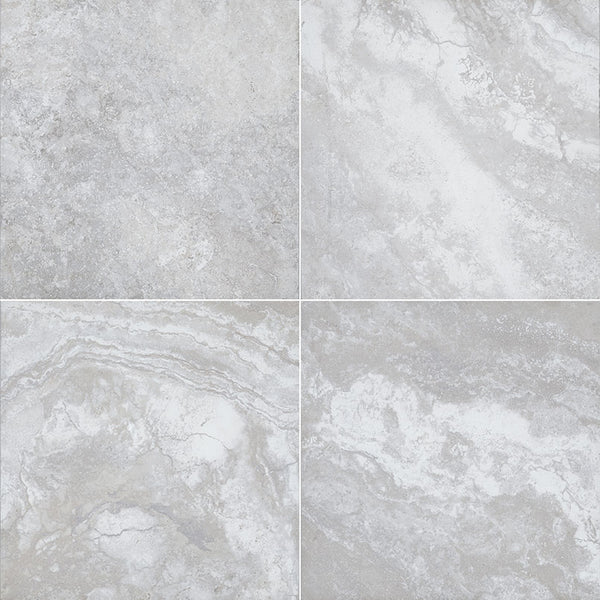
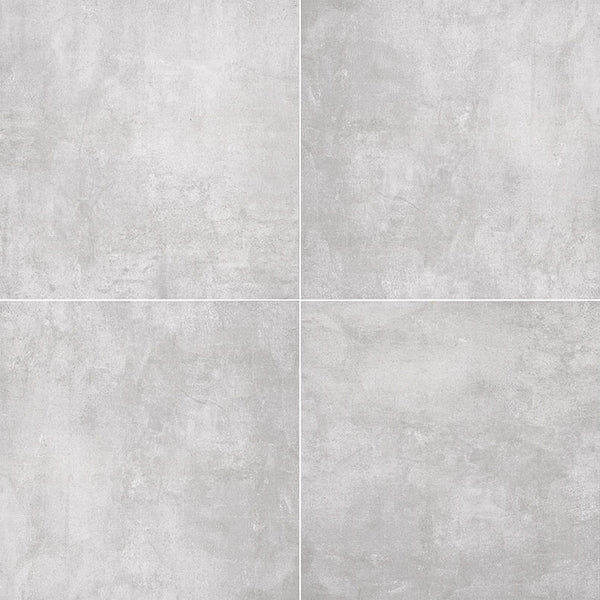
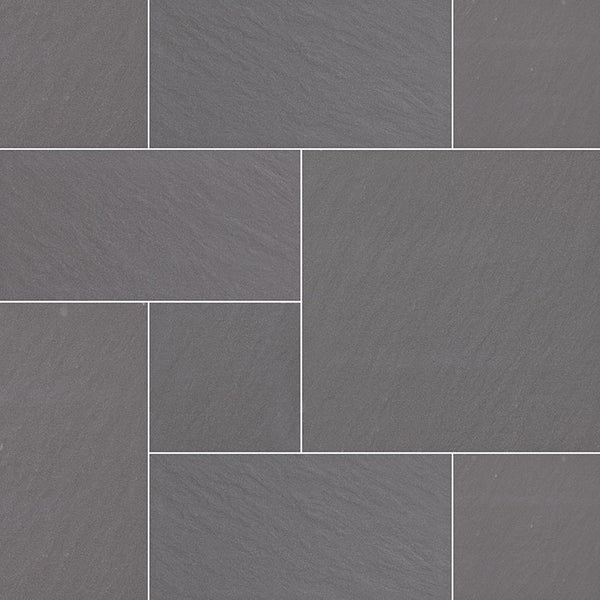
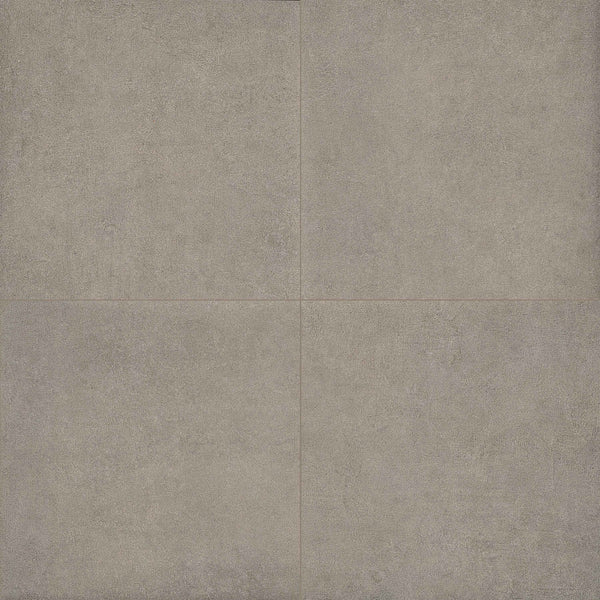
Porcelain pavers come in large formats and a wide range of printed and textured looks: travertine, limestone, bluestone, concrete and wood. Because the look is printed and fired into the surface, the same design is consistent across the whole patio. Many porcelain designs have an indoor counterpart, so a living room floor can continue through a sliding door onto the patio in the same look, with only the outdoor texture changing. Concrete pavers offer their own palette of molded shapes and blended colors, and many homeowners like their familiar, textured character in traditional gardens.
Joints matter to the finished look as well. Porcelain is often laid with narrow joints in a clean grid or offset pattern for a modern feel, while concrete pavers are usually laid tight with sand-filled joints in interlocking patterns.
Ordering
Measure the area in square feet, add a waste allowance for cuts around edges and features, and order all pavers for the project together so the batch matches. Order matching steps, coping or trim pieces where the design needs them.
Frequently Asked Questions
Are 20mm porcelain pavers strong enough for a patio?
Yes. 20mm porcelain pavers are made specifically for outdoor floors, and on a properly built base they suit patios, walkways and pool decks. Follow the manufacturer's installation guidance for the base you choose.
Do porcelain pavers need sealing?
No. Porcelain pavers have very low water absorption, so they resist stains without a sealer. Concrete pavers are usually sealed.
Do porcelain pavers fade in the sun?
No. The color is fired into the porcelain, so it holds up in strong sun. Concrete pavers can fade over time.
Are porcelain pavers slippery when wet?
Outdoor porcelain pavers have textured finishes made for wet areas. Check the slip rating of the specific product, especially for pool decks.
Can porcelain pavers be laid on gravel?
Yes. Many 20mm porcelain pavers can be laid on a well-compacted gravel or sand base, set in mortar over concrete, or raised on pedestals, depending on the project.
To take this from reading to ordering, browse porcelain pavers at Citadel Spaces, and size the order with the flooring and tile coverage calculator.
From the guide
Shop the pavers in this guide