Buyer Guide
Stacked Stone Veneers: 116 Colorways and the Geometry of Texture
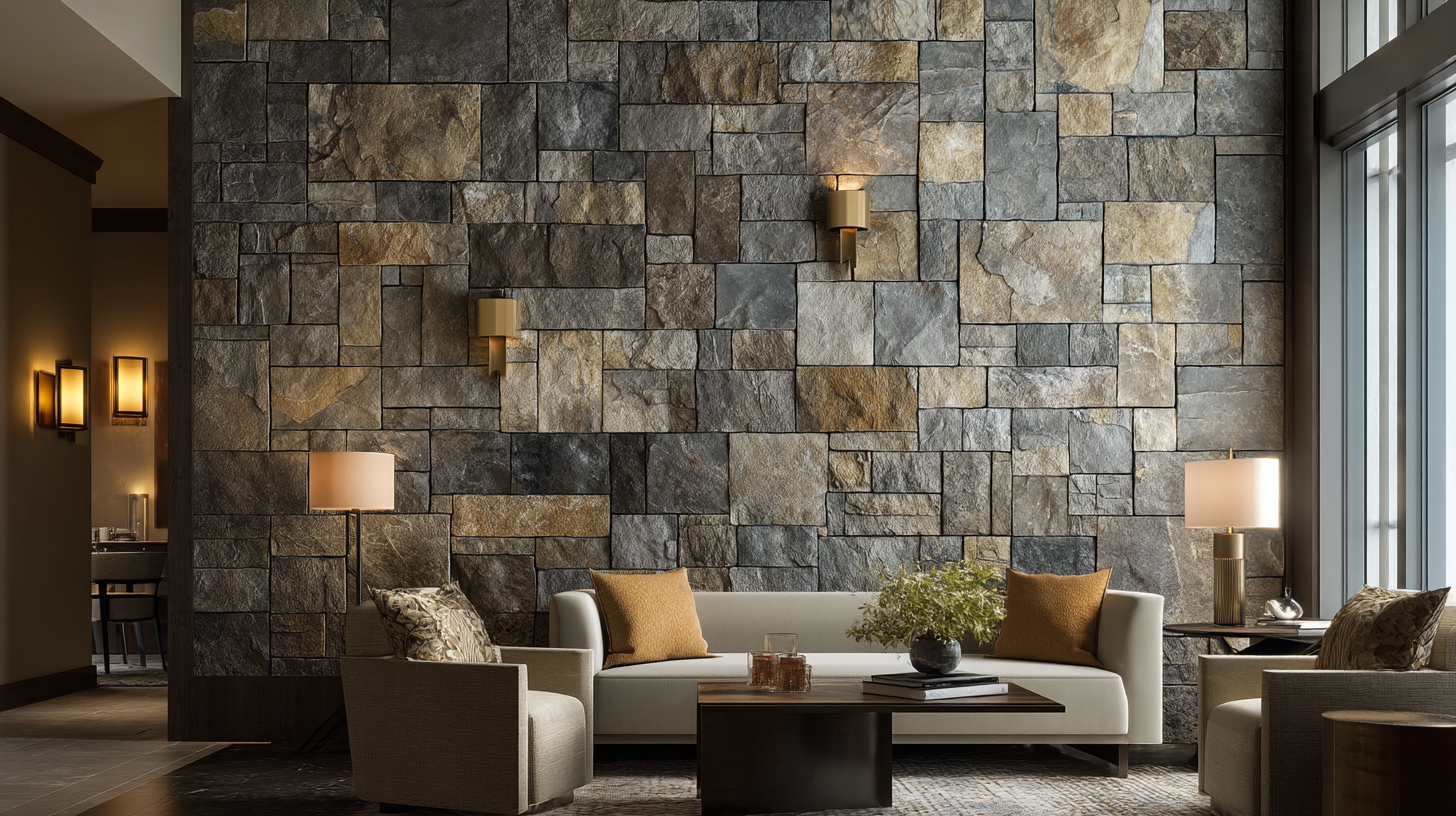
Stacked stone veneer used to read as a regional language, Western lodge, mountain modern, the entry of a custom home in a specific kind of climate. That association has loosened. In 2026, stacked stone is doing different work in different rooms: a feature wall in a minimalist living room, a fireplace surround in an interior that otherwise reads quiet, an exterior accent that grounds an architecture-forward elevation. The 116 colorways in our catalog cover the full geography of the material, and the specification choice matters more than the regional cliché ever did.
This spotlight maps the colorway library, the panel systems, and the rooms where stacked stone earns its place rather than landing as decoration.
What Stacked Stone Veneer Actually Is
Two distinct categories share the name. Natural stacked stone is a true thin-veneer cut from the same quarried stone you'd use for full-thickness masonry, slate, quartzite, limestone, sandstone, typically pre-assembled into panels of 6×24 or similar dimensions for mechanical install. The texture is the natural cleft of the stone; the colorways are the geological palette of the source. The material reads honest because it is honest.
Manufactured stacked stone is a cement-based product cast in molds taken from natural stone, then color-applied to imitate the source. The good ones read close at viewing distance and are cheaper, lighter, and easier to install than natural. The bad ones read instantly fake, uniform color, repeating mold patterns, the surface relief obviously embossed rather than cleft. Citadel's catalog leans heavily natural; we cover both, but the standard for what earns a slot is the same.
The 116-Colorway Library, Read at Tone
Rather than walk through individual colorways, the library reads more usefully when grouped by tonal family.
Warm graphite and charcoal
The largest tonal group in the library, slate-derived stacked stones in mixed graphite, cream-grey, and warm-charcoal blends. These read as the contemporary default for fireplace surrounds and feature walls in interiors that lean toward Midimalism and warm-modern. Specific heroes in the library include the Mayra White-leaning blends and the Capella warm-grey reads.
Cream and warm tan
Limestone and softer travertine-style stacked stones, the colorway group for warmer, more traditional interiors and Mediterranean-modern exteriors. Reads especially well alongside oak floors and warm cream cabinetry.
Mixed multi-tone
Three- and four-color blends that include warm rust, deep brown, and graphite in a single panel. These are the colorways most commonly chosen for exterior accent walls. They have enough visual variation to read as natural across a long elevation rather than as a manufactured product.
Honed and contemporary
A smaller subset of the library, stacked stones with a deliberately flatter face, less three-dimensional relief, designed for interiors where the texture is meant to read quiet rather than dramatic. These read well in bedrooms and bathrooms where a fully cleft stone would feel aggressive.
Browse the full stacked stone veneer library to see the colorways grouped by tone.
Where Stacked Stone Earns Its Place
Fireplace surrounds
The single most successful application, stacked stone's vertical texture, low-light shadow play, and warm-tone library all serve a fireplace's job: anchor a room visually, draw the eye, and provide the kind of grounding weight that turns a living room into a destination. The Capella, Mayra, and Sedona blends are particularly strong fireplace candidates. We dedicate a full guide to fireplace surrounds in stacked stone and slab.
Interior accent walls
A single wall in a living room, bedroom, or stairwell, typically the wall opposite the room's primary natural light source, so raking light across the texture creates the depth that makes stacked stone read as architecture rather than wallpaper. Avoid full four-wall installations; the material gets exhausting at that intensity. One wall, well-placed, holds a room together.
Exterior accents
Entry surrounds, low retaining walls, accent columns, and the lower third of a facade where the stone grounds the architecture. The mixed multi-tone colorways read most natural at exterior scale; uniform-tone stacked stone can read manufactured under harsh outdoor light.
Bathroom feature walls
A fast-growing application. The honed and contemporary stacked stone subsets work especially well in shower surrounds and behind freestanding tubs, paired with a marble slab or porcelain slab on the floor. Make sure the stone is rated for wet use and properly sealed; most of our stacked-stone-veneer SKUs are.
Installation: Panel Systems and the Honest Mortar Question
Stacked stone installs three ways, each with its own structural and aesthetic implications.
Mechanical panel install uses pre-assembled panels (typically 6×24 or 9×24) with metal clip fastening to a wood-stud or masonry substrate. Fast, accurate, no mortar mess. The cleanest install for interior dry locations.
Mortar-set traditional install beds the stone directly into Type S or N mortar over a metal-lath substrate. More forgiving of substrate variation, slower install, requires a competent mason. Right for exterior applications and any wet location.
Adhesive-set uses a polymer-modified thin-set adhesive on a cementitious backer board. Faster than full mortar, more forgiving than panel-mechanical, the middle option for residential interior installs.
For exterior installations, weather-resistant barrier and flashing details are not optional. Stacked stone can read beautifully and conceal a moisture problem behind it for years; the WRB and flashing are what prevent that.
Texture and the Vagus Nerve
The case for stacked stone in interiors goes beyond decoration. Texture, the kind of layered, three-dimensional visual rhythm that stacked stone produces, measurably engages the parasympathetic nervous system in a way flat surfaces don't. The eye reads texture as natural, and natural reads as safe. We cover the science in our material texture and the vagus nerve guide. A stacked-stone fireplace doesn't just look good; it does work in the room.
Pairing Stacked Stone in a Room
The mistake most stacked-stone installations make is letting the stone fight the rest of the room. Stacked stone reads loud. It has to be the visual anchor, and the rest of the room needs to quiet down around it. That means simpler floor (wide-plank LVT, hardwood, or honed concrete, see the Nove curator guide for floor pairings), low-pattern textiles, and lighting that washes across the stone rather than competing with it.
Companion materials that read well alongside stacked stone: honed marble or quartzite countertops, oak millwork, unlacquered brass hardware (see our unlacquered brass guide), and matte cream walls.
Lighting
Stacked stone is a lighting-dependent material. Lit poorly, it reads flat and dead. Lit well, it reads three-dimensional and architectural. The right lighting strategy: a graze light from above (a small uplight at the base or downlight from a soffit) that washes the surface at a sharp angle, revealing the texture's shadow geometry. Avoid head-on lighting; it flattens the relief.
Where to Start
Stacked stone is a commitment material, once installed, it's not casually replaced. Order generous samples, view them in the actual light of the actual room, and consider the colorway against the rest of the room's palette before committing. Browse the stacked stone veneer collection for the full 116-colorway library, and see how stacked stone reads alongside companion materials in our fireplace surrounds guide.
Ready to compare in person? Browse stacked stone and veneers at Citadel Spaces, and use the flooring and tile coverage calculator to turn room dimensions into an order quantity.