Design Trends
Midimalism: Minimalism Without the Cold
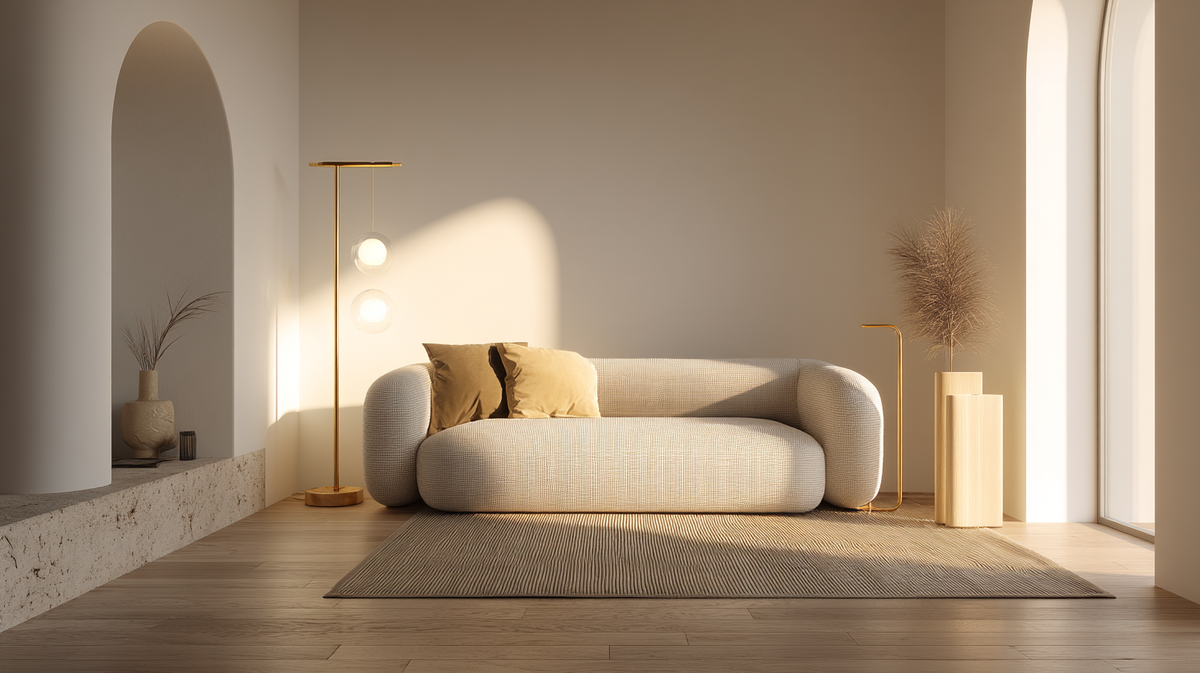
Strict minimalism, the white-walled, hard-edged, near-empty-room aesthetic, peaked around 2018 and has been retreating since. The reaction wasn't toward maximalism. It was toward something the design press has settled on calling Midimalism: minimalism's discipline (few elements, clean lines, restraint) crossed with warm material, soft texture, and the specific kinds of layering that make a room feel quietly inhabited rather than starkly empty.
Midimalism is the dominant 2026 residential interior direction. This guide explains what it actually is, the material vocabulary that makes a Midimalism interior read correctly, and the moves that turn the movement into specification language.
What Midimalism Is
Midimalism keeps minimalism's three core disciplines:
- Few elements per room (no decorative clutter)
- Clean architectural lines (no fussy moldings, ornate detail)
- Restrained color palette (no high-saturation contrast)
And adds three things that strict minimalism eliminated:
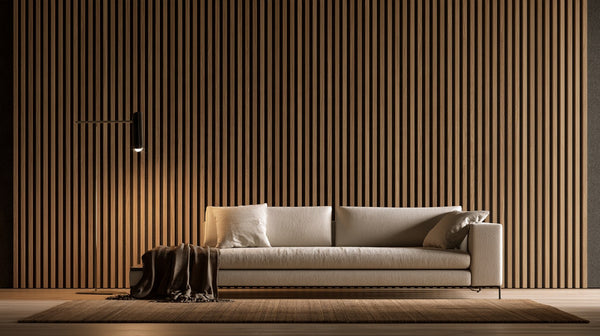
- Warm material, wood, stone, woven texture rather than polished concrete and metal
- Soft layered texture, visible weave on textiles, audible stone surface, hand-applied plaster rather than smooth drywall
- Considered imperfection, patina, hand-marks, small variations rather than machine-perfect uniformity
The result is a room that reads quiet without reading cold. Three or four objects in the room, but each one rich with material character. Light, but warm light. Restrained, but with the kind of subtle layering that rewards looking.
The Material Vocabulary
Floors that read warm and quiet
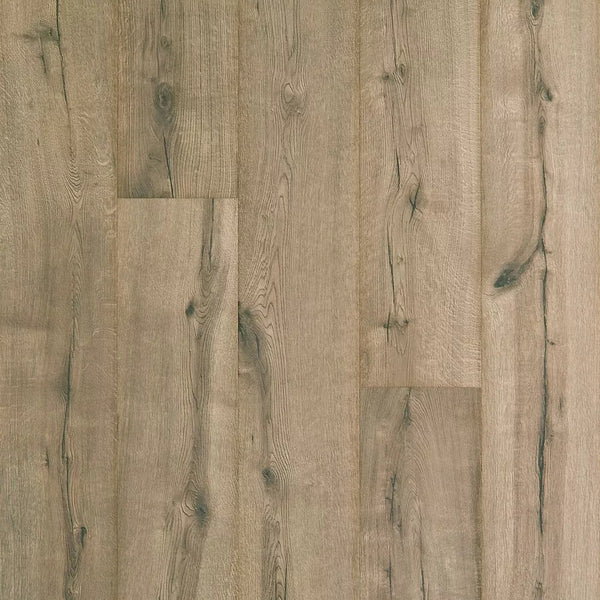
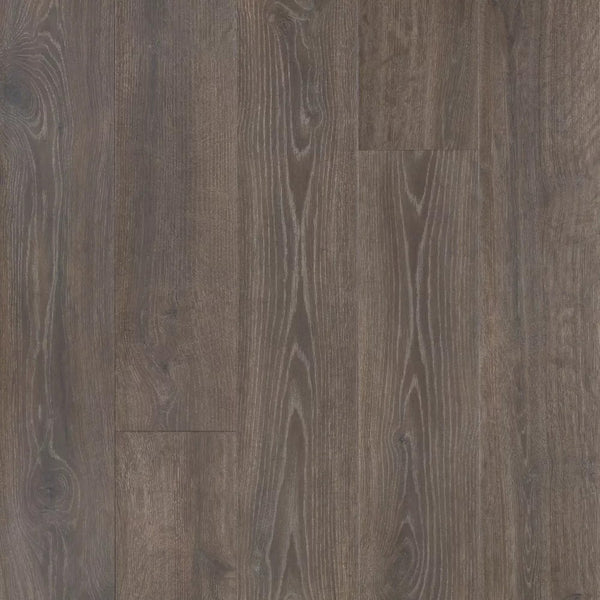
Wide-plank hardwood (white oak natural-finished is the strongest 2026 specification) and warm wide-plank LVT in cream-blonde or warm-taupe tones (see our Nove curator guide, Bayhill Blonde and Scandi are the Midimalism colorways). Avoid: dark dramatic floors, busy tile, anything with heavy pattern. The floor's job is to recede warmly.
Walls that read soft
Hand-applied lime plaster, Roman clay, or specialty paint with subtle texture variation. The wall plane should read alive, not flat. White is acceptable but warm white (cream, soft eggshell) reads correctly; bright white reads too cold. Pair with simple, non-fussy moldings (slim base, no crown, simple casing) where moldings appear at all.
Stone elements as character moments
One or two stone moments per room, a stacked stone fireplace surround, a honed marble threshold, a quartzite slab kitchen island. The stone provides the texture and weight that strict minimalism's drywall planes lacked.
Wood and woven texture
Visible wood, flooring, beam ceilings, wooden furniture, and one or two woven textile moments (a wool rug with visible weave, linen curtains with natural drape, a woven sofa). The texture is what differentiates Midimalism from strict minimalism.
Brass that develops
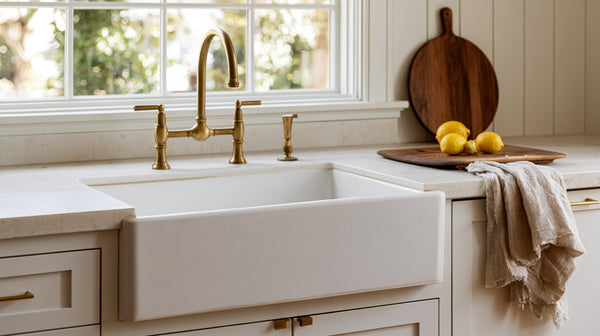
Unlacquered brass hardware, the kind that develops patina rather than staying mirror-perfect. The aging gives the room another texture and another time-trajectory. See our unlacquered brass guide.
The Discipline of Few Things, Each Considered
The fastest way to fail at Midimalism is to over-edit. Strict minimalism's empty-rooms-with-one-object approach reads cold; Midimalism's warm-rooms-with-three-objects approach is no less restrained but reads inhabited.
The discipline: every object in a Midimalism room earns its place. The single object on the side table is chosen carefully. The three books are chosen for their physical character, not their content. The light fixture is meaningful, not generic. Removing items improves the room until it doesn't; adding items improves the room until it doesn't. Most rooms are too full; Midimalism finds the line and stops there.
Color Palette
The Midimalism palette is warm-neutral with quiet accents.
- Warm cream and soft white, wall and ceiling planes
- Warm taupe, soft graphite, large surfaces (cabinetry, large furniture, occasional wall)
- Natural wood tones, flooring, wood furniture
- Stone tones, counters, accent walls, fireplaces
- Warm earthy accents, sage, terracotta, warm brown, used sparingly
- Brass and warm metal, hardware, lighting, small decorative elements
Avoid: pure black-and-white contrast, bright primary colors, cool grey-on-grey, high-saturation accent colors. The palette wants to read as a continuous warm field with subtle variation.
Lighting
Midimalism lighting is warm-toned (2700K to 3000K), spatially layered, and dimmable. Three lighting layers per room:
- Ambient (overhead, often recessed, dimmable to low evening levels)
- Task (table lamps, focused fixtures at functional zones)
- Accent (a single sculptural fixture as character, often in unlacquered brass)
Avoid: cool-temperature LED (4000K and above), single-source bright overhead, downlights aimed at the floor without other fill. The room should be able to read warm and intimate at evening lighting levels.
Negative Space as Architecture
Midimalism uses negative space, empty wall, empty corner, empty horizontal, as a deliberate design element. The empty corner is not "missing furniture"; it's a deliberate quiet zone that lets the room breathe. The empty wall is not "needs art"; it's a visual rest. We cover the science of how negative space affects breath and stress in our minimalism and negative space piece.
Texture Layers Without Pattern
The texture in Midimalism comes from material rather than from pattern. A wool rug reads textured because the wool is woven, not because the rug has a pattern. A linen curtain reads textured because the linen has natural slubs and drape, not because it's printed. A stacked stone wall reads textured because the stones are layered, not because there's a pattern carved into the stone.
This is the move that distinguishes Midimalism from layered traditional. Both are visually rich, but traditional layers pattern (printed wallpaper, patterned rugs, decorative moldings) while Midimalism layers material texture.
The Kitchen Specifically
A Midimalism kitchen typically uses:
- Slim Shaker or frameless flat-front cabinetry in warm taupe, sage, or wood-grain (see our cabinet decision tree)
- Quartzite or marble island with quiet veining (see our quartzite countertops)
- Wide-plank wood or premium LVT floor
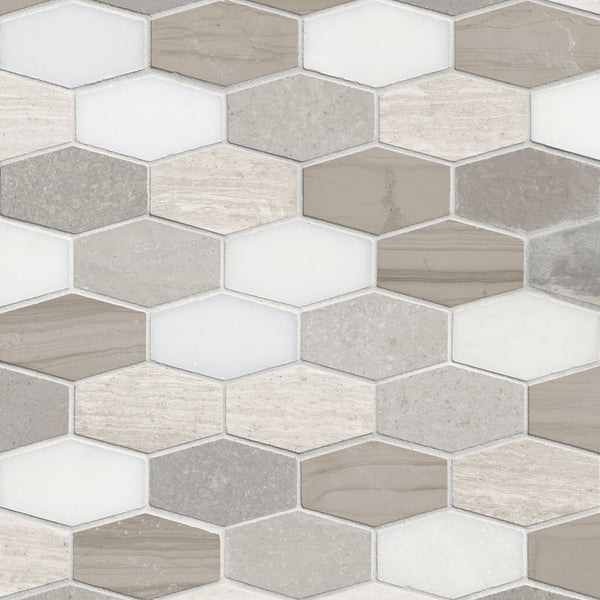
- Honed marble or restrained stone backsplash (see our wall tile guide)
- Unlacquered brass hardware
- One sculptural pendant or single feature light
The kitchen reads as architecture rather than as a tool, quiet, considered, made for living rather than performing.
The Bathroom Specifically
A Midimalism primary bathroom typically uses:
- Honed marble floor (Carrara or Calacatta, see our marble tile guide)
- Marble threshold at the doorway
- Floating wood vanity with quiet hardware
- Single dramatic mirror, simple lighting
- Linen curtains rather than blinds
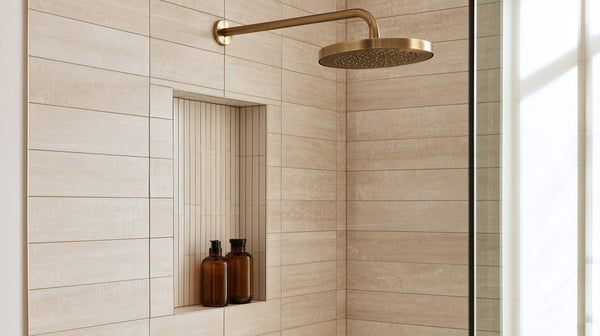
- One stacked stone or porcelain slab feature wall
The room reads as a refuge, warm, calm, quietly luxurious, intimately scaled.
Common Failures
Three Midimalism failures to avoid:
Cold minimalism in disguise. Removing color and texture without adding warmth produces a sterile room. Midimalism's character is the warmth, not the restraint.
Trendy texture without discipline. Rough plaster + rough wood + rough stone + rough textile = visual chaos. Midimalism wants two or three textures per room, not all of them.
Single-tone monotony. Warm-neutral monotone reads flat without subtle variation. Midimalism wants tonal variation within the warm-neutral palette, cream against warm taupe against soft graphite.
Where to Start
The first Midimalism move in most projects is reducing visible items by half. The second is replacing one cool element with a warmer equivalent (cool grey wall paint becomes warm cream; chrome hardware becomes brushed brass; cold porcelain floor becomes wide-plank wood or warm LVT). The material library that supports Midimalism: hardwood, wide-plank LVT in warm tones, stacked stone, quartzite, honed marble. For the deeper design science, our neuroscience of calm interiors pillar.
From the guide
Shop the surfaces in this guide