Buyer Guide
Shaker vs Slab Cabinet Doors: How They Differ and Which to Choose
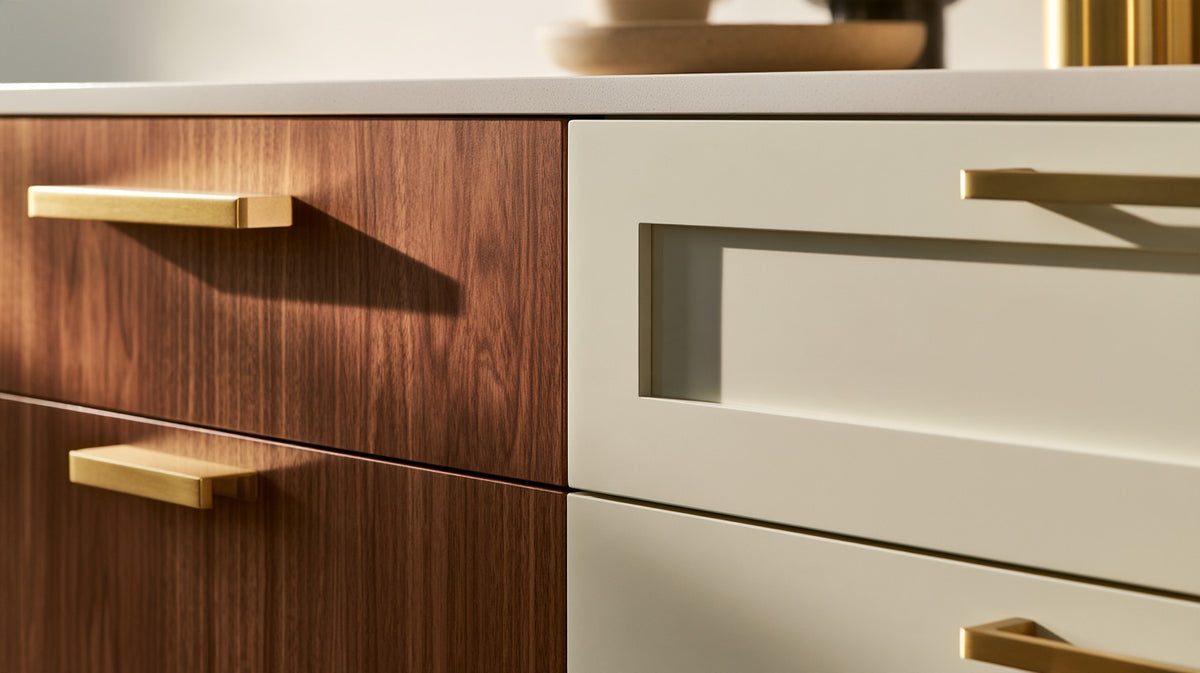
Shaker vs slab cabinet doors is the first style decision in most kitchens. A shaker door is a five-piece door: a flat center panel held inside a frame of four pieces. A slab door is one flat piece with no frame at all. The difference is simple to describe and changes the whole character of a room, so it is worth knowing what each one does well before you choose.
How each door is built
Shaker. Four pieces, two rails and two stiles, form a frame around a recessed flat panel. In our range, shaker doors are three quarters of an inch thick and made in solid birch with an MDF center panel, or in full MDF, depending on the colorway. Variations change the frame: a beveled shaker adds an angled inside edge to the frame, and a slim shaker narrows the frame for a lighter, more current look.
Slab. One flat piece with no frame and no recess. Our slab doors are laminate over a particleboard core, in a soft-touch matte PET finish or a high-gloss UV finish, with edge banding around the door. With no frame to break up the face, the finish itself does all the work.
Side by side
| Shaker | Slab | |
|---|---|---|
| Construction | Five piece: frame around a recessed panel | One flat piece |
| Look | Classic, works from traditional to transitional | Modern, minimal, European |
| Cleaning | Recessed inside corners collect dust | Flat face, wipes clean in one pass |
| Hardware | Suits knobs and pulls of almost any style | Suits long bar pulls or edge pulls |
| Finishes in our range | Painted and wood-look colorways | Soft-touch matte and high-gloss laminate |
| Where it shines | Kitchens meant to feel timeless | Kitchens meant to feel quiet and clean-lined |
When shaker is the right choice
Shaker is the most flexible door there is. The frame gives it enough detail to feel crafted, and the flat panel keeps it restrained, so it sits comfortably in a traditional house and in a new build alike. It takes paint and wood tones equally well. If you want a kitchen that will not date quickly, or you are matching an older home, shaker is the safe and handsome choice.
Within shaker, the variation matters more than it first appears. A beveled frame reads a little more tailored. A slim shaker frame reads lighter and more contemporary, a bridge between shaker and slab.
When slab is the right choice
Slab doors suit kitchens where the goal is calm: long, uninterrupted runs, handleless or bar-pull hardware, and color doing the talking. A high-gloss slab reflects light and makes a small kitchen feel larger. A soft-touch matte slab has a warm, velvety feel and hides fingerprints better than gloss. Slab doors are also the easiest to keep clean, since there is no recess or profile for dust and splashes to settle into.
What about raised panel?
A raised panel door has a center panel that is shaped and raised rather than flat. It is the more traditional cousin of shaker, and it suits period homes and formal kitchens. Our range includes raised panel doors in solid wood and in solid birch with an MDF center panel.
How to decide
- Look at the house, not only the kitchen. Doors should agree with the trim, windows and floors around them.
- Think about who cleans. Busy kitchens with small children may appreciate a flat slab face.
- Choose hardware at the same time. Shaker takes almost anything; slab looks best with long, simple pulls.
- See the finish in person. Gloss, matte and painted finishes all read differently in daylight than on a screen.
Mixing the two
Shaker and slab do not have to compete. A common approach is shaker on the perimeter cabinets and slab on an island, or the other way round, so the island reads as a piece of furniture in its own right. Another is shaker doors with slab drawer fronts, which keeps the doors traditional while the drawer stack stays clean and easy to open. If you mix styles, keep one thing constant, such as the color family or the hardware finish, so the kitchen still reads as one design rather than two.
Door style and cabinet construction are separate choices. The box behind the door, and whether it has a face frame, is chosen on its own terms; the door style is about the look and the feel of the face.
Frequently Asked Questions
What is a shaker cabinet door?
A shaker door is a five-piece door with a flat, recessed center panel inside a square frame. It is one of the most widely used cabinet door styles because it suits both traditional and modern kitchens.
What is a slab cabinet door?
A slab door is a single flat piece with no frame or recessed panel. It gives cabinets a clean, modern face and is common in minimal and European-style kitchens.
Are slab doors easier to clean than shaker doors?
Yes. A slab door has a flat face that wipes clean in one pass, while a shaker door has recessed inside corners where dust and splashes can collect.
Is shaker going out of style?
Shaker has been in steady use for a very long time because it adapts to so many looks. Variations such as a slim frame keep it current in contemporary kitchens.
What is the difference between shaker and slim shaker?
A slim shaker has a narrower frame around the center panel. It keeps the shaker structure but reads lighter and more modern, sitting between classic shaker and slab.
When the choice is made, browse kitchen cabinets at Citadel Spaces.
From the guide
Shop the cabinets in this guide