Buyer Guide
How to Finish Stairs With Vinyl Plank or Hardwood: Stair Nose and Treads
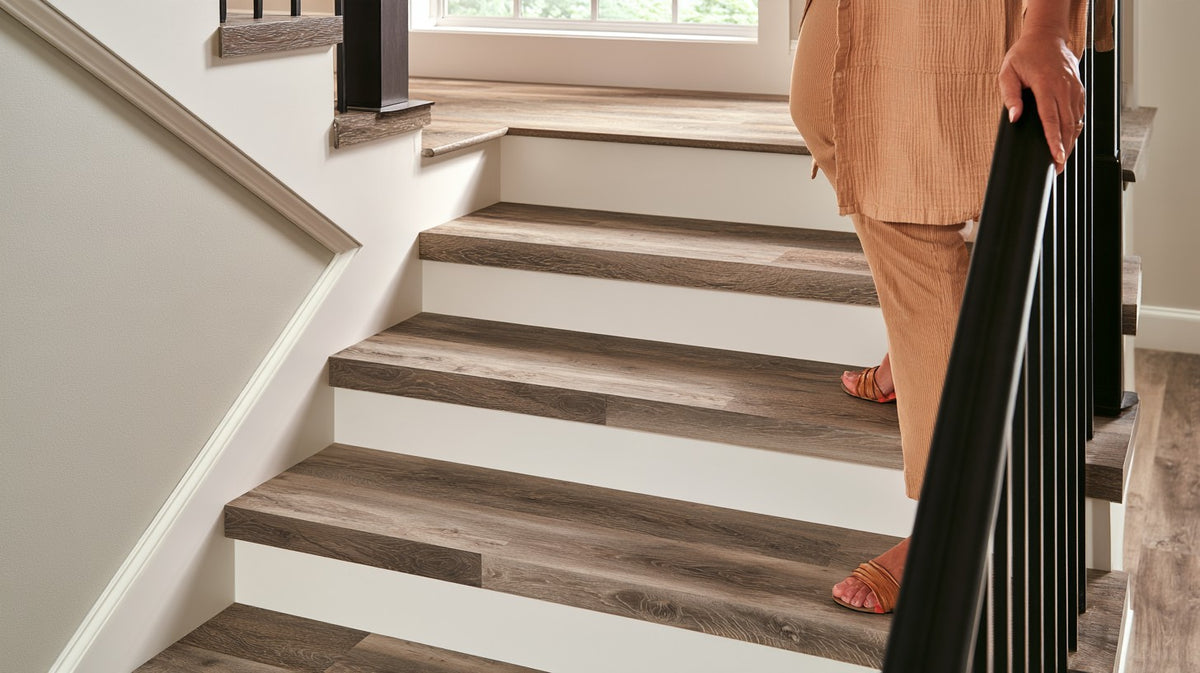
How do you finish stairs with vinyl plank or hardwood? Every step needs a finished front edge, and there are two ways to get one: cover the tread with plank and add a stair nose on the edge, or use a one-piece stair tread that already has the nose formed on it. Which one fits depends on the stairs you have, how much time the job can take, and how you want the finished edge to look.
The parts of a stair
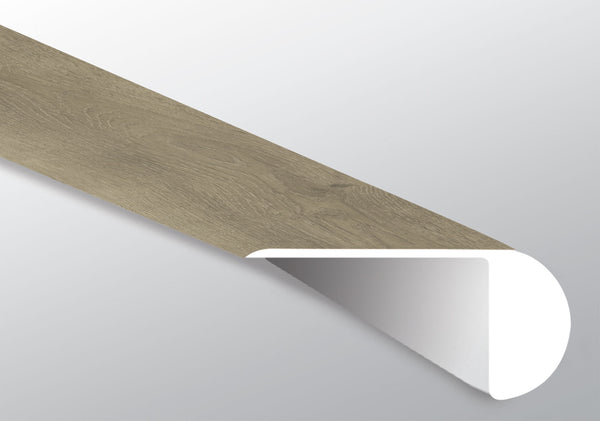
A few words make the rest of this guide easier. The tread is the flat part you step on. The riser is the vertical face between treads. The nosing is the front edge of the tread, the part your foot and your eye both find first. A landing is a flat platform partway up, and it needs a finished edge too. When a staircase looks unfinished, the nosing is almost always why.
Option one: plank on the tread plus a stair nose
In this approach, the tread is covered with cut planks and a separate stair nose piece finishes the front edge. It is flexible: the same planks from the floor go up the stairs, and the nose is chosen to suit the plank.
- Overlapping stair nose sits on top of the tread plank and wraps down over the edge. It is forgiving to install and hides small gaps at the edge.
- Flush stair nose sits level with the plank on the tread, so the surface stays flat right to the edge. It looks more built in, and takes more care to fit.
Plank on stairs is fastened down, not floated. A floating floor can move, and a tread has to stay exactly where it is. The installation instructions for your floor will specify the adhesive or fastening for stairs.
Option two: one-piece stair treads
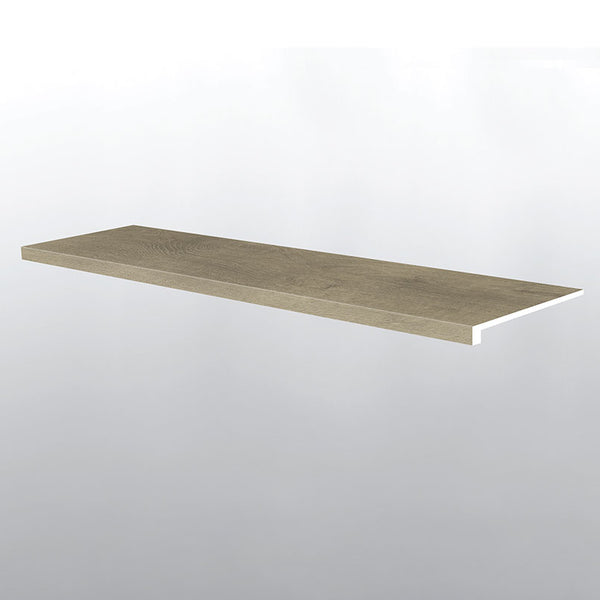
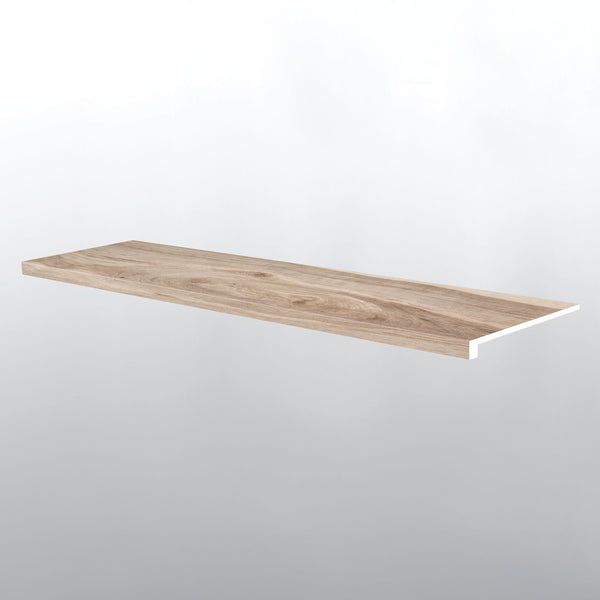
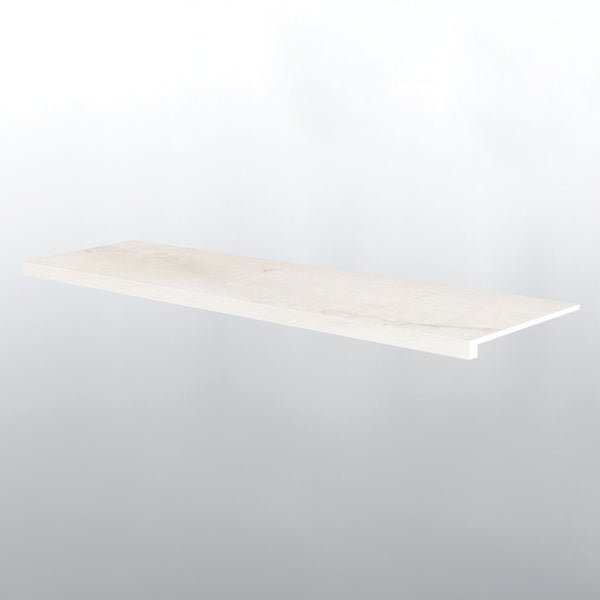
A stair tread with an eased edge is a single piece shaped to cover the step and form the nose at the same time. There are no seams across the step and no separate nose to line up, so every step looks the same. For straight staircases this is usually the faster and cleaner route, and it is the one many installers prefer on open stairs where the edge is on display from below.
Treads are sold in color-matched sets for specific floors. The treads shown in this guide match floors from the MSI Ashton and Andover series, so the steps carry the same color as the floor at the top and bottom of the stairs.
Plank and nose, or one-piece tread?
| Plank plus stair nose | One-piece tread | |
|---|---|---|
| Look | Seams across the tread, separate nose | One continuous surface per step |
| Fit | Works on odd widths and winders by cutting plank | Best on straight steps within the tread length |
| Labor | More cutting and fitting per step | Fewer pieces per step |
| Match | Same planks as the floor | Color-matched to the floor series |
Hardwood stairs
With hardwood, the same two approaches apply. Engineered hardwood can go on treads with a matching hardwood stair nose, or the stairs can take solid treads stained to match. Engineered hardwood flooring is often the practical choice for the floors around the stairs because it handles changes in humidity better than solid wood, and matching nosings are made for many engineered lines. Where a hardwood floor meets a vinyl staircase or the other way round, the landing edge is the natural place to change materials.
Details that make stairs safe
- Consistent edges. Every nosing should project the same amount, because people climb stairs by feel. Residential building codes set limits on nosing projection and on step dimensions, and your local building department can confirm what applies to your home.
- Grip. Choose a finish that is not slick, especially on stairs that lead outside or to a laundry area where feet may be wet.
- Visible edges. A nosing that contrasts slightly with the tread helps people see where each step ends, which matters most on the way down.
- Firm fastening. Any give or rock in a tread is a trip risk. Old carpet tack strips and staples should come out and the stair should be flat before anything goes on.
Planning the order
Count the steps and landings, measure the width of each, and note whether any steps are winders or open on one side. That tells you whether one-piece treads will fit every step or whether some will need plank and nose. Order stair parts with the floor so the color matches, and add a spare tread or nose piece in case one is cut short.
Frequently Asked Questions
Can you put vinyl plank on stairs?
Yes. Vinyl plank is fastened to the tread rather than floated, and the front edge is finished with a stair nose or the whole step is covered with a one-piece tread. Follow the stair instructions for your specific floor.
What is the difference between a flush and an overlapping stair nose?
A flush stair nose sits level with the plank on the tread, keeping the step flat to the edge. An overlapping stair nose sits on top of the plank and wraps over the edge, which is more forgiving to install.
Are one-piece stair treads better than plank and nose?
On straight stairs they are usually faster and look more uniform because there are no seams across the step. On winders or unusual widths, plank and nose can be cut to fit where a one-piece tread cannot.
Do I need a stair nose on the landing?
Yes. A landing has an exposed front edge just like a step, and it needs the same finished nose so the edge is protected and easy to see.
Can I use the same floor on the stairs and in the rooms around them?
Usually, yes. Treads and stair noses are made to match specific floor series, so the stairs can carry the same color and finish as the floor at the top and bottom.
When the choice is made, browse stair flooring and flooring trims at Citadel Spaces.
From the guide
Shop the stair parts in this guide