Buyer Guide
How Much Does Luxury Vinyl Plank Flooring Cost in 2026
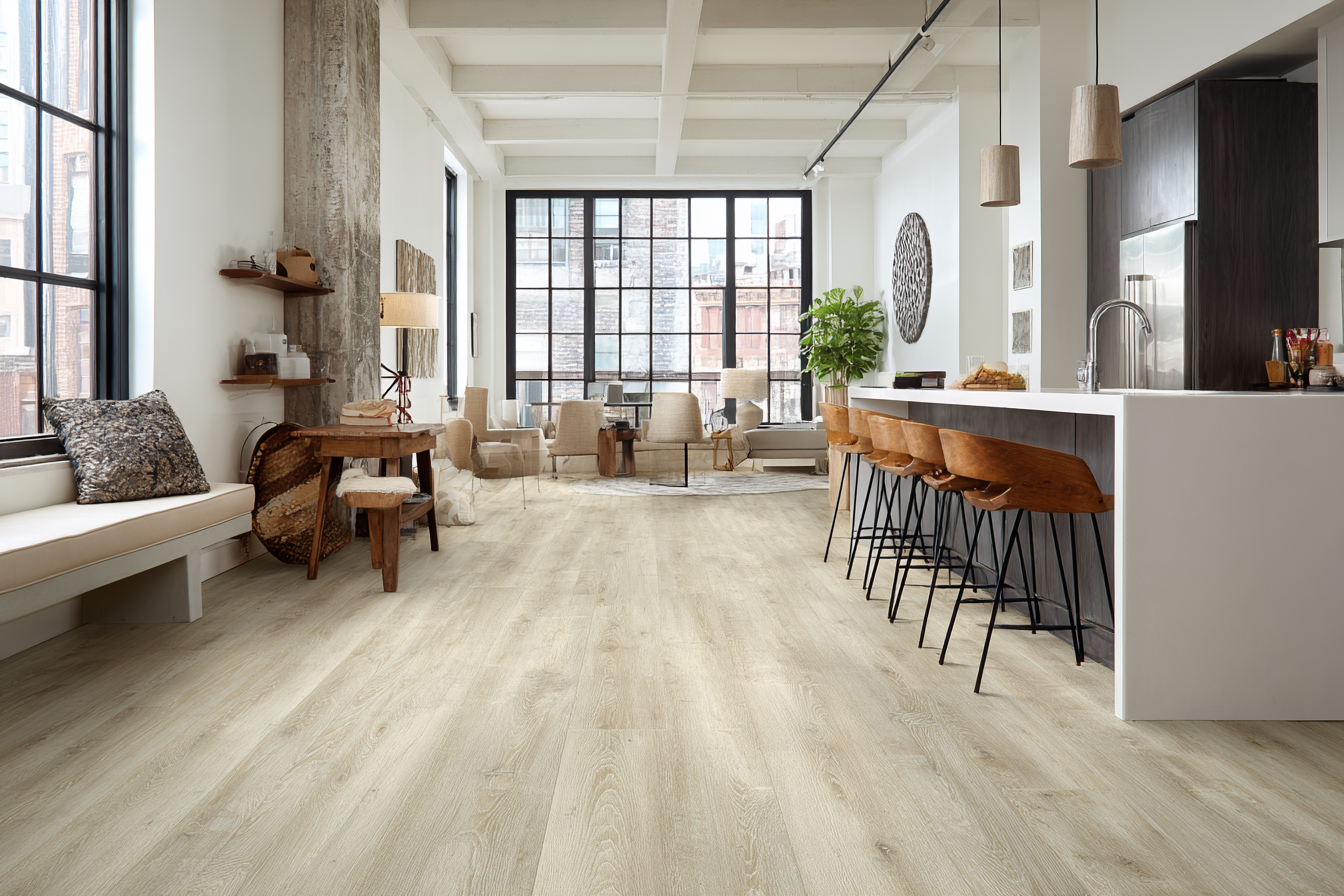
Luxury vinyl plank (LVP) has become one of the most popular flooring choices in American homes, and for good reason: it delivers a realistic wood look, holds up to moisture, and costs a fraction of real hardwood. If you are budgeting a project for 2026, the question is simple but the answer has a few moving parts. This guide breaks down LVP pricing by material, installation, and project size so you can plan with confidence.
What Drives Luxury Vinyl Plank Cost
LVP is not a single product. It is a category that ranges from thin, builder-grade planks to thick, rigid-core SPC boards with attached underlayment and lifetime warranties. The price you pay depends mostly on these factors:
- Core construction: SPC (stone polymer composite) and WPC (wood polymer composite) cores cost more than flexible glue-down vinyl but are more durable and dimensionally stable.
- Wear layer thickness: Measured in mils, a thicker wear layer (12 to 22 mil) resists scratches and dents and carries longer warranties.
- Plank size and visual: Wide, long planks with deep embossing and realistic graphics command a premium.
- Brand and warranty: Established brands with strong residential and light-commercial warranties tend to price higher.
- Waterproof rating and attached pad: Fully waterproof rigid-core boards with a pre-attached acoustic pad add value and cost.
2026 LVP Cost Per Square Foot
For 2026, expect material pricing to fall into the ranges below. These are estimates, and actual pricing varies by brand, color, and quantity. For exact pricing, check the live numbers on individual product pages or request a quote.
| Tier | Material Only (per sq ft) | What You Get |
|---|---|---|
| Builder / Value | $1.50 to $2.50 | Thinner wear layer (6 to 12 mil), flexible or entry SPC core, shorter warranty |
| Mid-Range | $2.50 to $4.50 | Rigid SPC/WPC core, 12 to 20 mil wear layer, attached pad, waterproof |
| Premium | $4.50 to $7.00+ | Thick wear layer (20 to 22 mil), wide planks, premium visuals, long warranties |
Installation is a separate cost. Professional installation for floating click-lock LVP typically runs $1.50 to $4.00 per square foot, while glue-down installation and complex layouts can push higher. Add-on charges for subfloor prep, old floor removal, transitions, and stairs are common.
Total Installed Cost
When you combine material and labor, most homeowners land in the ranges below for a fully installed floor:
| Project | Estimated Installed Cost (per sq ft) |
|---|---|
| DIY floating LVP (material only) | $1.50 to $7.00 |
| Professional install, value LVP | $3.00 to $6.00 |
| Professional install, mid-range LVP | $4.50 to $8.50 |
| Professional install, premium LVP | $7.00 to $11.00+ |
Estimating Your Project by Room Size
To turn per-square-foot pricing into a real budget, measure your space and add roughly 7 to 10 percent for cutting waste. Here is what a mid-range floor (around $6 per square foot installed) looks like by room:
- Small bathroom or laundry (40 sq ft): roughly $240 to $340
- Bedroom (150 sq ft): roughly $900 to $1,275
- Living room (300 sq ft): roughly $1,800 to $2,550
- Main floor (1,000 sq ft): roughly $6,000 to $8,500
Hidden Costs to Plan For
- Subfloor leveling: Uneven subfloors must be flattened before rigid-core LVP goes down.
- Removal and disposal: Tearing out old carpet, tile, or laminate adds labor.
- Underlayment: If your planks lack an attached pad, you may need a separate underlayment.
- Trim and transitions: Baseboards, quarter round, and T-molds at doorways add up.
- Stairs: Stair treads are labor-intensive and priced separately, often per step.
How to Save Money Without Sacrificing Quality
You do not have to choose between price and performance. A few smart moves keep your budget in check:
- Buy from a superstore that carries 40+ brands so you can compare tiers and find the best value for your look.
- Order all material at once to lock pricing and avoid dye-lot mismatches.
- Choose a mid-range SPC plank with a 12 to 20 mil wear layer: it is the sweet spot for durability and price.
- Handle simple prep yourself, like removing old baseboards, to reduce labor hours.
- Take advantage of nationwide shipping for material and local installation services if you are near the Sacramento showroom.
Why LVP Pricing Varies So Much Between Stores
Two planks that look the same in a photo can carry very different price tags, and the reason usually comes down to specifications buyers cannot see at a glance. A thicker wear layer, a denser core, tighter locking mechanisms, and longer warranties all add cost but also add years of real-world performance. When you shop a superstore that carries 40 or more brands, you can line up products by spec and see exactly what you are paying for, rather than guessing from a single sample board.
It also pays to understand the difference between residential and commercial ratings. A plank built for light commercial use often has a heavier wear layer and a more aggressive warranty, which can be worth the premium in a busy household with kids and pets. On the other hand, a quiet primary bedroom does not need the toughest plank on the shelf, so you can put your budget toward a richer visual instead. Matching the product to the room, rather than buying the same plank everywhere, is one of the simplest ways to control your total spend without compromising on quality where it counts.
Comparing LVP to Other Floors
It helps to see where LVP sits in the broader flooring landscape. Laminate is often a touch cheaper but is less water-friendly. Engineered hardwood looks and feels premium but costs more and is more sensitive to moisture. Tile is the most durable and waterproof but costs the most to install. LVP threads the needle: waterproof, comfortable, attractive, and DIY-friendly, which is exactly why it has become the default choice for so many renovations and new builds across the country.
Browse the full selection on our luxury vinyl plank collection, or explore the broader flooring category to compare LVP against laminate, tile, and engineered wood.
Frequently Asked Questions
Is luxury vinyl plank cheaper than hardwood?
Yes. Solid and engineered hardwood often costs $6 to $15 or more per square foot for material alone, while LVP material typically ranges from $1.50 to $7.00 per square foot. LVP also tends to cost less to install and is more forgiving in moisture-prone rooms.
How long does LVP flooring last?
A quality rigid-core plank with a thick wear layer can last 15 to 25 years or more in a residential setting, depending on traffic and care. Warranties on premium products often run 25 years to lifetime for residential use.
Can I install LVP myself to save money?
Floating click-lock LVP is one of the most DIY-friendly floors available, and doing it yourself can save the $1.50 to $4.00 per square foot you would pay for labor. That said, large areas, stairs, and floors that need significant subfloor prep are often worth handing to a professional.
Is more expensive LVP always better?
Not always. Past a certain point you are paying for wider planks, premium visuals, and longer warranties rather than dramatically better durability. For most homes, a mid-range plank delivers excellent performance at a reasonable price.
How much extra material should I order?
Order about 7 to 10 percent over your measured square footage to cover cutting waste, and keep a few spare planks for future repairs. Complex layouts with lots of angles may need closer to 10 to 15 percent.
Ready to price your project? Compare options, warranties, and live pricing on our luxury vinyl plank collection, and reach out for a quote or to visit the Sacramento showroom for hands-on samples and local installation help.
Shop luxury vinyl plank at Citadel Spaces
Browse our full luxury vinyl plank selection or start with these popular options:
- MSI XL Cyrus Fauna Luxury Vinyl Plank Flooring
- MSI Laurel Saddle Wood Luxury Vinyl Plank Flooring
- MSI Andover Highcliffe Greige Luxury Vinyl Plank Flooring
Browse all luxury vinyl plank →
Browse hardwood to see the current range, and size your order with the flooring and tile coverage calculator.