Buyer Guide
Engineered vs Solid Hardwood: What Is the Difference
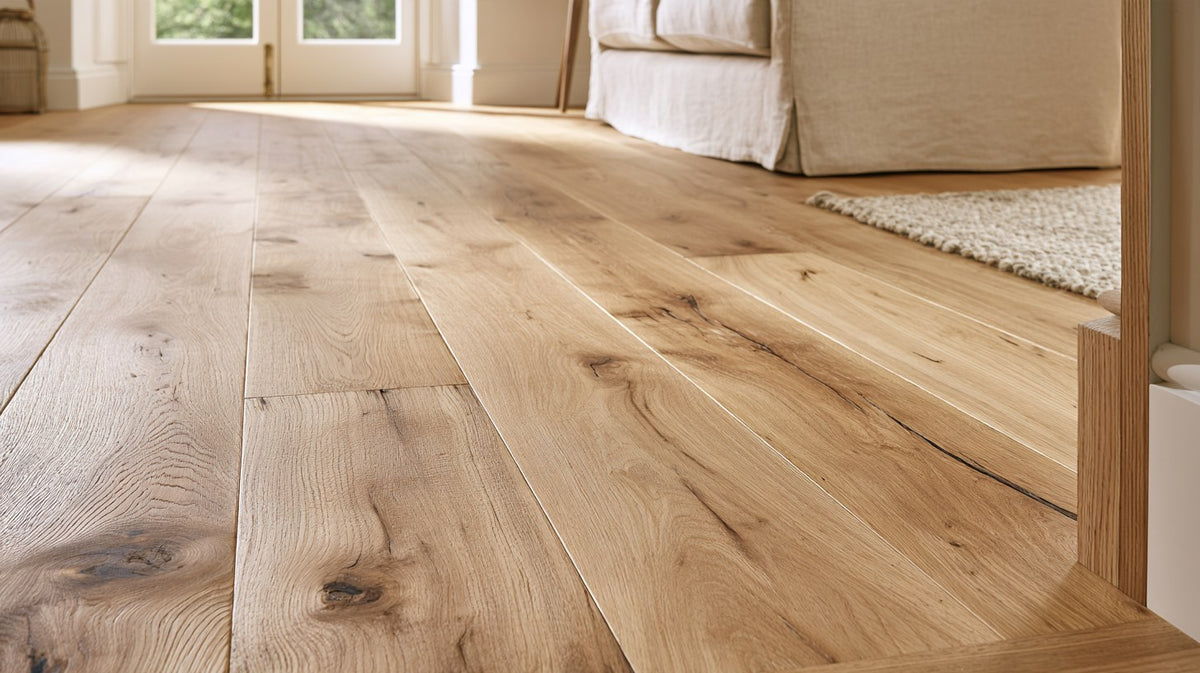
Engineered vs solid hardwood is not a question of real versus fake: both are real wood on the surface you walk on. The difference is underneath. Solid hardwood is one piece of wood all the way through. Engineered hardwood is a real wood top layer bonded to a stable core. That construction decides where each floor can go, how it handles changes in humidity, and how many times it can be refinished.
How each is built
Solid hardwood is milled from a single piece of timber, commonly three quarters of an inch thick. It can be sanded and refinished many times over its life, because there is plenty of wood above the tongue and groove.
Engineered hardwood has a top layer of real hardwood, called the wear layer, bonded to a core of layered plywood or other wood-based material. The layers run in different directions, which makes the plank far more resistant to expanding and shrinking with humidity. How often it can be refinished depends on the thickness of that top layer.
Side by side
| Engineered hardwood | Solid hardwood | |
|---|---|---|
| Construction | Real wood top layer on a layered core | One piece of wood throughout |
| Stability | Resists humidity changes well | Moves more with seasonal humidity |
| Where it can go | Most rooms, including many basements and concrete slabs, per the manufacturer | Above-grade rooms over a wood subfloor |
| Installation | Float, glue or nail, depending on product | Usually nailed down |
| Refinishing | Limited by the wear layer thickness | Can be refinished many times |
| Wide planks | Well suited; stays flat | Wide solid planks move more |
Why engineered has become the default
Most new wood floors today are engineered, for practical reasons. Many homes are built on concrete slabs, where solid wood usually cannot be nailed down, and many owners want wide planks, which stay flatter in engineered construction. Engineered floors can also go in rooms where humidity swings, where a solid floor would cup or gap. Our range reflects that: most of our hardwood is engineered, from Mohawk, Garrison, MSI, Johnson Hardwood and others.
Why people still choose solid
Solid hardwood's great strength is longevity. A solid floor in a room that suits it can be sanded and refinished again and again over decades, changing color or recovering from years of wear. For a traditional home with a wood subfloor above grade, and an owner who plans to stay a long time, solid is a lasting investment. Our solid floors come from Appalachian and Johnson Hardwood.
How to choose
- Check the subfloor. Concrete slab or basement: engineered. Wood subfloor above grade: either.
- Think about humidity. Rooms with large seasonal swings favor engineered.
- Decide on plank width. Wide planks are easier to keep flat in engineered construction.
- Plan for refinishing. If you expect to refinish several times, choose solid, or an engineered floor with a thick wear layer.
- Consider installation. Some engineered floors can float, which can be faster and quieter to install.
Looks and feel
Once installed, a good engineered floor and a solid floor look and feel the same, because the surface is real wood either way. Species, grade, color, finish and plank width shape the look far more than construction does. Choose those first, then choose the construction that suits the room.
Finishes and care
Both engineered and solid hardwood come prefinished or unfinished. Prefinished floors are sanded, stained and sealed at the factory under controlled conditions, so they install without the dust and drying time of an on-site finish, and many carry textured surfaces such as wire-brushed or hand-scraped that hide everyday wear. Care is the same for both: sweep or vacuum grit that would scratch, wipe spills promptly, use felt pads under furniture, and keep indoor humidity in a steady range. A wood floor rewards that routine with decades of service, whichever construction is underneath.
Plank width and length also change the character of a room. Wide, long planks read calm and contemporary with fewer seams; narrower strips feel traditional. Wide planks are where engineered construction shows its advantage, because a wide solid board moves more with humidity than a wide engineered plank.
Before you order
Confirm what is under the floor: slab, plywood, or an existing floor to cover. Measure the moisture in a concrete slab or a basement before any wood goes down, and let the planks acclimate in the house if the manufacturer calls for it. Order matching stair nose and transitions at the same time as the floor so the stain and finish match, and add a waste allowance for cuts, which is higher for patterns such as herringbone.
Frequently Asked Questions
Is engineered hardwood real wood?
Yes. The surface you walk on is a layer of real hardwood. Underneath is a layered wood-based core that makes the plank more stable.
Can engineered hardwood be refinished?
Usually, yes, but the number of times depends on how thick the top wood layer is. A thicker wear layer allows more refinishing.
Can I put hardwood on a concrete slab?
Engineered hardwood can often be installed over concrete, glued down or floated, following the manufacturer's instructions. Solid hardwood is generally not installed directly on concrete.
Which lasts longer, engineered or solid hardwood?
Solid hardwood can last the longest because it can be refinished many times. A well-made engineered floor with a good wear layer also lasts for many years, and it can go in places solid wood cannot.
Does engineered hardwood look different from solid?
Not once it is installed. Both show real wood on the surface, so the species, finish and plank width decide the look.
To take this from reading to ordering, browse engineered hardwood and solid hardwood at Citadel Spaces, and size the order with the flooring and tile coverage calculator.
From the guide
Shop the floors in this guide