Investment
Premium Surfaces as a Quiet Long-Cycle Hedge

The investment conversation around residential surfaces usually focuses on resale recovery, how much of the spend you'll get back when you sell. The deeper conversation runs longer: how premium surfaces compound in value across decades, how they age relative to alternatives, and why considered specification turns building cost from expense into long-cycle asset.
This guide thinks about premium surfaces as a long-horizon position rather than a short-horizon transaction. The framing matters because the homeowners who specify well today are often holding through 10, 20, or 30 years of ownership, and the math at that horizon is meaningfully different from the resale-in-five-years math.
The Long-Horizon Surface Math
Across 30 years of ownership, three behavioral patterns separate premium surfaces from alternatives.
Premium surfaces don't need replacement. Real natural stone, premium porcelain, and high-quality hardwood routinely deliver 30+ year service lives without replacement. The same period typically covers 1.5 to 2 cycles of replacement for cheaper alternatives, concrete pavers replaced at year 15, then again at year 30; vinyl flooring replaced at year 10, year 20, year 30.
Premium surfaces age into character. Natural stone, hardwood, brass, and similar materials develop patina that reads as character. The surface at year 30 is often more beautiful than at install, not less. Cheaper alternatives age into "needs replacement" rather than "developed character."
Premium surfaces hold market position. A premium-specified house in 2026 still reads as premium-specified in 2046. The architectural language doesn't go out of date. A budget-specified house in 2026 reads dated by 2036 and aggressively dated by 2046.
The compound effect: premium surfaces aren't just better surfaces, they're better long-horizon investments at the architectural level.
How Appraisers Read Materials Over Time
One specific market dynamic worth understanding: appraisers don't price replacement-cost on surfaces, they price perceived condition and quality. A marble counter at year 20 with subtle patina appraises essentially the same as a new marble counter, perhaps slightly better because it reads "established" rather than "new construction."
A laminate counter at year 20 appraises as worn-out laminate; the appraiser deducts replacement cost from the home's value.
The differential compounds across the surfaces in the house. Premium kitchens, bathrooms, hardscape, and floors all maintain or improve their contribution to appraised value over decades. Budget specifications typically subtract value as they age.
Inflation and the Replacement Hedge
Construction costs have outpaced general inflation for the past two decades and are continuing to do so. The price of installing a premium marble bath in 2026 is materially higher than the same project in 2006; in 2046, the cost will be higher still.
What this means for surface investment: specifying premium today locks in current pricing for what will be a more expensive specification later. A $40,000 marble installation done in 2026 is approximately $80,000 in 2046 dollars (assuming continuation of historical construction inflation rates). For homeowners holding long-term, this is the inflation-hedge math: today's premium spec is tomorrow's avoided premium spec.
The math turns reverse on cheaper alternatives. A $15,000 vinyl floor installation done in 2026 will need replacement around 2046, at which point the replacement cost approaches the original premium specification's cost. The "savings" disappear at the replacement horizon.
Material Categories That Hold Value Best
Three specific categories with strong long-cycle hedge characteristics.
Natural stone surfaces
Marble, quartzite, limestone, travertine, granite, natural stones are essentially geological material with no significant aging mechanism. The countertops and slabs collection carries the residential range. A natural stone counter installed today will be essentially the same counter in 2046, perhaps with subtle patina that reads as character. See our slab buyer's guide pillar.
Premium hardwood
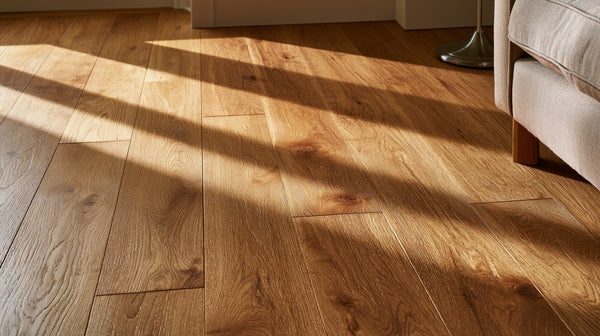
Solid sawn or quality engineered hardwood from the hardwood collection delivers 50+ year service lives with periodic refinishing. The refinishing, typically every 10-15 years, is dramatically cheaper than replacement. The floor at year 50 looks essentially like the floor at install, perhaps with slightly more patina.
Real metal hardware
Solid brass, solid bronze, real stainless steel, fixtures and hardware made from real metals rather than plated alloys. Develop patina, last decades, age beautifully. We cover the brass case in our unlacquered brass guide.
Where the Math Gets Mixed
Some categories don't fit the premium-as-hedge story cleanly.
Engineered quartz countertops (Cambria, Caesarstone, Silestone). The polymer resins age, can yellow with UV exposure, and the surface character at year 25 is meaningfully different from install. Premium engineered quartz is still better than budget alternatives, but doesn't have the indefinite service life of natural stone.
Premium luxury vinyl flooring. Even the best LVT, Nove Reserve at 22mil wear layer (see our Nove curator guide), has a service horizon. Maybe 25-30 years for the best products in light-use applications, less in heavy use. The product is a meaningful improvement over budget vinyl, but doesn't match the long-horizon behavior of hardwood or natural stone.
Cabinetry. Even premium cabinetry has stylistic obsolescence. The 1990s premium kitchen cabinet looks dated in 2026 regardless of original quality. This is the case where premium specification doesn't fully hedge against long-cycle change; cabinetry will need refresh sooner than surfaces will.
The Specification Strategy for Long-Horizon Owners
For homeowners planning to hold through 15+ years, the specification strategy that maximizes long-cycle value:
Invest premium in surfaces with indefinite service lives. Counters, floors, exterior hardscape, plumbing fixtures, hardware. These compound across decades.
Spec mid-range in elements with stylistic obsolescence. Cabinetry, light fixtures, paint colors, decorative elements. These will need refresh in 10-15 years anyway.
Avoid budget alternatives where the maintenance trajectory is bad. Cheap pavers, low-grade hardwood, polymer-heavy counters. The savings disappear at the replacement horizon and the visible aging often dominates the home's read before replacement.
The Appraiser Read
One specific behavior of professional residential appraisers: they're trained to identify "deferred maintenance", surfaces that need replacement but haven't been replaced. Deferred maintenance is a meaningful deduction from appraised value.
Premium materials don't accumulate deferred maintenance the way budget materials do. A 25-year-old marble bath floor doesn't appear on an appraiser's deferred-maintenance list; a 25-year-old vinyl floor does. The differential is measurable.
For long-horizon owners, this is the resale moment of truth: the appraised value at sale reflects the cumulative differential between premium and budget specification across decades.
The Total Cost of Ownership Calculation
The honest total-cost-of-ownership comparison across 30 years usually favors premium specification, particularly for surfaces with high replacement costs (flooring, exterior pavers, kitchen counters).
The math runs roughly:
- Premium specification: higher initial cost, near-zero replacement cost, modest maintenance cost, full value retention
- Mid-range specification: moderate initial cost, partial replacement cost (one cycle in 30 years), moderate maintenance, partial value retention
- Budget specification: lower initial cost, high replacement cost (multiple cycles), high cumulative maintenance, low value retention
Calculated honestly across 30 years, premium specification often costs less than budget specification, sometimes substantially less, particularly when the premium specification eliminates replacement cycles entirely.
The Liquidity Question
One worthwhile caution: premium surface specification is illiquid investment. The value is realized only at sale of the home (or at the avoided-cost moment of replacement). A homeowner who needs to liquidate quickly can't easily extract the premium-spec value.
This is a real but limited concern. Real estate is fundamentally illiquid; surface specification is part of the home's overall illiquidity, not a separate problem. For homeowners who treat home as long-horizon hold rather than short-horizon trade, the illiquidity isn't a meaningful constraint.
Where to Start
For long-horizon owners considering surface specification, the framework is straightforward: invest premium in elements with indefinite service lives, spec moderate in elements with stylistic obsolescence, and avoid budget alternatives where the maintenance trajectory is bad. Browse the slabs library, hardwood, natural stone pavers, and porcelain pavers for the long-horizon material categories. For specific deep-dives, our investment case for premium hardscrape, real stone vs engineered lifetime cost, and material aging playbook.