Design Trends
The Neuroscience of Calm Interiors: How Material, Light, and Space Regulate the Nervous System
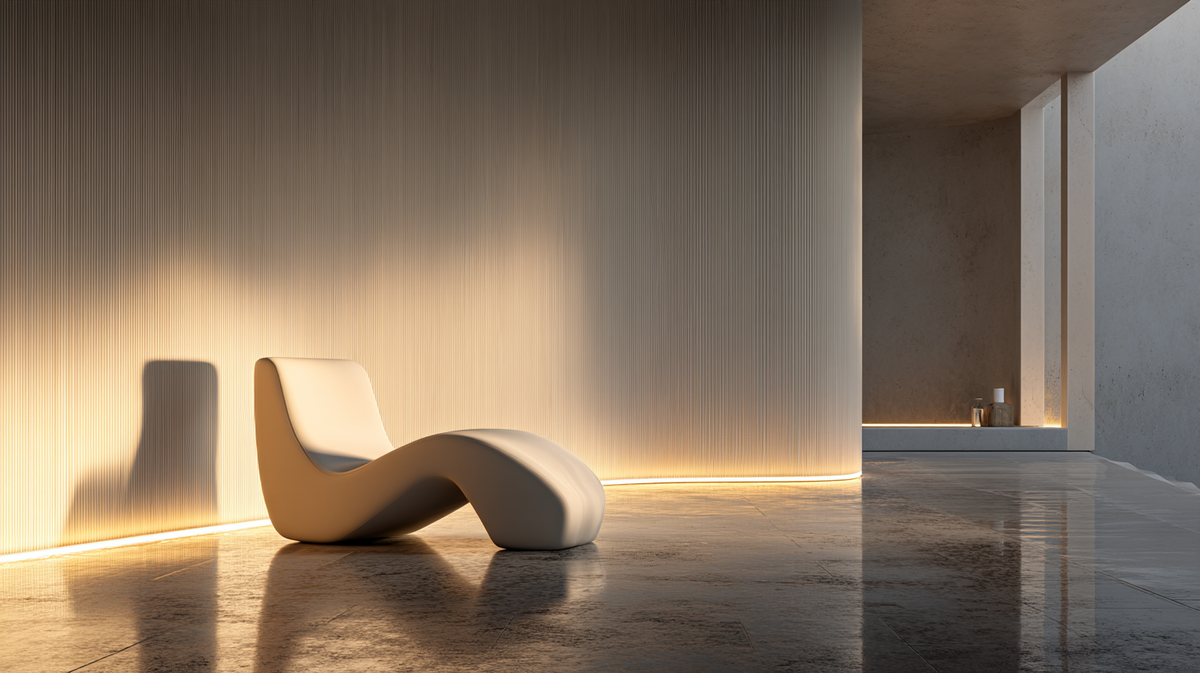
The case for calming interiors has shifted from preference to measurable science. Across the past decade, neuroscience research on how interior environments affect the human nervous system, particularly the parasympathetic side that regulates rest, digestion, and recovery, has moved from theoretical to specific. Researchers can now measure the effect of material choice on cortisol, the impact of light color temperature on heart rate variability, and the relationship between visual complexity and parasympathetic activation. The results consistently favor specific kinds of interiors over others.
This is the pillar guide for the wellness science cluster on the Citadel blog. We'll walk through what's actually been demonstrated, what it means for interior specification, and the specific design choices that follow from the research. The supporting cluster pieces, material texture and the vagus nerve, light, surface, and cortisol, and minimalism and negative space, go deeper on specific mechanisms.
The Two Nervous Systems and the Built Environment
The autonomic nervous system has two opposing branches.
The sympathetic system, the "fight or flight" response, activates in response to perceived threat or stimulation. Heart rate rises, blood pressure increases, attention narrows, the body prepares for action. Sustained sympathetic activation produces stress, fatigue, and the long-term health effects associated with chronic stress.
The parasympathetic system, the "rest and digest" response, activates in response to perceived safety. Heart rate slows, breathing deepens, attention broadens, the body shifts toward recovery and repair. Parasympathetic activation is the physiological state of calm.
The built environment continuously sends signals to the autonomic nervous system. Some signals trigger sympathetic activation. Others promote parasympathetic activation. Most homes are accidentally sending sympathetic signals, bright cool light, hard reflective acoustic surfaces, visually complex environments, materials that read manufactured rather than natural, without their occupants realizing why they feel subtly anxious in their own homes.
The neuroscience of calm interiors is the research on which environmental signals trigger which nervous-system response, and what to do about it.
The Three Primary Calming Signals
Across the research, three categories of environmental signal consistently promote parasympathetic activation:
Natural material cues. Wood, stone, woven texture, and other materials with biological or geological origin trigger parasympathetic responses that synthetic materials don't. The mechanism appears to involve evolutionary recognition, human nervous systems calibrated over hundreds of thousands of years in natural environments still read natural materials as "safe" cues.
Warm, dimmable light. Light in the warm color temperature range (2700K-3000K) at moderate intensity triggers measurable parasympathetic responses. Bright cool light (4000K+) triggers sympathetic responses, particularly in evening hours when the contrast with circadian expectations is sharpest.
Visual quietness with depth. Environments with low visual complexity (few competing visual elements, restrained color palette, clean architectural lines) but meaningful textural depth (varied material, natural pattern, considered material variation) promote parasympathetic states. Pure visual minimalism without texture reads sterile and can fail to calm; texture-rich environments without visual restraint produce overstimulation.
Material Texture: The Strongest Single Variable
Of the calming signals, material texture appears to have the most consistent measurable effect. Specific findings from biophilic design research:
- Wood-grain visible textures produce measurably greater stress reduction than smooth painted equivalents
- Natural stone surfaces elicit stronger parasympathetic response than imitative engineered surfaces
- Woven and tactile textiles in a room correlate with longer dwell time and lower self-reported stress
- Three-dimensional surface relief (cleft stone, stacked stone, hand-applied plaster) produces stronger parasympathetic activation than flat equivalents
The mechanism appears to involve the vagus nerve, the long parasympathetic nerve that runs from brain to abdomen, which responds to specific kinds of sensory input. Texture, particularly natural texture, appears to be one of the visual-and-tactile signals the vagus nerve reads as "safe."
We cover the specific mechanism in our material texture and the vagus nerve guide.
Light: The Second Strongest Variable
Light affects circadian regulation, mood, and stress response in measurable ways.
The basic dynamic: blue-rich cool light (4000K and above) signals "daytime alertness" to the brain via specific blue-light-sensitive cells in the retina (intrinsically photosensitive retinal ganglion cells, ipRGCs). These cells trigger cortisol release and sympathetic activation appropriate for daytime activity. Warm light (2700K-3000K) lacks the blue spectrum that triggers ipRGCs and is interpreted as evening-or-rest signal.
The implication for residential lighting: bright cool light in evening hours (the standard 4000K LED that dominated 2010s residential) actively works against the body's need to wind down. Bright cool light in morning hours is appropriate; bright cool light in evening hours produces measurable sleep disruption and stress accumulation.
The 2026 evidence-based residential lighting specification: 2700K-3000K throughout living spaces, dimmable, with brightest levels reserved for daytime use. The simplicity of this rule is striking, the residential standard moved decisively wrong in the 2010s and has only recently begun correcting.
Floor and surface reflectivity compound the lighting effect: lighter floors reflect more light into the room, dark floors absorb. This is part of why dark bedrooms support sleep and bright kitchens support morning alertness. We cover the relationship in our light, surface, and cortisol guide.
Negative Space: The Underrated Variable
Visual minimalism, empty wall, empty corner, empty horizontal, has a measurable nervous-system effect that designers have observed for decades and researchers have begun confirming experimentally. Visually busy environments produce sustained sympathetic activation; quiet environments allow parasympathetic dominance.
The mechanism appears to involve attentional load. The nervous system continuously processes visual information; a busy environment requires constant attention-shifting, which activates the sympathetic system. A quiet environment allows the attention system to relax.
The specification implication: rooms benefit from significant negative space. The empty wall, the empty corner, the surface with one object instead of three. The discipline isn't aesthetic minimalism for its own sake. It's reducing the attentional load the room places on its occupants.
This is also the case where strict minimalism over-corrects. A room with no visual elements at all reads sterile and can produce its own kind of low-grade stress. The right specification has visual quietness and material texture, the calming signals come from material rather than from object density. We cover this in our minimalism and negative space guide.
Color Palette and Stress Response
Color affects nervous-system response through several mechanisms, direct color psychology, association with natural environments, and reflectivity behavior.
Findings from interior environment research:
- Warm-neutral palettes (cream, warm taupe, soft graphite, warm earthy accents) produce stronger parasympathetic responses than cool-neutral palettes
- High-contrast environments (pure black-and-white, bright accent against neutral ground) produce more sympathetic activation than low-contrast environments
- Natural-derived colors (sage, terracotta, warm earth tones, natural wood) outperform synthetic-saturated colors (bright primary, electric tones, neon accents) on stress measures
- Pure white walls, while popular, produce slightly higher arousal than warm cream equivalents
The 2026 residential color specification that follows: warm-neutral palettes with restrained accent, drawing color from natural references (stone, wood, plant, earth) rather than from synthetic palettes.
Sound and Acoustic Environment
The acoustic environment of a room affects stress measures alongside visual signals. Hard reflective surfaces (tile, polished stone, drywall) bounce sound and amplify ambient noise; soft absorptive surfaces (rugs, curtains, upholstery) absorb sound and reduce noise.
Quiet rooms with sound absorption produce measurably lower stress responses than reverberant rooms. The implication: floor and textile choice affects nervous-system regulation through acoustics as well as visual reading. Hardwood and stone reflect sound; large rugs, soft window treatments, and upholstered furniture absorb sound.
For acoustic floor specification, see our acoustic floors guide.
Air Quality and Respiratory Cues
Indoor air quality affects nervous-system response through both physiological and psychological mechanisms. Poor indoor air quality produces measurable sympathetic activation. Plants improve indoor air quality measurably; natural ventilation does so dramatically. Synthetic VOCs from new materials, paints, and furnishings off-gas for months and produce sympathetic stress.
Specification implication: low-VOC paints and finishes, materials with low embodied chemistry (natural stone, hardwood, natural fiber textiles), generous ventilation, and integrated planting all contribute to nervous-system-friendly interiors.
The Compound Effect at the Material Level
No single calming signal is dramatic. The effect compounds across multiple coordinated specifications:
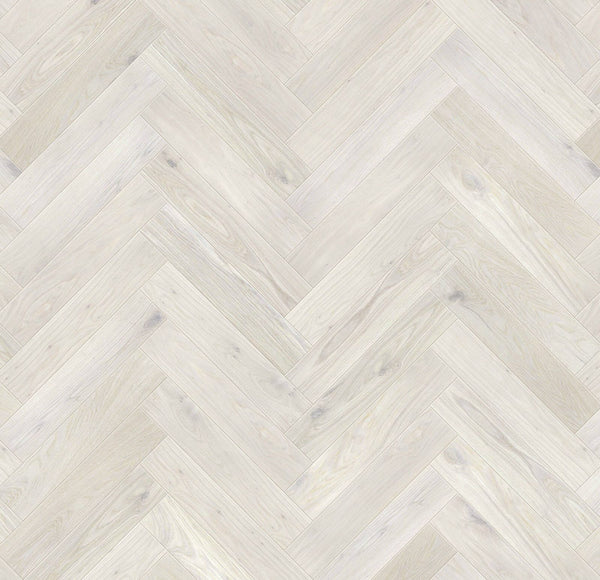
- Natural stone or wood floor (rather than synthetic carpet or plastic-look LVT)
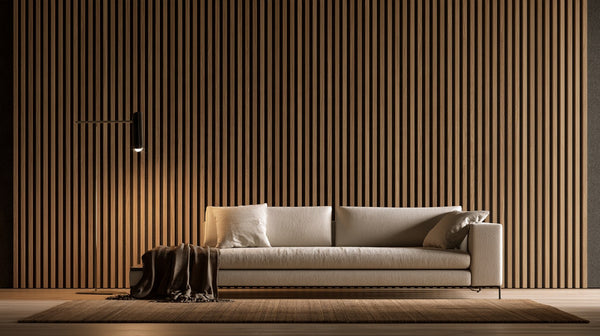
- Hand-applied plaster or textured wall treatment (rather than smooth drywall)
- Warm-temperature lighting at moderate intensity (rather than bright cool LED)
- Restrained color palette in warm neutrals (rather than high-contrast or saturated colors)
- Significant negative space in each room (rather than visual density)
- Soft acoustic textiles (rugs, curtains, upholstery)
- Plants and natural elements where light supports them
- Natural materials in dominant volumes (rather than synthetic alternatives)
The aggregate effect of these specifications is a room measurably calmer than its alternative. Occupants don't articulate the difference; they just feel calmer in the space.
The Bedroom Specifically
The bedroom is where the calming-signal specification matters most. Findings:
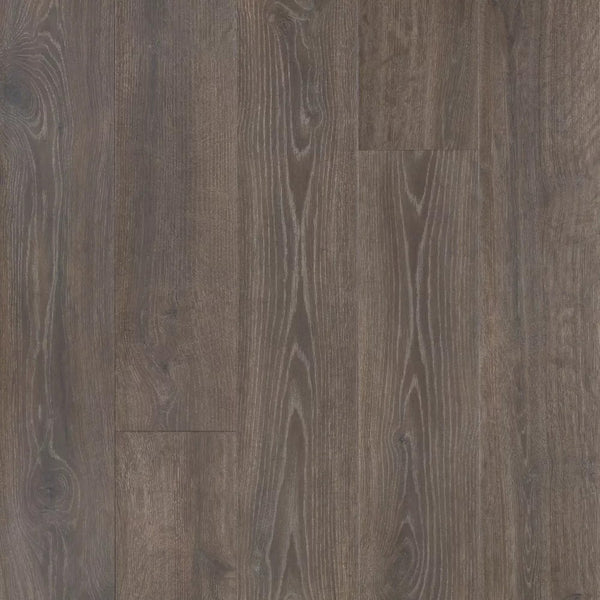
- Darker floors support sleep better than light floors (lower morning light reflection)
- Warm-temperature lighting throughout, dimmable to very low levels
- Soft textiles dominant, rugs, upholstered headboard, layered bedding
- Restrained visual content, significant negative space, few decorative objects
- Natural materials at the surfaces nearest the body (wood, linen, wool)
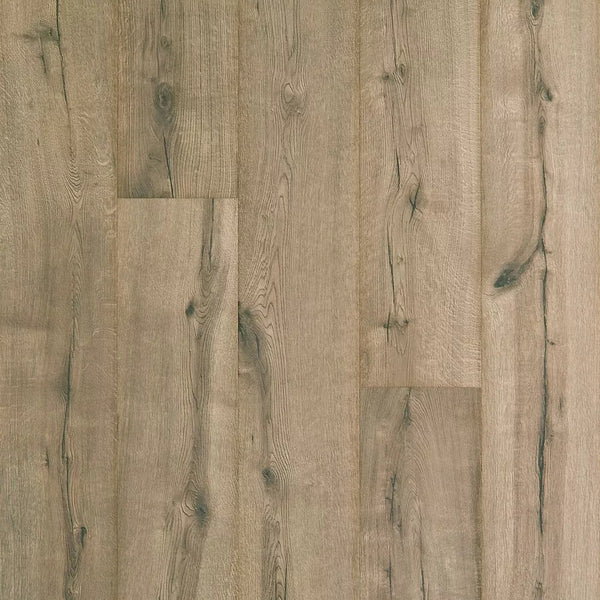
The bedroom specification that follows: hardwood or warm-tone wide-plank LVT (Hatfield Nove for the dark-floor read, see our Nove curator guide), warm-cream walls, simple architectural moldings, dimmable warm lighting, layered textile depth, intentional negative space.
The Bathroom Specifically
The bathroom is the second-most-important calming-signal room, particularly the primary bath. Specifications:
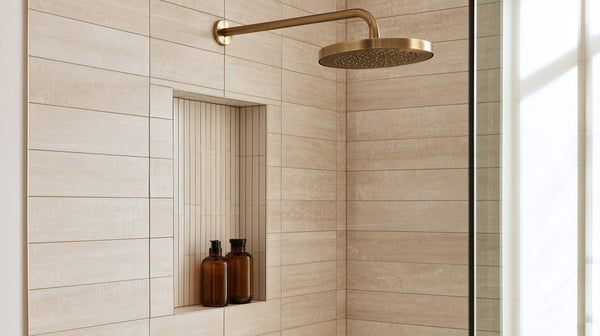
- Honed natural stone surfaces (cool to touch, calming), see our marble tile guide
- Marble or stone thresholds at doorways
- Warm low-level lighting in addition to bright vanity lighting
- Natural-fiber textiles (linen towels, woven rugs)
- Restrained visual content; the bath as refuge rather than display
The Living Areas
Living rooms and family rooms benefit from balanced specifications, calming for evening use but stimulating enough for daytime activity. The strategy: dimmable lighting that supports both modes, materials and textures that read warm but not soporific, intentional negative space that allows the room to breathe.
The cluster pieces below cover specific dimensions in depth.
Where to Start
For homeowners interested in specifying calming interiors, the cumulative-effects framework is the right starting point. Investing in any single calming variable produces modest results; investing across the full specification produces dramatic results. Start with the largest signals, material texture (replace synthetic with natural), light (warm-temperature dimmable throughout), and visual quietness (significant negative space). Then layer the secondary signals: warm color palette, soft acoustic surfaces, integrated planting.
The cluster guides for specific mechanisms: material texture and the vagus nerve, light, surface, and cortisol, minimalism and negative space, and biophilic design 2026. For the related material specifications, our Midimalism guide and the broader slabs, hardwood, and stacked stone libraries.
From the guide
Shop the surfaces in this guide