Buyer Guide
Marble Tile for the Modern Home: A Curator's Read on Honed, Polished, and Veining
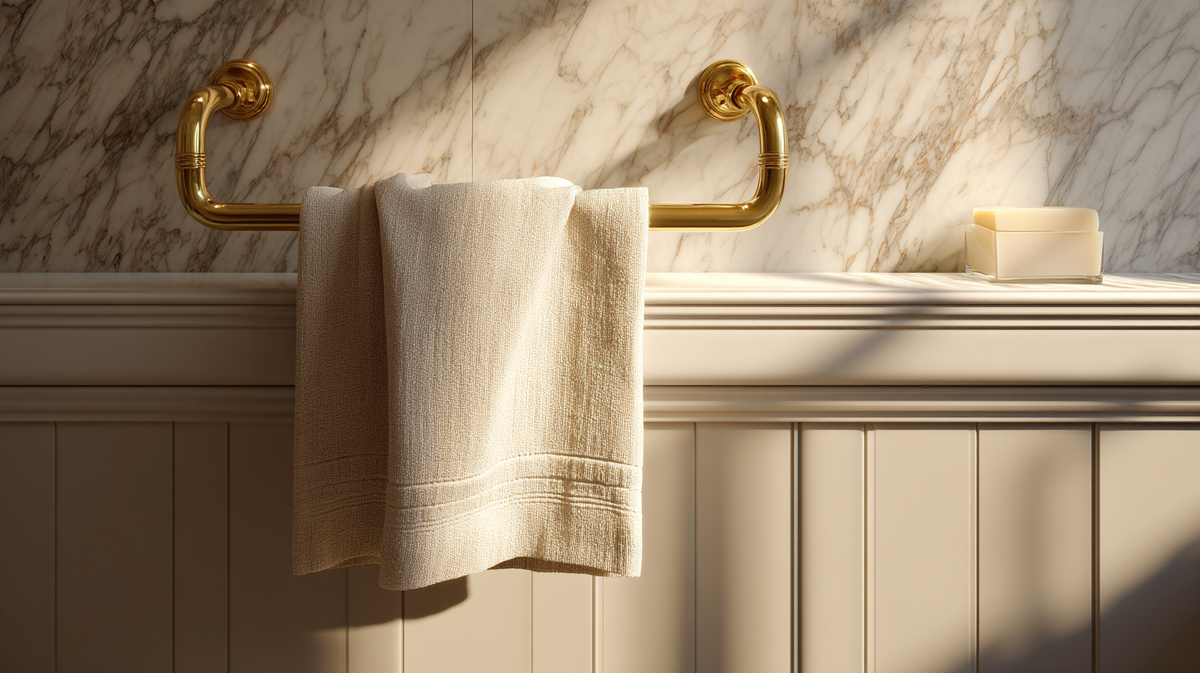
Marble tile sits in an awkward spot in 2026 residential design. The material is genuinely beautiful, the source quarries are some of the most storied in the trade, and a well-laid marble floor is one of the few interior finishes that genuinely improves a room. At the same time, marble has been done badly enough often enough that it carries some baggage, bowling-alley polished glare, scale-mismatched veining, the wrong cut in the wrong room. The 15 marble tile SKUs in Citadel's marble tile collection are curated against those failures. This guide explains what makes a marble tile read modern rather than dated, and how to specify it well.
The Three Marble Decisions
Most marble-tile mistakes come from missing one of three decisions: finish, scale, and pattern.
Finish, honed, polished, or tumbled. Polished is the high-gloss reflective finish most people picture when they hear "marble"; honed is matte; tumbled has rounded edges and a soft, weathered surface read.
Scale, the size of the tile itself, and the size of the veining within it. A small-format marble tile (12×12) reads more traditional; large format (24×48) reads more contemporary. Veining scale changes how the room reads at viewing distance.
Pattern, the layout, the joint pattern, and whether the tiles read as a unified field or as discrete pieces. Stack-bond, staggered, herringbone, basketweave, each carries different connotations.
Honed vs Polished: The Finish That Decides Everything
The fastest way to make marble tile look dated is to specify polished marble in 2026. Polished was the residential default for two decades, and its specific shiny, light-bouncing surface is one of the strongest "early-2000s" visual signals in the home. Honed, matte, soft, the natural matte finish of cut marble, reads dramatically more modern, ages more gracefully, and forgives the small scuffs and water spots that polish makes visible.
Polished still earns the specification in two narrow cases: where reflectivity is the design intent (a small powder room with theatrical lighting, a feature wall meant to bounce candlelight), and where the specific marble's color is most striking when polished (some warm Italian marbles read flatter when honed). Outside of those cases, honed is the considered default.
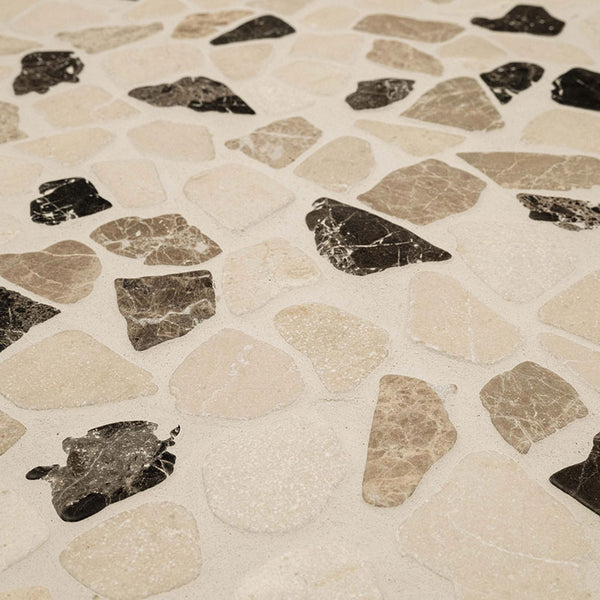
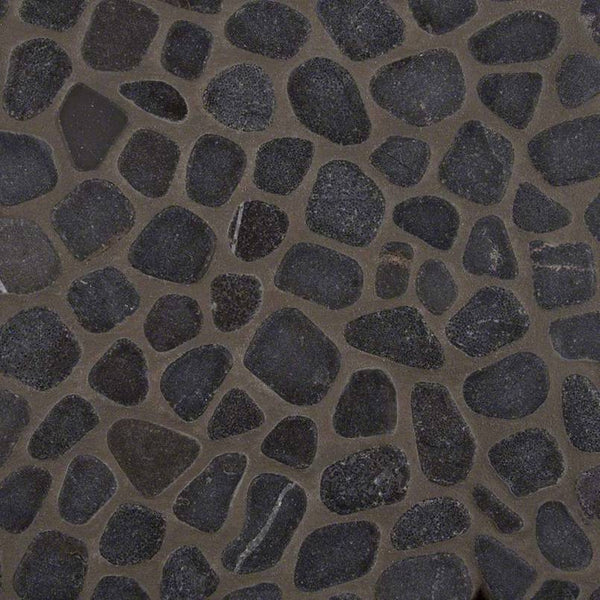
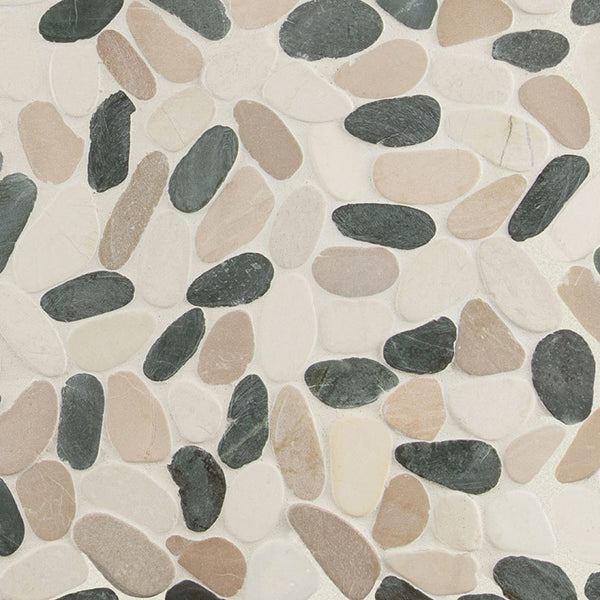
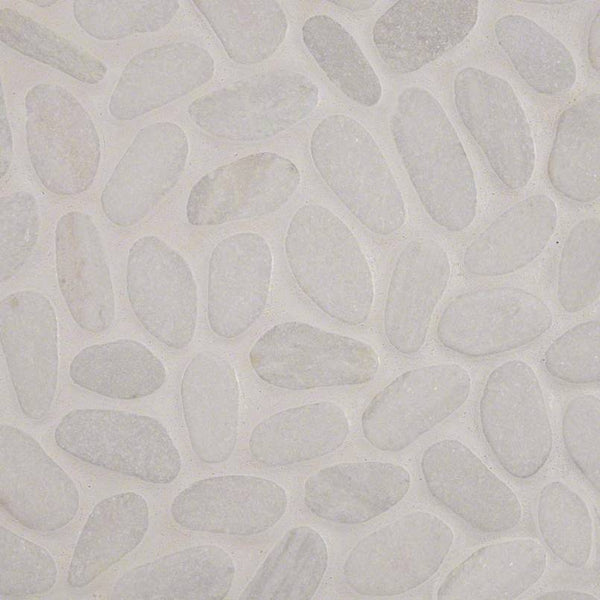
Tumbled marble, soft, weathered edges, matte aged surface, is right for traditional and Mediterranean architecture, especially on floors and exterior applications. Reads unmistakably warm and soft.
The 15-SKU Library
The collection covers the major residential marble families.
Calacatta and Statuary whites
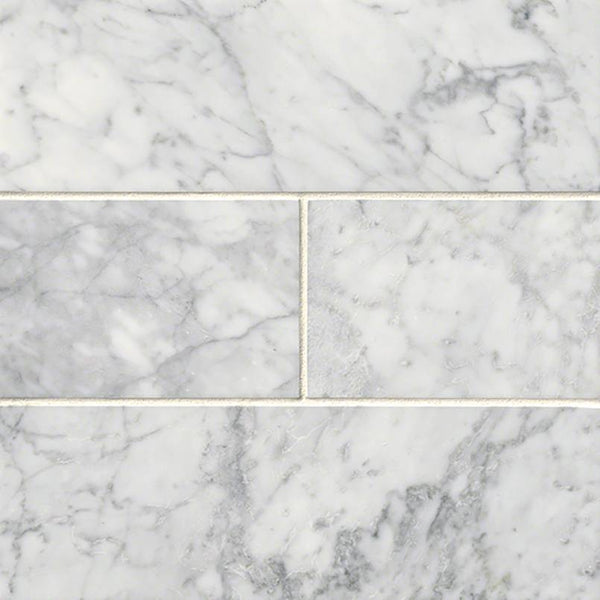
The most classical, bright white marbles with bold grey-and-gold veining. Calacatta Gold's veining is more dramatic and has warm gold inflections; Statuary Marble's veining is finer and more restrained. The flagship choice for primary bathroom floors and feature walls.
Carrara whites
Cool white-and-grey, with finer, more subtle veining than Calacatta. Reads more quiet and more universal, pairs with both warm and cool architectures. The most-specified marble in residential because it's the most forgiving across design contexts.
Crema Marfil and warm cream marbles
Soft warm cream tones with subtle, low-contrast veining. Reads warmer and more traditional. Right for Mediterranean and warm-modern architecture; pairs especially well with warm wood cabinetry and unlacquered brass.
Botticino and honey-toned marbles
Warmer, more golden tones. The most traditional read in the library; pairs with classical and warm-traditional architectures.
Dark marbles
Emperador (warm brown), Nero Marquina (black with white veining), Bardiglio (cool grey). The contrast and accent options. Used in feature applications, fireplace surrounds, accent walls, single-bath floors, rather than as the dominant interior material.
Where Marble Tile Belongs
Primary bathroom floors
The most successful marble application. The room has the right scale (large enough to let the veining read), the right humidity (warm marble is more forgiving than dry interiors of the slight tonal shifts marble takes), and the right use pattern (occupied moments, not constant traffic). A honed Carrara or Calacatta floor in a primary bath is one of the residential moves that genuinely doesn't go out of style.
Powder rooms and feature spaces
Small rooms can take more dramatic marble specifications, book-matched Calacatta on a feature wall, polished marble in a powder room where the visual drama is the point. The constrained scale lets the marble be the room's character.
Kitchen backsplashes (with caveats)
A marble backsplash works in kitchens that aren't aggressive cooking environments. Acidic spills (lemon, tomato, wine) etch marble; in a heavy-cook kitchen, the etching pattern accumulates fast. For light-use kitchens, second homes, urban apartments, marble backsplash with a thorough sealing schedule reads beautifully. For working family kitchens, consider porcelain slab that visually reads as marble but doesn't etch.
Fireplace surrounds and feature walls
Marble's drama earns its specification in feature spaces. A book-matched Calacatta fireplace surround is one of the few interior moves that genuinely creates a destination object in a room. Pair with stacked-stone or smooth-plaster surround treatments, see our fireplace surrounds guide.
Where Marble Tile Doesn't Belong
Marble tile on a high-traffic kitchen floor is asking for trouble. The acidic spills, the dropped pans, the dragging chair legs, all accumulate marks that marble keeps. Use porcelain tile or LVT on heavy-use kitchen floors; reserve marble for the rooms where its specific character earns the trade.
Marble in commercial entries and exterior applications is similarly problematic. The polish wears, the etching accumulates, and the maintenance schedule that residential homeowners can sustain isn't realistic in commercial settings. Granite or porcelain wins in those contexts.
Veining Scale and the Room
One of the under-appreciated marble decisions is matching the veining scale to the room scale. Bold, dramatic Calacatta veining reads beautifully in a large primary bathroom and aggressive in a small powder room, the veining gets visually fragmented by the small format. Subtle Carrara veining reads quietly in a small room and slightly thin in a large open kitchen.
The rule of thumb: large rooms can handle dramatic veining; small rooms want subtle veining. The exception is feature walls, where small rooms can absorb dramatic marble because the wall is the room's whole character.
Pattern: How the Tiles Are Laid
The four most common marble tile layouts:
Stack bond, tiles aligned in a strict grid, joints aligning vertically and horizontally. Reads the most contemporary and the most demanding to install (any out-of-square reads immediately). Right for large-format honed marble.
Staggered (running bond), each row offset by half a tile from the row above. Reads more traditional and forgives small dimensional irregularities. The residential default for most floor applications.
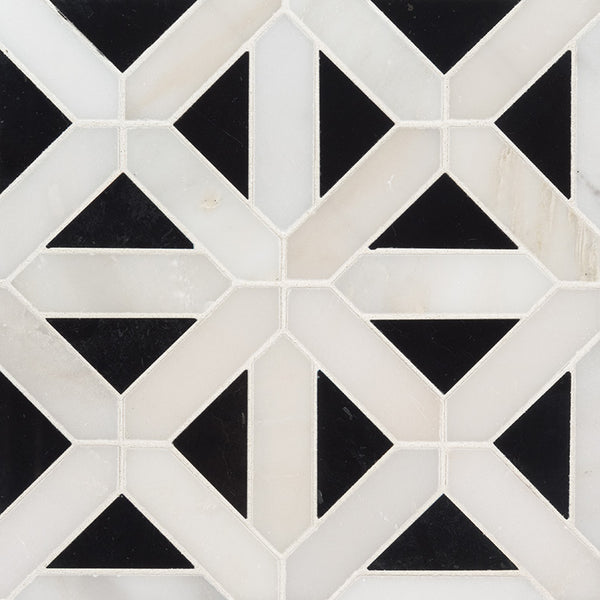
Herringbone, tiles laid at 45-degree angles in a chevron pattern. Reads decorative and emphasizes the marble itself rather than letting it recede. Right for accent applications (fireplace hearths, small powder room floors); reads busy at large scale.
Basketweave, alternating horizontal and vertical groups of tiles. Traditional and decorative. Right for classical architecture; reads dated in contemporary contexts.
We cover the layout choice in depth in our tile layout patterns guide. (That post is in our content queue; meanwhile see the Midimalism guide for pattern-quietness considerations.)
Sealing and the Care Schedule
Marble wants a penetrating stone sealer applied at install and reapplied every 1 to 3 years depending on use. The sealer doesn't make marble immune to etching; acid still etches sealed marble. The sealer prevents staining, the tomato sauce that would soak into raw marble doesn't soak into sealed marble. Etching and staining are separate problems with separate solutions, and most marble owners blame the sealer for failing to prevent etching when the sealer was never going to.
For etch prevention, the only solution is fast cleanup of acidic spills. For visible etches, light repolishing or honing-pad treatment can reduce or remove them. We cover the full sealing protocol in our sealing natural stone guide.
Pairing Marble in a Room
Marble's dominance in a room means the rest of the architecture should quiet down. Frameless flat-front or slim-Shaker cabinetry, simple millwork, restrained hardware, low-pattern textiles. The marble carries the room's character; everything else supports it. Pair with our marble thresholds at doorways for material-language continuity, and consider matching marble slab for adjacent counters where budget allows.
Where to Start
Marble tile shopping starts with the room and the finish question. Honed almost always; polished for narrow cases; tumbled for traditional. From there, the colorway against the room's light and the rest of the architecture. Browse the marble tile collection for the curated 15-SKU library, and see related material guides at travertine vs limestone vs marble (in queue) and our travertine comeback piece.
Browse marble slabs to see the current range, and size your order with the countertop and slab calculator.
From the guide
Shop the tile in this guide