Design Trends
Biophilic Design 2026: Materials That Bring the Outside In
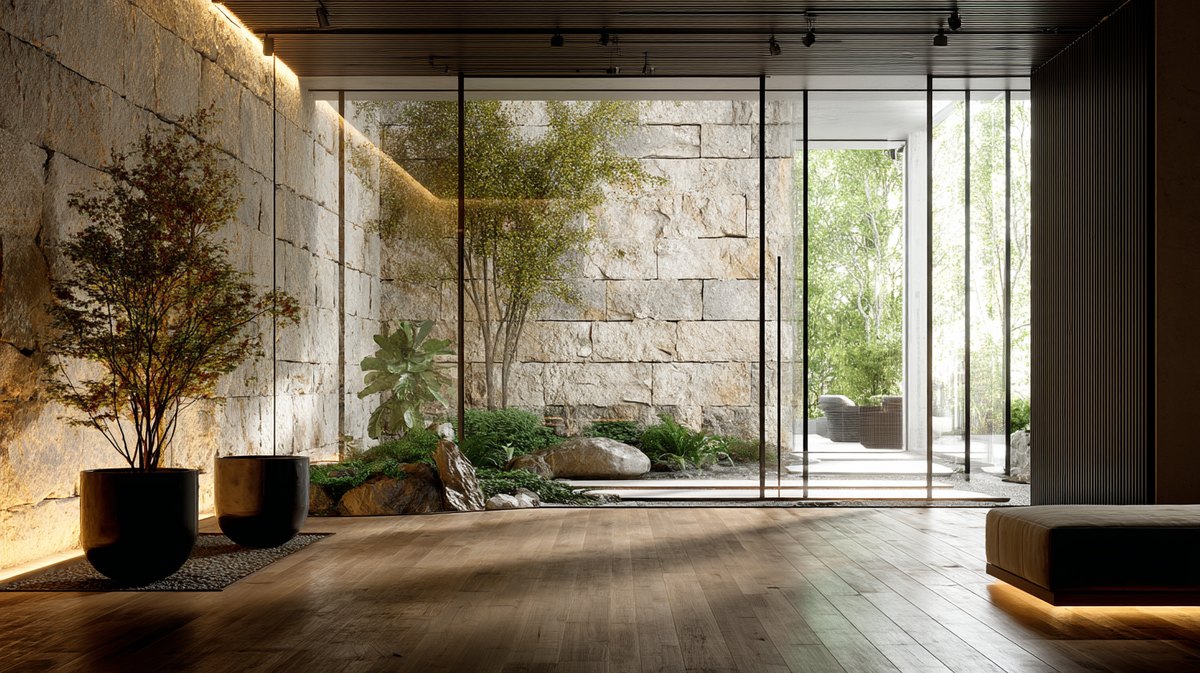
Biophilic design, the practice of designing interiors that connect to nature, has spent two decades moving from architectural theory to mainstream residential. The early phase emphasized obvious moves: indoor plants, natural light, views to outside. The 2026 phase has matured into something more specific: the material-level choices that make interiors measurably more calming, less stress-inducing, and better for the people who live in them.
This guide treats biophilic design at the material specification level. Not "add a plant", the considered material choices that bring nature's calming effect into a room without requiring a window onto a forest. Linked throughout: the wellness science cluster, neuroscience of calm interiors, material texture and the vagus nerve, light, surface, and cortisol. That explains why these material choices work.
What Biophilic Design Actually Asks
Biophilic theory rests on a simple observation: human beings evolved over hundreds of thousands of years in natural environments and very recently moved into manufactured ones. Our nervous systems, particularly the parasympathetic side that regulates rest and recovery, are calibrated to natural cues: organic patterns, natural light, warm-toned surfaces, the sound of water, the texture of unmanufactured material. Built environments that lack these cues are subtly stressful in ways occupants can't articulate but can measure.
Biophilic design is the practice of restoring those cues to interior environments. The strongest 2026 implementations do it at the material level, choosing stone, wood, woven texture, and warm light rather than synthetic flat surfaces, cool LED, and rectilinear monochromes, rather than relying on add-on solutions like plants or water features.
Natural Material as Foundation
The single most-impactful biophilic move is committing the room's largest surfaces to natural materials. The floor and the wall planes are the room's biggest visual loads; if they're synthetic, no number of plants and water features compensates.
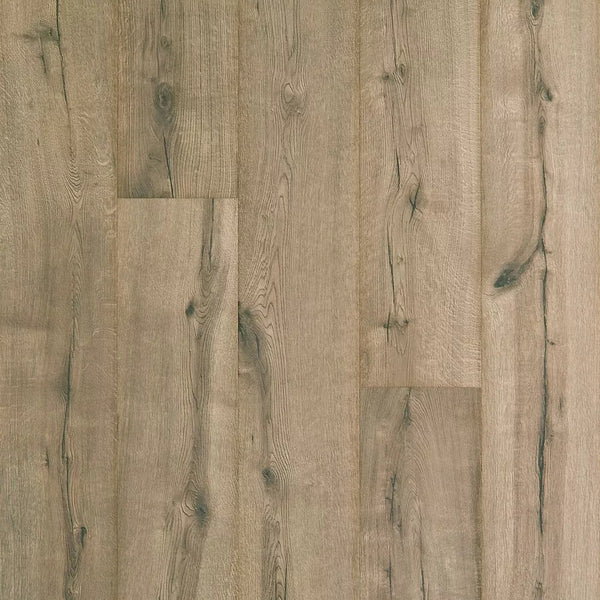
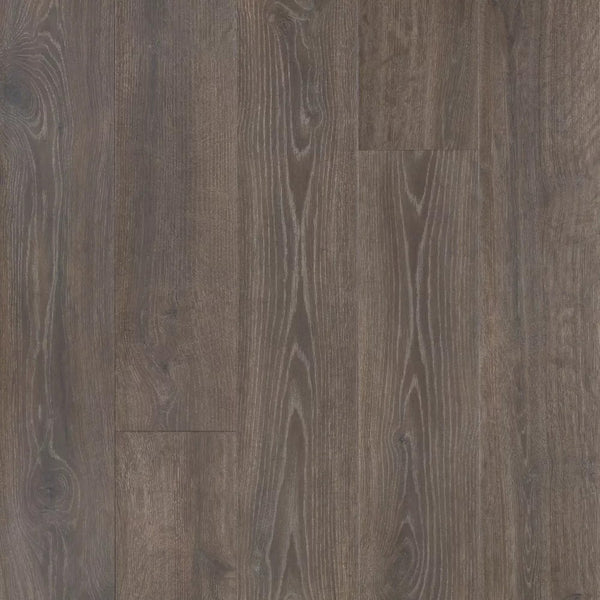
The biophilic-correct floor: hardwood (real wood, with visible grain), natural stone tile, or, when a hard floor isn't right, premium wide-plank LVT in warm wood-grain colorways (see our Nove curator guide, Bayhill Blonde and Akadia carry wood-grain patterns that read most natural).
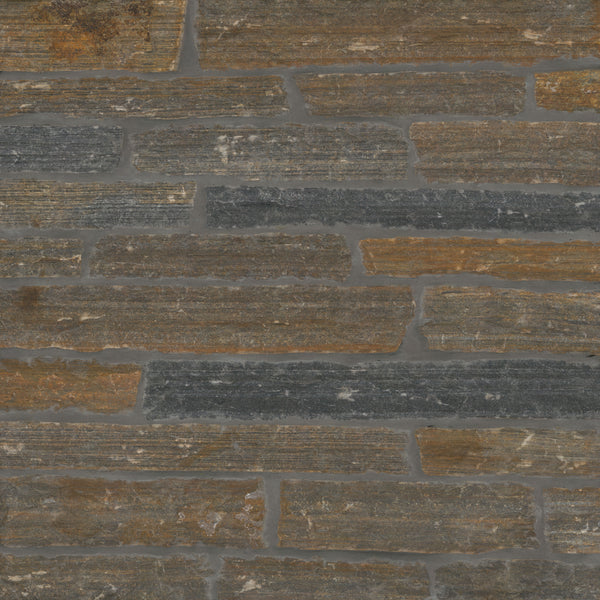
The biophilic-correct wall: hand-applied lime plaster, Roman clay, or specialty paint with subtle texture variation. The wall plane should read alive, not flat. Stacked stone veneer on a single wall provides dramatic biophilic texture; we cover the application in our stacked stone spotlight.
Texture as the Underrated Cue
The biophilic literature increasingly emphasizes texture, the kind of layered, three-dimensional surface variation that reads natural, as one of the most measurable nervous-system cues. Smooth, flat, uniform surfaces read manufactured. Textured, varied, irregular surfaces read natural and trigger parasympathetic activation.
Strong texture moves at the material specification level:
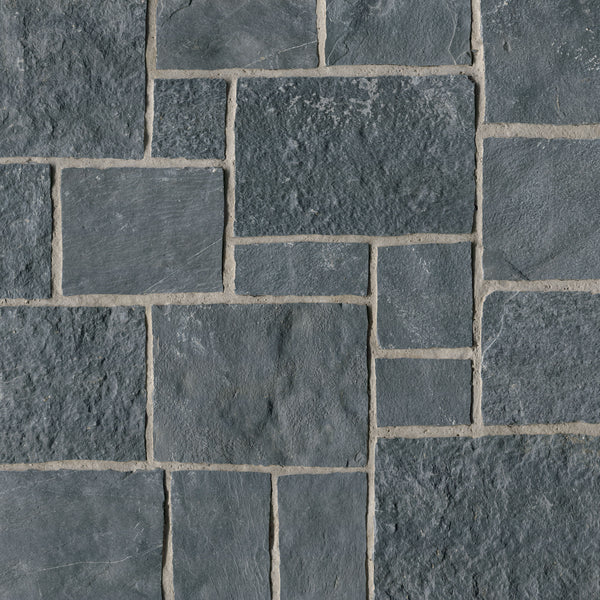
- Cleft natural stone floors and walls, see our slate guide for the cleft slate read
- Wire-brushed or hand-scraped hardwood
- Stacked stone on accent walls
- Hand-troweled plaster on wall planes
- Woven textiles, wool rugs with visible weave, linen curtains, naturally textured upholstery
The texture doesn't need to be dramatic. Subtle texture, wire-brushed grain on flooring, lightly textured wall plaster, natural slubs on linen, accumulates across the room into a measurable biophilic effect.
Light: Warm, Variable, Dimmable
Manufactured environments tend toward static light: same brightness, same color temperature, all day. Natural environments are dynamically varied: bright cool morning, warm afternoon, deep amber evening, dark night. The mismatch is one of the largest sources of background stress in modern interiors.
The biophilic lighting move:
- Color temperature 2700K to 3000K (warm, sun-evening-like), never 4000K or higher in living spaces
- Dimmable across the full range (10% to 100%)
- Multiple zones, overhead ambient, task lighting, accent, controlled separately
- Daylight harvesting where possible, let natural light dominate during day
- Circadian-aware lighting where the home automation supports it (cool-bias morning, warm-bias evening)
We cover the relationship between light, surface reflectivity, and circadian regulation in our light, surface, and cortisol guide.
Patterns That Read Natural
Biophilic design embraces specific kinds of pattern, the ones that mirror natural systems. Fractal patterns (the recursive self-similar geometry that appears in coastlines, tree branches, leaf venation, river deltas) read as restful in a way uniform repetitive patterns don't. The brain recognizes fractals as natural structure and relaxes.
Practical applications:
- Marble veining is fractal, the small veins mirror the large veins. The brain reads marble as biological.
- Wood grain is fractal, subtle pattern repetition at multiple scales.
- Stacked stone is fractal, the layered geometry reads as natural.
- Avoid: strict geometric repeating patterns (perfect grids, repeating tile motifs). They read as constructed.
Connection to Outside, Whether or Not There's a View
Biophilic design wants the interior to feel connected to outside. Strongest moves where there's a view: pocketing door systems that disappear into walls, matched indoor-outdoor flooring that erases the threshold (see our outdoor tile guide for the matched-system approach), strategic plant placement that bridges interior and exterior.
Where there's no exterior view (basement rooms, urban interiors), biophilic moves substitute material connection: plants thriving under appropriate light, water features (a small interior fountain), natural materials in dominant volume, and full-spectrum daylight-mimicking lighting.
Sound
The biophilic conversation is increasingly attentive to sound. Natural environments have water, leaves moving in wind, soft animal sounds, varied, soft, never silent. Manufactured environments tend toward HVAC drone and reflected hard-surface sound.
The biophilic-correct sound environment:
- Soft acoustic materials, wool rugs, linen curtains, upholstered furniture absorb reflective sound
- Water features in zones where the sound is welcome, small fountains, pool sound, soft water walls
- HVAC quietness, modern systems can run nearly silent if specified that way
- The acoustic isolation between rooms that lets each room have its own sonic character
We cover acoustic flooring specifically in our acoustic floors guide.
Plants as Architectural Element
The 2026 plant approach is meaningful integration rather than decorative dotting. A small number of well-placed, well-maintained, appropriate-to-the-light plants outperforms many small struggling plants. Architecturally, plants work best as:
- A single large statement plant in a room corner (fiddle-leaf fig, olive tree, large monstera)
- A grouped collection in a strong-light zone (multiple plants near a south window)
- Vertical plant integration on a feature wall (a single column of climbing plants on a stone wall)
- An indoor-outdoor planting arrangement that bridges the threshold
Avoid: scattered single plants across many rooms (reads underwhelming), low-light plants in dim corners (struggle and die), aggressive maintenance plants (require attention the household can't sustain).
Color Drawn From Outside
The biophilic interior color palette is drawn from natural systems: warm earth, sky, vegetation, stone. The 2026 specific palette:
- Warm cream and soft white (sand, clouds, weathered stone)
- Sage and muted green (foliage, lichen)
- Soft warm taupe (sand, stone, weathered wood)
- Warm graphite (slate, basalt, weathered iron)
- Warm earthy accents (terracotta, deep earth red, soft amber)
Avoid: high-saturation engineered colors (bright orange, lime green, electric blue) that read clearly synthetic; pure black and pure white that read constructed rather than natural.
The Compound Effect
No single biophilic move is dramatic. The effect compounds: a warm-tone hardwood floor + textured plaster wall + natural-stone counter + warm-temperature lighting + soft acoustic textiles + one or two well-chosen plants + a view to outside (or the substitute moves where there isn't one) produces a room measurably less stressful than the same room with synthetic materials, flat walls, cool LED, and hard acoustics. Occupants don't articulate the difference; they just feel calmer.
This is the practical case for biophilic design: it's not aesthetic preference, it's measurable nervous-system effect. Specified at the material level, it's how 2026 luxury residential architecture is differentiating itself from 2010s modernism.
Where to Start
The first biophilic move in most projects is replacing the largest synthetic surfaces with natural ones. Synthetic carpet → wide-plank hardwood or wood-grain wide-plank LVT. Smooth drywall → hand-applied plaster or stacked stone veneer accent wall. Engineered stone counter → quartzite, marble, or soapstone (see our slab buyer's guide). For the deeper science, our neuroscience of calm interiors pillar.
From the guide
Shop the surfaces in this guide