Buyer Guide
Slim Shaker, Textured Slab & the Frame Question: The Cabinet Decision Tree of 2026
Cabinetry is the single largest visible element in most residential kitchens, covering more surface area than the counter, the floor, or any other architectural finish. The cabinet decision shapes every other kitchen choice: what counter reads against it, what floor pairs with it, what hardware is appropriate, what light fixtures make sense. Most homeowners arrive at the cabinet decision asking the wrong first question, "Shaker or flat?", when the more useful first question is what the cabinetry is meant to read as in the room.
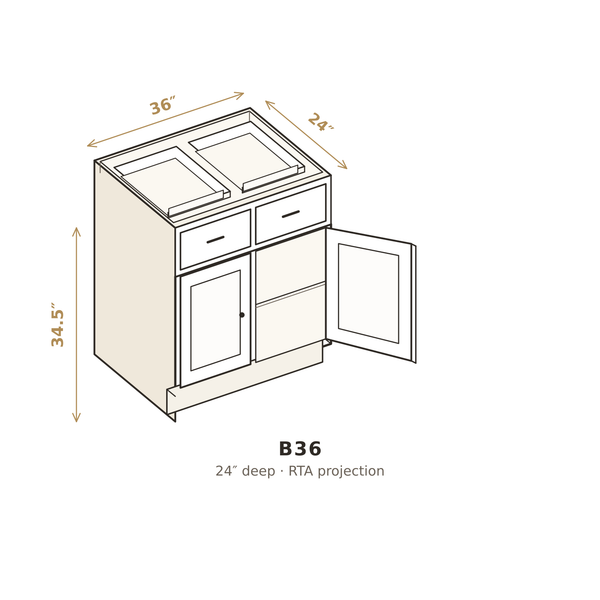
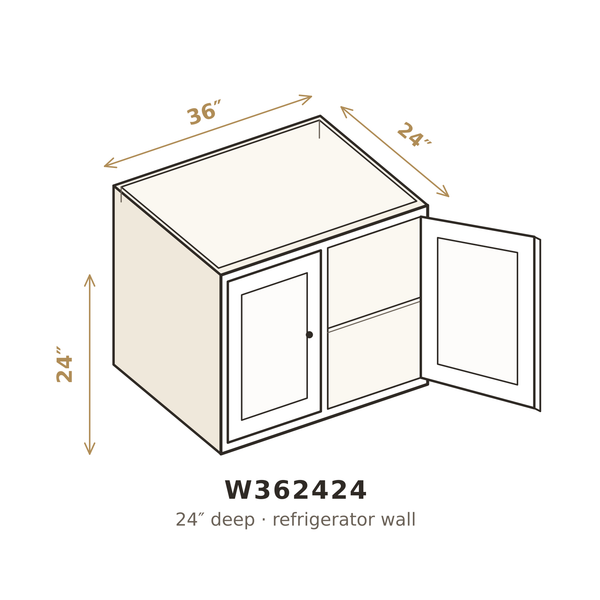
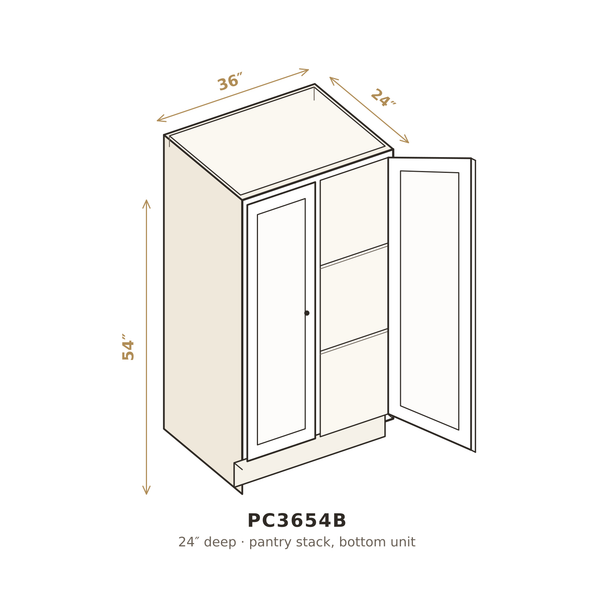
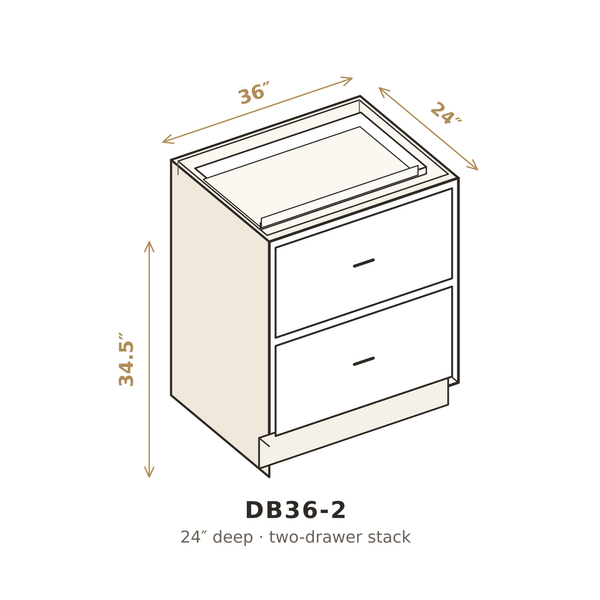
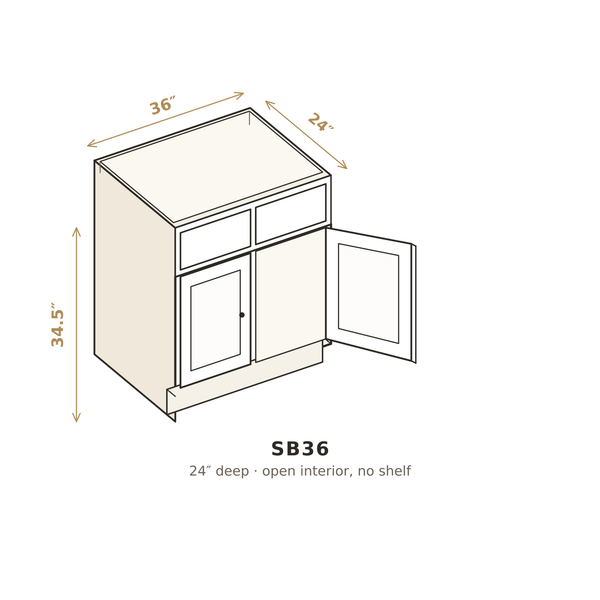
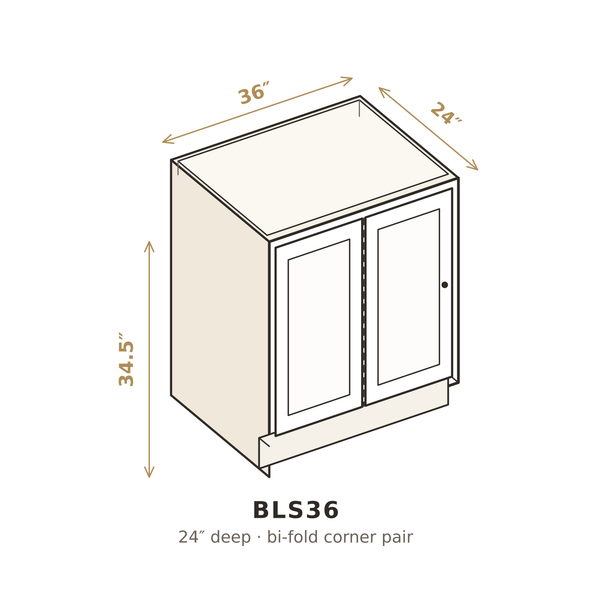
This guide walks through the four most-specified 2026 cabinet directions, slim Shaker, textured slab, framed-traditional, and frameless flat-front, and the question hierarchy that decides between them. Browse the cabinets collection for the curated library, and the sub-collections framed cabinets and frameless cabinets for the construction-specific reads.
Frame Construction: The Foundational Decision
Two cabinet box constructions divide the entire residential market.
Framed cabinetry uses a face frame attached to the front of the cabinet box, typically a 1½-inch wood frame around the door opening, with the door mounted to the frame. The frame creates a small visible reveal between adjacent doors and around drawer fronts. Reads classical, traditional, and inherently American, framed construction is the historical American residential standard.
Frameless cabinetry (also called European-style or full-access) attaches the doors directly to the cabinet box, eliminating the face frame. The doors meet edge to edge with minimal reveal between them. Reads contemporary, modern, inherently European. The construction allows full-width drawer access and slightly more interior storage space than framed.
The construction decision tells the room what it's reading. Framed in a strict-modern interior reads displaced; frameless in a strict-traditional interior reads displaced. Most kitchens land in the transitional middle, where either construction works and the door style decides the read.
The Four 2026 Door Directions
Slim Shaker: The Refined Shaker
Standard Shaker, the five-piece flat-panel door with a 2½-inch surrounding rail and stile, has been the residential default for fifteen years and is starting to read overused. Slim Shaker is the 2026 evolution: the same five-piece construction with the rail and stile reduced to 1¾ or 2 inches. The smaller frame reveals more of the central panel, reads more contemporary while retaining the Shaker's traditional vocabulary.
Slim Shaker is the strongest current entry for buyers who want traditional construction but a fresh visual. Pairs with framed or frameless construction; reads beautifully in matte cream, warm taupe, soft graphite, and natural wood-grain stains.
Textured Slab: The Quiet Luxury Move
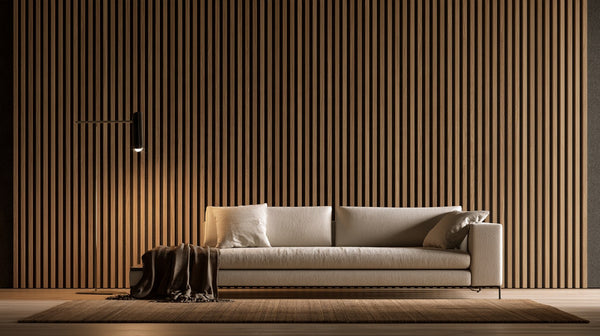
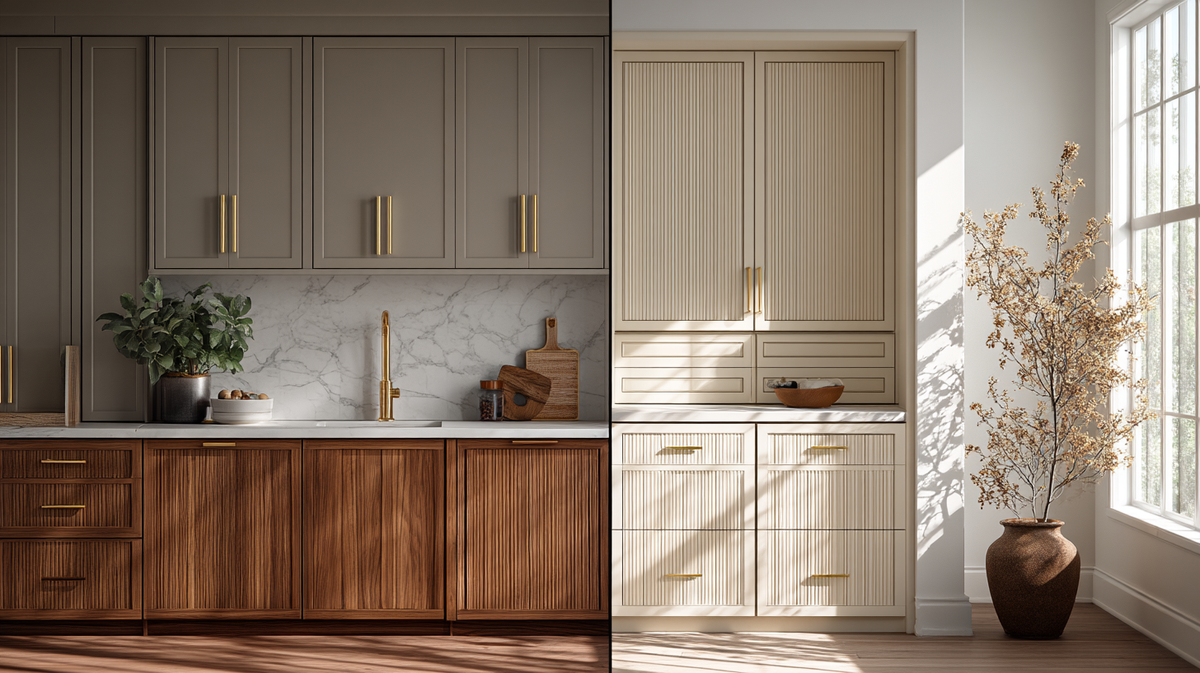
Flat-front slab doors have been a contemporary kitchen standard for over a decade. The 2026 evolution adds texture, fluted vertical reeds, ribbed horizontal lines, wire-brushed grain pulled out from the wood underneath. The texture adds visual depth and tactile interest without adding pattern noise; the door still reads as a clean slab from across the room and reveals the texture only at close range.
Textured slab is the "quiet luxury" cabinet move, the door looks deceptively simple from the kitchen entry and rewards close looking. Pairs almost exclusively with frameless construction (framed faces fight the slab's visual logic).
Framed Traditional: The Historical Default
Standard Shaker, beadboard inset, raised-panel, the framed-traditional vocabulary covers the historical American kitchen and remains the right specification for traditional architecture. In 2026 the move within this category is toward simpler profiles (less ornate panel detail, simpler bead profiles) and away from the heavily detailed traditional that read overworked in the 2010s.
Pair with traditional hardware (cup pulls, classic round knobs), warm cream or sage green paint finishes, and traditional architectural moldings. The framed cabinet collection carries the classical vocabulary.
Frameless Flat-Front: The Contemporary Default
The simplest 2026 cabinet, frameless construction with a clean flat-front door, integrated handle profile (or simple linear pulls), matte finish. Reads strict-contemporary, lets the rest of the kitchen do the visual work, ages well as long as the finish quality is good. Common in slab quartzite or porcelain slab kitchens where the counter is the visual anchor (see our quartzite countertops 2026 guide).
Pair with the frameless cabinet collection for the construction.
Inset, Overlay, and Full Overlay
Within framed construction, three door positions decide how the cabinet reads.
Inset, the door sits flush within the face frame opening, with a precise reveal around all four sides. The most expensive, most demanding to build, most beautiful when executed well. Reads as the highest level of cabinet craft. Pairs with traditional and refined-traditional architecture.
Standard overlay, the door sits on top of the face frame, partially covering it. The traditional residential default. Reveal between doors typically 1 to 1¼ inches.
Full overlay, the door sits on top of the face frame and covers most of it, with only a small reveal between doors. Reads contemporary; reduces the visual frame presence. Pairs with transitional architecture.
The Reveal Question (Why ⅛ Inch Matters)
Inset cabinet door reveals, the gap between the door edge and the face frame, should measure exactly the same on all four sides of every door, ideally ⅛ inch. The consistency is the entire point of inset construction; uneven reveals signal cheap work. A premium inset kitchen at year 10 still has the reveal it had at install. A poorly built inset kitchen develops visible drift within the first year as wood movement and hinge settling catch up.
This is one of the cabinet specifications where the cost difference between premium and budget construction shows most clearly. If you're choosing inset, choose well-built inset; budget inset is the worst of both decisions.
Two-Tone and Mixed Cabinets
The strongest 2026 cabinet move is two-tone, base cabinets in one finish, upper cabinets in another. Most successful pairings:
- Dark base + light upper, visually grounds the kitchen, makes the upper cabinets recede
- Wood base + painted upper, material warmth at hand level, painted lift overhead
- Painted island + wood perimeter, the island reads as furniture, the perimeter reads as architecture
The mistake to avoid: random two-tone with no design logic. The two finishes need a clear conceptual reason for being different, light/dark, wood/paint, island/perimeter. Without a reason, the room reads improvised.
Hardware as Punctuation
Cabinet hardware is the kitchen's punctuation, small, repeated, and highly visible. The 2026 hardware vocabulary leans heavily toward unlacquered brass (see our unlacquered brass guide) for warm and traditional contexts, matte black for contemporary, and increasingly to integrated handle profiles where the door itself provides the grip.
Avoid mixing hardware finishes within a single kitchen unless the mixing is deliberate (e.g., brass on the island, matte black on the perimeter, a specific design move). Random mixing reads confused.
Paint Finishes That Age Well
Cabinetry paint finishes that hold up across years:
- Warm cream and soft white, universal, ages gracefully, reflects light without glare
- Warm taupe and warm grey, contemporary, holds character against various counter materials
- Sage and muted green, currently strong, traditional in residential American
- Deep blue (navy, deep teal), strong on islands and lower cabinets in two-tone schemes
- Soft graphite, contemporary, pairs with quartzite and porcelain slabs
Finishes to be wary of: bright white (yellows over years and shows every fingerprint), bright primary colors (date quickly), and very dark monotone (can read heavy in compact kitchens).
Wood-Grain Cabinetry
Natural wood-grain cabinets, visible grain, stained or oiled rather than painted, read warmer and more tactile than painted finishes. The 2026 strongest wood specifications:
- White oak, rift-cut for vertical grain, lightly stained or natural oiled, the contemporary premium
- Walnut for character grain, mid-tone warm-modern, especially strong on islands
- Reclaimed oak or salvaged wood, character-forward, farmhouse-modern
Wood-grain cabinetry pairs especially well with stone counters that share warm tones, quartzite with warm veining, soapstone (see our soapstone comeback), warm-cream marbles.
Pairing Cabinets in a Considered Kitchen
Cabinets are the kitchen's largest finish. They need to harmonize with the counter, floor, and lighting rather than compete with them. The strongest kitchens use cabinetry as the room's structure and let one or two other elements (the slab, a feature light, the backsplash) be the character. Floor pairings worth considering: Bayhill Blonde or Akadia Nove (see our Nove curator guide) under warm wood cabinetry; honed Carrara floor under cream-painted Shaker; large-format porcelain (see our outdoor tile guide for the porcelain library) under contemporary frameless.
Where to Start
Specifying cabinetry starts with the architecture, what kitchen is this for, and what is the cabinetry meant to read as. From there, the construction (framed/frameless), door direction (slim Shaker, textured slab, traditional, flat-front), and finish (paint or wood-grain) follow. Browse the full cabinets collection alongside the construction-specific framed cabinets and frameless cabinets sub-collections. For the slab pairing question, see our quartzite vs marble vs granite pillar guide.
When the choice is made, browse countertops and slabs and size the order with the countertop and slab calculator.
From the guide
Shop the cabinets in this guide