Buyer Guide
Slate: Texture, Durability, and the Floor That Wears Quietly
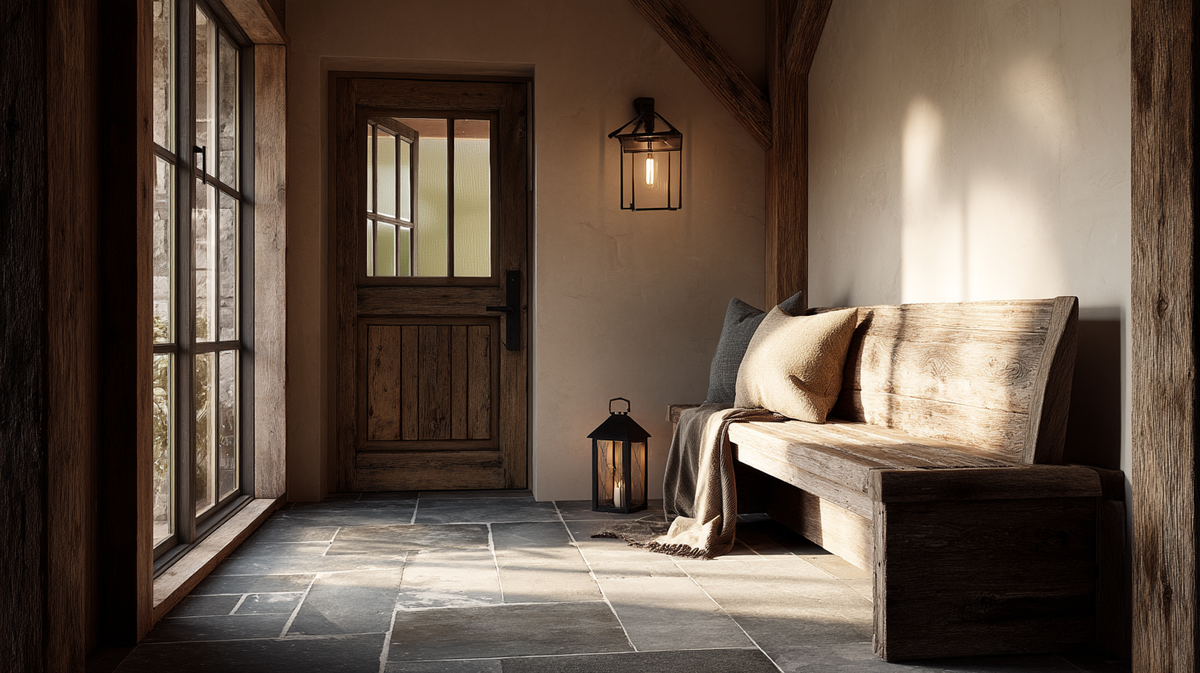
Slate gets less air time in the residential conversation than marble or travertine, partly because the visual language is regional and partly because slate doesn't photograph as flatteringly as more polished stones. Photographs flatten slate. The material reads beautifully in person and ordinarily in pictures. That gap is one of the reasons slate consistently exceeds expectations, the homeowner who specifies slate based on a sample chip is usually surprised, in a good way, by how the floor reads in their actual room.
This guide reads the 8-SKU slate subset of Citadel's natural stone tiles catalog, what slate actually is, where it earns its specification, and the small details that decide whether a slate floor reads timeless or tired.
What Slate Actually Is
Slate is a metamorphic rock formed when shale (a sedimentary clay-rich rock) is subjected to low-grade metamorphism, moderate heat and pressure, much less than what produces quartzite. The clay minerals realign into parallel layers, creating slate's characteristic foliation: the natural cleavage planes that allow the stone to be split into thin, flat sheets along its natural grain. That cleavability is what makes slate practical as a roofing and flooring material; thicker stones can't be split that thin without elaborate machinery.
Slate's color comes from trace minerals in the original clay. Iron oxide produces reds and purples. Carbon produces blacks and dark greys. Manganese produces greens. Hematite produces deeper reds. Most natural slate carries multiple minerals, producing the multi-tone reads that distinguish good slate from monotone alternatives.
The Color Library
Slate's color names get vague in the trade. The honest categories:
Black slate, solid carbon-rich slate, near-monotone deep grey-black with subtle mineral inclusions. Reads contemporary and architectural. The slate variant most common in modern minimalist applications.
Multi-color slate, sometimes called "rainbow slate" or "autumn slate", slate carrying multiple minerals, with significant tonal variation across pieces (warm rust, deep purple, soft green, charcoal, gold). Reads warm-rustic and traditional. Used in mountain-modern, cabin, and traditional architecture.
Grey and silver slate, cool-toned slate, less mineral variation, more uniform. The transitional option that reads neither aggressively traditional nor strictly contemporary.
Green slate, manganese-rich slate with subtle green undertones. Less common, distinctive in the right architectural context, particularly traditional Northeastern American residential.
Rusty / honey slate, iron oxide rich, warm orange-brown reads. Strongest in Mediterranean and Southwestern architecture.
Cleft, Honed, and Gauged
The surface treatment on slate decides nearly everything about how it reads.
Cleft (or natural cleft), the stone is split along its natural foliation, and the split surface is the finished face. Reads as the most authentic slate; carries the natural surface relief, the small dimensional irregularities, the texture that telegraphs "this is rock." The right finish for traditional, mountain, and rustic architecture. The most slip-resistant slate finish.
Honed, the cleft surface is ground and polished to a flat matte finish. Eliminates the irregularities; reads contemporary, restrained, intentional. Right for modern and minimalist architecture where the slate's color and depth matter more than its texture. Less slip-resistant than cleft.
Gauged, a process step rather than a finish, in which slate tiles are calibrated to a uniform thickness (typically by surface grinding the back face). Cleft-gauged slate reads as cleft on top but installs more like ordinary tile because the back is flat. The 2026 default for most residential slate floor applications because the cleft surface looks right and the gauged back installs cleanly.
Where Slate Earns Its Place
Mountain and cabin architecture
The native context. Cleft multi-color slate flooring in a mountain home reads as the architecture intends, natural, warm, regional. Pair with rough-cut beams, oak millwork, stacked-stone fireplaces. The stacked stone veneer collection carries colorways that pair specifically with multi-color slate.
Traditional residential entries
Slate's foot-traffic durability and visual depth make it a strong specification for entry halls, the place where wet shoes, dirt, and the small daily abuses of arrival concentrate. A cleft slate entry handles all of it without showing wear. The same slate runs to the threshold where the entry tile meets the interior flooring.
Contemporary minimalist accents
Honed black or honed grey slate in a contemporary minimalist context reads dramatically different from cleft slate in a traditional context, same material, different design language. A honed black slate floor in a small powder room or a single bathroom reads as a deliberate moment of weight and depth in an otherwise quiet interior.
Fireplace hearths
Slate's heat resistance and visual character make it a strong fireplace hearth material. The slate doesn't crack from radiant heat, doesn't show scorching, and pairs well with both traditional and contemporary fireplace surrounds.
Exterior applications
Slate is one of the few residential stones that handles uncovered exterior use across multiple climates. For exterior steps, walkway accents, and patio borders in regions where freeze-thaw is real, slate's durability is hard to beat, though the cleft texture's irregularity makes it less standard for full-deck applications. Flagstone (which includes some slate-derived material) is often the better choice for full-deck exterior use.
Where Slate Doesn't Fit
Slate in beach-modern or coastal-clean architectural contexts reads disconnected, the stone is too grounded, too earth-toned, for the lighter palette those architectures want. Marble or porcelain in light colorways better suits coastal interiors.
Slate in formal-traditional architecture (think classical residential, Georgian, French country) reads regionally wrong, slate carries mountain and rustic associations that conflict with formal architectural traditions. Limestone or honed marble lands better in those contexts.
The Maintenance Question
Slate is one of the lowest-maintenance natural stones. The material is essentially impervious to staining; the cleft surface forgives small marks; the dark base color hides the dust and dirt that show on lighter stones. Sealing is recommended at install but isn't urgent, slate without sealer doesn't develop staining problems, just slightly different cleaning behavior.
Daily care: sweep or dry mop, occasional damp mop with pH-neutral cleaner. The "do nothing" maintenance schedule is a real option for cleft slate; the floor will read fine for years without attention. Honed slate wants slightly more care because the flat surface shows water spots and fingerprints that the cleft texture hides.
Specification Notes
Three specification details to verify:
Thickness consistency. Cleft slate has natural thickness variation; gauged slate has been mechanically calibrated to consistent thickness. Specify gauged for any installation where joint consistency matters; specify ungauged where the natural irregularity is the design intent.
Density and absorption. Slate density varies by source quarry. Indian slate (often the lower-cost option) tends toward higher absorption and softer surface; Brazilian, Welsh, and Vermont slates run denser and more durable. For exterior applications, verify the absorption rate.
Edge treatment. Cleft slate often has factory edges that read rough; for modern installations, specify factory-trimmed or sawn edges for clean grout joints. For traditional installations, the natural cleft edges are part of the look.
Pairing Slate
Slate pairs well with materials that share its grounded, natural character, oak hardwood, stacked stone, unlacquered brass. It pairs poorly with materials that read aggressively contemporary or aggressively classical, high-gloss finishes, polished brass, ornate millwork. The slate wants the rest of the room to share its quiet, considered weight.
For light-tone partner materials, look at our limestone and warmer travertines; for slate as part of a layered material story, see our biophilic design 2026 and material texture and the vagus nerve pieces.
Where to Start
Specifying slate starts with the architectural context, slate works as native material in mountain, traditional, and rustic architectures, and as accent material in modern interiors that want grounded weight. From there, the cleft-vs-honed decision drives the visual reading. Browse the slate subset of our natural stone tiles alongside the broader catalog, and see related guides at stone identification (in queue) and our sealing natural stone piece.
To take this from reading to ordering, browse ceramic and porcelain tile and run your measurements through the flooring and tile coverage calculator.