Flooring
LVP vs Tile for Bathrooms and Wet Areas
Bathrooms, laundry rooms, mudrooms, and basements all share one challenge: water. The two most popular flooring choices for these spaces are luxury vinyl plank (LVP) and tile, and both can perform beautifully when chosen and installed correctly. This guide compares them head to head on waterproofing, comfort, cost, installation, and resale so you can pick the right floor for your wet area.
The Core Question: How Each Handles Water
In a wet area, water resistance is everything. Here is the key distinction:
- LVP is waterproof at the plank level. Rigid-core SPC and WPC planks will not swell or warp from surface water and spills. However, in a floating installation, water can still seep through seams to the subfloor if it pools, so it shines in bathrooms and laundry rooms but is not ideal inside a shower.
- Tile is waterproof at the tile and, when installed with a proper waterproofing membrane and sealed grout, the entire system can be watertight. That makes tile the only real choice for shower floors and walls and the gold standard for fully wet zones.
Head-to-Head Comparison
| Factor | LVP | Tile |
|---|---|---|
| Waterproof rating | Waterproof plank; great for floors | Fully waterproof system; required for showers |
| Comfort underfoot | Warmer, softer, quieter | Hard and cold without heating |
| Slip resistance | Good textured options | Excellent with the right finish |
| Installation | DIY-friendly floating click-lock | Skilled labor, longer install |
| Material cost (per sq ft) | $1.50 to $7.00 | $1.00 to $20.00+ |
| Repairability | Replace individual planks | Replace tiles, match grout |
| Lifespan | 15 to 25 years | 25 to 50+ years |
Cost Comparison for Wet Areas
For a typical bathroom floor, LVP is usually the more budget-friendly installed option because the planks float and labor is lower. Tile costs more to install but lasts longer and is the only option for the shower itself. These are 2026 estimates and will vary; check product pages for live pricing.
| Project | LVP (installed, per sq ft) | Tile (installed, per sq ft) |
|---|---|---|
| Bathroom floor | $3.00 to $8.50 | $10.00 to $20.00 |
| Laundry / mudroom | $3.00 to $8.50 | $9.00 to $18.00 |
| Shower floor and walls | Not recommended | $12.00 to $25.00+ |
When to Choose LVP
LVP is often the smart pick when you want comfort, speed, and value. Consider it if:
- You want a warmer, softer, quieter floor underfoot, especially in a kids or guest bathroom.
- You are tackling a DIY project and want a floating floor you can install in a weekend.
- You want a continuous wood look that flows from a bathroom into adjoining rooms.
- You are budget-conscious and want a waterproof floor at a lower installed cost.
- You want easy plank-by-plank repairs down the road.
When to Choose Tile
Tile is the better choice when longevity and full waterproofing matter most. Choose it if:
- You are building or renovating a shower or a curbless wet room: tile with a waterproofing membrane is the only correct option.
- You want maximum lifespan and are happy to invest in a floor that can last decades.
- You want a premium, custom look with natural stone, large-format, or patterned designs.
- You are pairing the floor with radiant heat, which tile transmits beautifully.
- You want the strongest resale appeal in a primary bathroom.
A Common Best-of-Both Approach
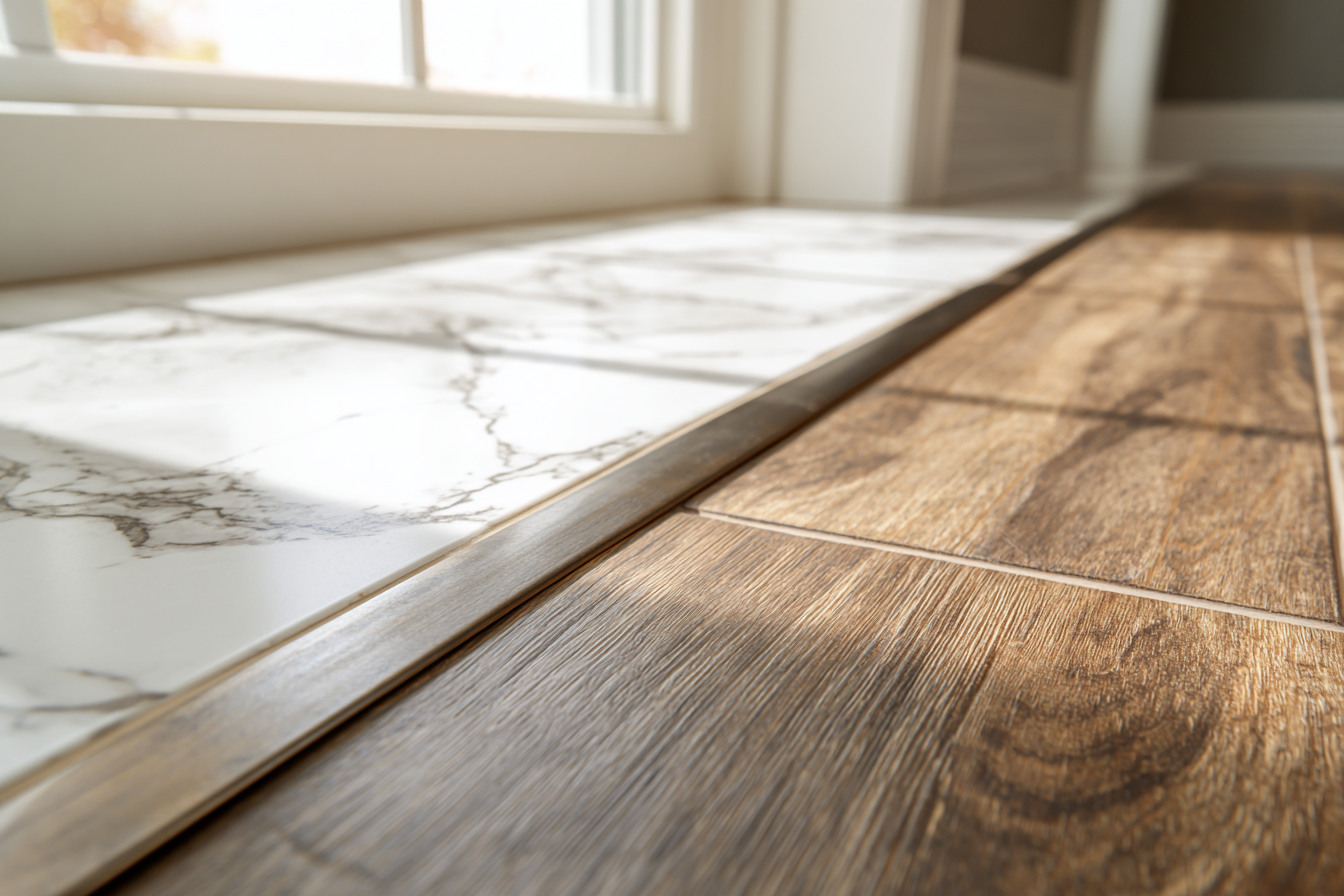
Many homeowners combine the two: tile inside the shower and wet zones for a fully waterproof system, and LVP across the rest of the bathroom floor for comfort and value. This hybrid delivers performance where you need it and savings where you do not.
Installation and Maintenance Notes
- Subfloor matters for both. Flat, sound subfloors are essential. Rigid-core LVP needs a level base, and tile needs a rigid, properly prepped substrate.
- Grout needs care. Tile grout should be sealed and cleaned periodically to stay watertight and bright.
- LVP is low maintenance. A damp mop is usually all it needs, and there is no grout to seal.
- Ventilation helps both. A good bath fan reduces standing moisture and prolongs any floor.
Comfort, Safety, and Real-World Use
Performance specs only tell part of the story. How a floor feels day to day matters just as much, especially in a bathroom where you stand barefoot every morning. LVP wins on comfort: it is warmer, softer, and quieter than tile, and it forgives a dropped glass better than a hard ceramic surface. For households with young children or older adults, that softer, warmer feel and the lower risk of a hard fall can be a deciding factor.
Tile, however, has the edge in pure longevity and in spaces that see standing water. A well-built tiled shower can outlast the rest of the room by decades, and tile pairs perfectly with radiant floor heating to erase its one comfort weakness. Slip resistance is a tie that depends on the product: both LVP and tile come in textured, slip-rated finishes, so choose a surface designed for wet use rather than a glossy one. Thinking through how each space is actually used, who uses it, and what you value most usually points clearly to one material or to a smart combination of both.
Resale and Long-Term Value
If you plan to sell, buyers tend to expect tile in a primary bathroom and especially in the shower, where it signals quality and durability. In secondary bathrooms, laundry rooms, and homes designed for a continuous wood look throughout, waterproof LVP is widely accepted and appreciated for its comfort and value. Neither choice is wrong, but matching the material to the room's importance protects your investment and keeps the home feeling cohesive.
Compare your options on our luxury vinyl plank collection and our tile collection to find the right product for each space.
Frequently Asked Questions
Can I use LVP in a bathroom?
Yes. Waterproof rigid-core LVP is an excellent choice for bathroom floors, laundry rooms, and other wet areas. The one place to avoid it is inside the shower itself, where a fully waterproofed tile system is required.
Is tile or LVP better for resale value?
Tile, especially in a primary bathroom and shower, tends to carry stronger resale appeal because buyers associate it with durability and a premium finish. LVP is well regarded too, particularly for secondary bathrooms and continuous-look homes.
Which is warmer and more comfortable?
LVP is warmer and softer underfoot and quieter than tile. Tile is hard and cold unless paired with radiant floor heating, which many homeowners add in primary bathrooms.
Which is easier to install myself?
LVP is far more DIY-friendly thanks to floating click-lock planks. Tile requires substrate prep, waterproofing, precise cutting, and grouting, which is best left to an experienced installer for wet areas.
Can I put LVP over existing tile?
Often yes, if the tile is flat, sound, and the grout lines are not too deep. A rigid-core floating LVP can frequently go over existing tile with the right preparation, but check the product guidelines and your subfloor condition first.
Still deciding? Browse waterproof options on our luxury vinyl plank collection and durable choices on our tile collection, then request a quote or visit the Sacramento showroom for samples and local installation guidance.
Shop luxury vinyl plank at Citadel Spaces
Browse our full luxury vinyl plank selection or start with these popular options:
- MSI XL Cyrus Fauna Luxury Vinyl Plank Flooring
- MSI Laurel Saddle Wood Luxury Vinyl Plank Flooring
- MSI Andover Highcliffe Greige Luxury Vinyl Plank Flooring
Browse all luxury vinyl plank →
Shop the range of luxury vinyl plank, and let the flooring and tile coverage calculator convert your room dimensions into a quantity.