Flooring
How to Measure for Carpet (Plus How Much Waste to Add)
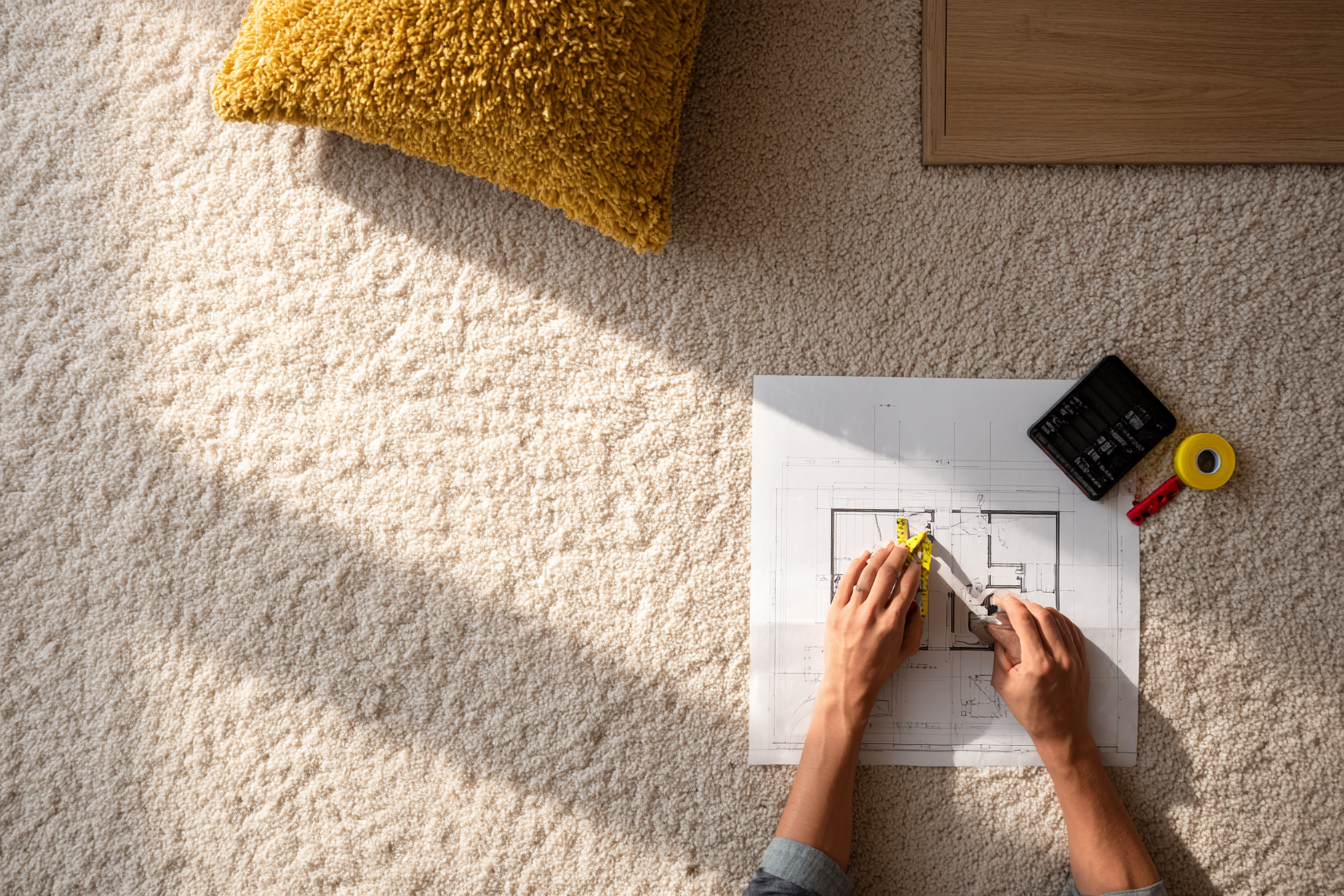
Measuring for carpet correctly saves you money and prevents the headache of running short mid-install. The process is straightforward once you understand how carpet is sold, how seams work, and how much waste to add. This guide walks you through measuring any room step by step, with a simple formula and a waste cheat sheet you can use today.
How Carpet Is Sold
Carpet is priced per square foot or per square yard, and it ships in wide rolls, most commonly 12 feet wide (some are 13 feet 6 inches or 15 feet). That fixed roll width is the single most important thing to understand before you measure, because it determines where seams fall and how much waste you will have. To convert between units, remember that one square yard equals nine square feet.
- Square feet: Length times width of the area.
- Square yards: Square feet divided by nine.
- Roll width: Usually 12 feet, which means rooms wider than 12 feet need a seam.
You can see roll widths listed on individual products in our carpet collection.
Tools You Will Need
- A 25-foot or longer tape measure
- A laser measure for larger rooms (optional but faster)
- Graph paper or a tablet to sketch the layout
- A calculator
Step-by-Step: Measuring a Room
- Sketch the room. Draw the floor plan roughly to scale, including closets, alcoves, and doorways.
- Measure length and width. Measure wall to wall at the widest points. Carpet should be cut a little long, so always round up.
- Add into doorways and closets. Carpet usually runs to the center of a doorway and fully into closets, so include those areas.
- Account for the roll direction. The carpet's nap (pile direction) should run the same way across a room and especially down a hallway, which affects how pieces are cut.
- Calculate square footage. Multiply length by width for each rectangle, then add the rectangles together.
- Convert and add waste. Divide by nine for square yards if needed, then add your waste allowance.
A Quick Example
Say a bedroom measures 13 feet by 11 feet. That is 143 square feet, or about 15.9 square yards. Because the room is wider than a 12-foot roll, you will likely need a small seam, and you should round the order up. Adding a 10 percent waste allowance brings you to roughly 157 square feet to order.
How Much Waste to Add
Waste covers trimming, pattern matching, seam placement, and the fact that carpet is cut from a fixed-width roll. Ordering too little is far more costly than a small overage, since dye lots can vary between orders. Use this guide:
| Situation | Recommended Waste | Why |
|---|---|---|
| Simple square or rectangular room | 5 to 8% | Minimal trimming and few seams |
| Room wider than the roll | 10% | Seams require extra material |
| L-shaped or irregular room | 10 to 15% | More cuts and offcuts |
| Patterned carpet | 15 to 20% | Pattern repeat must align at seams |
| Stairs | 10 to 20% | Nap direction and individual step cuts |
Measuring Stairs
Stairs need their own method. As a rule of thumb, each standard step requires about 18 inches of carpet length (10 inches for the tread and 8 inches for the riser), times the stair width plus a couple of inches. Count your steps, multiply, and remember that nap direction must run consistently down the staircase so the color looks uniform. Wraparound or box steps need extra material, so measure each unusual step individually.
- Measure tread depth and riser height for one step.
- Add them together and add a small allowance for tucking.
- Multiply by the number of steps.
- Multiply by stair width plus 2 to 4 inches.
- Add 10 to 20 percent waste for nap and cutting.
Hallways and Open-Plan Spaces
Long hallways should run the carpet nap in one continuous direction to avoid color shading where pieces meet. For open-plan areas that flow between rooms, plan seam locations away from high-traffic paths and out of direct sightlines from main entries. Sketching the whole connected space before ordering helps the installer lay it out with the fewest, least visible seams.
Common Measuring Mistakes to Avoid
- Forgetting closets and doorways. These add up across a home and are easy to miss.
- Ignoring roll width. A 13-foot room cannot be covered seamlessly by a 12-foot roll.
- Skipping waste. Tight orders leave no room for trimming or future repairs.
- Mixing dye lots. Ordering more later may not match, so order enough at once.
- Not noting nap direction. Inconsistent pile direction shows as color differences.
When to Get a Professional Measure
For a single simple room, measuring yourself is reliable. For whole-home projects, stairs, patterned carpet, or irregular layouts, a professional measure protects you from costly errors and dials in seam placement. If you are local, ask about our installation services and Sacramento showroom, where our team can confirm quantities before you order.
Frequently Asked Questions
How much extra carpet should I order?
For a simple rectangular room, add 5 to 8 percent. For rooms wider than the roll, irregular shapes, stairs, or patterned carpet, add 10 to 20 percent. Ordering a little extra is far cheaper than coming up short and risking a dye-lot mismatch.
How do I convert square feet to square yards?
Divide the total square footage by nine. For example, 180 square feet divided by nine equals 20 square yards. Many carpets are priced per square foot today, but some quotes still use square yards, so it helps to know both.
Why does roll width matter so much?
Carpet comes in fixed-width rolls, usually 12 feet. Any room wider than the roll needs a seam, and that affects how much material you order and where seams appear. Knowing the roll width up front prevents surprises in both cost and layout.
How do I measure carpet for stairs?
Estimate about 18 inches of length per standard step (tread plus riser) multiplied by the stair width plus a couple of inches, then add 10 to 20 percent waste. Keep the nap running the same direction down all steps so the color stays uniform.
Should I measure myself or get a pro?
A single simple room is easy to measure yourself. For multiple rooms, stairs, patterns, or odd shapes, a professional measure pays for itself by getting seams and quantities right the first time.
Ready to Order the Right Amount?
Accurate measurements and a sensible waste allowance are the difference between a smooth install and a frustrating reorder. Sketch your space, add the right waste, and double-check roll width before you buy. When you are ready, browse our carpet collection, order samples, and reach out to our team or visit the Sacramento showroom for help confirming your quantities and arranging local installation.
Shop carpet at Citadel Spaces
Browse our full carpet selection or start with these popular options:
Ready to compare in person? Browse carpet at Citadel Spaces, and use the flooring and tile coverage calculator to turn room dimensions into an order quantity.