Buyer Guide
Broadloom vs Carpet Tile: Pros, Cons, and Costs
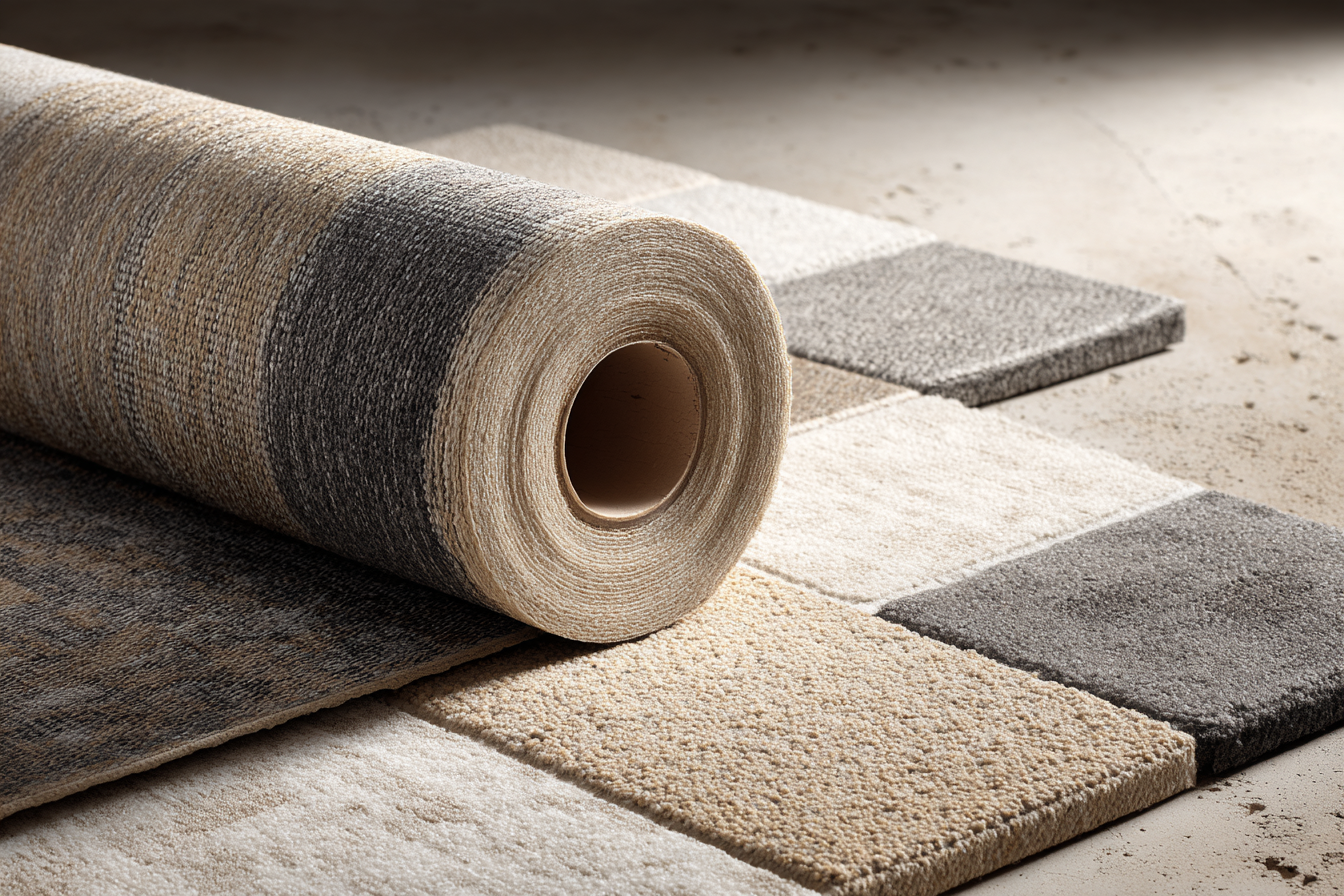
When it comes to wall-to-wall carpet, you have two very different formats to choose from: traditional broadloom rolls and modular carpet tile. Each has real advantages depending on the room, the install, and your tolerance for maintenance down the road. This guide breaks down the pros, cons, and costs of broadloom versus carpet tile so you can pick the right format with confidence.
The Two Formats Explained
Broadloom is carpet manufactured in wide continuous rolls, most commonly 12 feet wide, and cut to fit your room. It is the classic format most people picture when they think of carpet. Carpet tile (also called modular carpet) comes in individual squares or planks, typically 18 by 18 inches, 24 by 24 inches, or plank shapes, and is laid piece by piece. Both can deliver a wall-to-wall look, but they install, repair, and price out very differently.
Broadloom: Pros and Cons
Broadloom remains the go-to for residential rooms because of its seamless feel and wide style range.
Advantages
- Smooth, continuous surface with minimal visible seams
- Softest underfoot feel, especially with a quality pad
- Widest range of plush and luxury residential styles
- Lower material cost per square foot in many cases
- Classic, cohesive look for bedrooms and living spaces
Drawbacks
- Harder to install in tight or irregular spaces
- More waste from cutting around a room's shape
- A stain or damaged spot often means replacing a large section
- Heavier and more cumbersome to handle and transport
Browse roll options in our broadloom carpet collection.
Carpet Tile: Pros and Cons
Carpet tile has grown popular in basements, offices, playrooms, and DIY projects thanks to its flexibility.
Advantages
- Replace a single stained or damaged tile instead of a whole area
- Easier DIY installation, often peel-and-stick or glue-down
- Less waste in irregular rooms because tiles cut cleanly
- Easy to transport in small, manageable boxes
- Mix colors and patterns for custom designs
Drawbacks
- Visible seams or grid lines depending on the style
- Generally firmer and less plush underfoot
- Fewer ultra-soft, luxury residential textures
- Material cost per square foot can be higher for quality tiles
Head-to-Head Comparison
| Factor | Broadloom | Carpet Tile |
|---|---|---|
| Feel underfoot | Softer, plusher | Firmer, lower profile |
| Seams | Minimal, hidden | Visible grid possible |
| Installation | Best done by a pro | DIY friendly |
| Spot repair | Difficult | Replace one tile |
| Waste in odd rooms | Higher | Lower |
| Style range | Widest (plush, luxury) | More commercial and modern |
| Material cost | Often lower per sq ft | Often higher per sq ft |
| Best rooms | Bedrooms, living rooms, stairs | Basements, offices, playrooms |
Cost Breakdown
Total cost depends on more than the sticker price per square foot. Here is how the two compare across the full project.
- Material: Broadloom often has a lower per-square-foot material cost, though premium tiles can be comparable or higher.
- Pad: Broadloom usually needs a separate pad. Many carpet tiles have an attached backing, reducing or eliminating pad cost.
- Installation: Broadloom typically requires professional installation. Carpet tile is more DIY friendly, which can save on labor.
- Waste: Carpet tile wastes less in irregular rooms, while broadloom wastes more cutting around odd shapes.
- Long-term repair: Carpet tile wins on lifetime cost if you expect spills or wear, since you replace single tiles instead of large sections.
For a typical bedroom, broadloom usually delivers the best comfort for the money. For a basement playroom where spills are likely, carpet tile can be cheaper to own over time.
Which Should You Choose?
Use this quick decision guide:
- Want maximum softness and a seamless look? Choose broadloom.
- Installing it yourself? Carpet tile is far more forgiving.
- Worried about future stains or spills? Carpet tile lets you swap one square.
- Covering an irregular or small room? Carpet tile reduces waste.
- Carpeting bedrooms or stairs? Broadloom is the traditional, comfortable choice.
- Outfitting a basement or home office? Carpet tile handles moisture risk and repairs well.
You can compare both formats across our full carpet collection and narrow by room and budget.
Installation Notes
Broadloom installation involves stretching the carpet over a separate pad and securing it to tack strips around the room, which is best handled by a professional for a tight, lasting result. Carpet tile is laid directly to the subfloor with peel-and-stick adhesive, glue, or a release adhesive that allows lifting and reuse. For broadloom and stairs especially, professional installation protects the look and the warranty. If you are local, ask about our installation services and visit the Sacramento showroom to feel both formats in person.
Frequently Asked Questions
Is carpet tile cheaper than broadloom?
It depends on the project. Broadloom often has a lower material cost per square foot, but carpet tile can be cheaper to install yourself and cheaper to own over time because you replace single damaged tiles instead of large sections. Premium tiles can cost more per square foot than basic broadloom.
Does carpet tile feel as soft as broadloom?
Generally no. Broadloom with a quality pad is softer and plusher underfoot, while carpet tile tends to be firmer and lower profile. If maximum comfort is your priority, broadloom is usually the better feel.
Can I install carpet tile myself?
Yes. Carpet tile is one of the most DIY-friendly flooring options, with peel-and-stick and glue-down formats that lay directly on the subfloor. Broadloom, by contrast, usually requires professional stretching and seaming for a clean result.
Which is better for a basement?
Carpet tile is often the smarter choice for basements. If a tile gets wet or stained, you can lift and replace just that square, and many tiles tolerate moisture better than broadloom and pad. Broadloom can work in dry, finished basements where comfort is the priority.
Are the seams on carpet tile noticeable?
It varies by product. Some carpet tiles show a subtle grid, while patterned or monolithic-look tiles minimize visible lines. Broadloom has the most seamless appearance overall, with only a few hidden seams in larger rooms.
Pick the Format That Fits Your Space
Broadloom wins on softness and a seamless look, while carpet tile wins on easy installation and simple repairs. The right choice comes down to the room, your install plan, and how you want to handle wear over time. Explore our carpet collection and broadloom selection to compare both, order samples, and reach out to our team or visit the Sacramento showroom for guidance and local installation when you are ready.
Shop carpet at Citadel Spaces
Browse our full carpet selection or start with these popular options:
Ready to compare in person? Browse carpet tile at Citadel Spaces, and use the flooring and tile coverage calculator to turn room dimensions into an order quantity.