Buyer Guide
Waterproof Hybrid Rigid Core: The Quiet Flooring Revolution
Waterproof rigid core flooring has spent the last decade quietly displacing both traditional luxury vinyl tile and laminate as the contemporary residential default. The category, WPC (Wood Plastic Composite) and SPC (Stone Plastic Composite), combines the visual range of LVT with substantially better dimensional stability, click-lock floating installation, and predictable performance across challenging substrates. For 2026 residential, it's increasingly the right answer in applications where traditional LVT was previously specified.
This guide explains what WPC and SPC actually are, the differences between them, where each one earns its specification, and how the category fits into the broader flooring decision framework. For the broader decision pillar, see our hardwood vs LVT vs WPC pillar.
What Rigid Core Actually Is
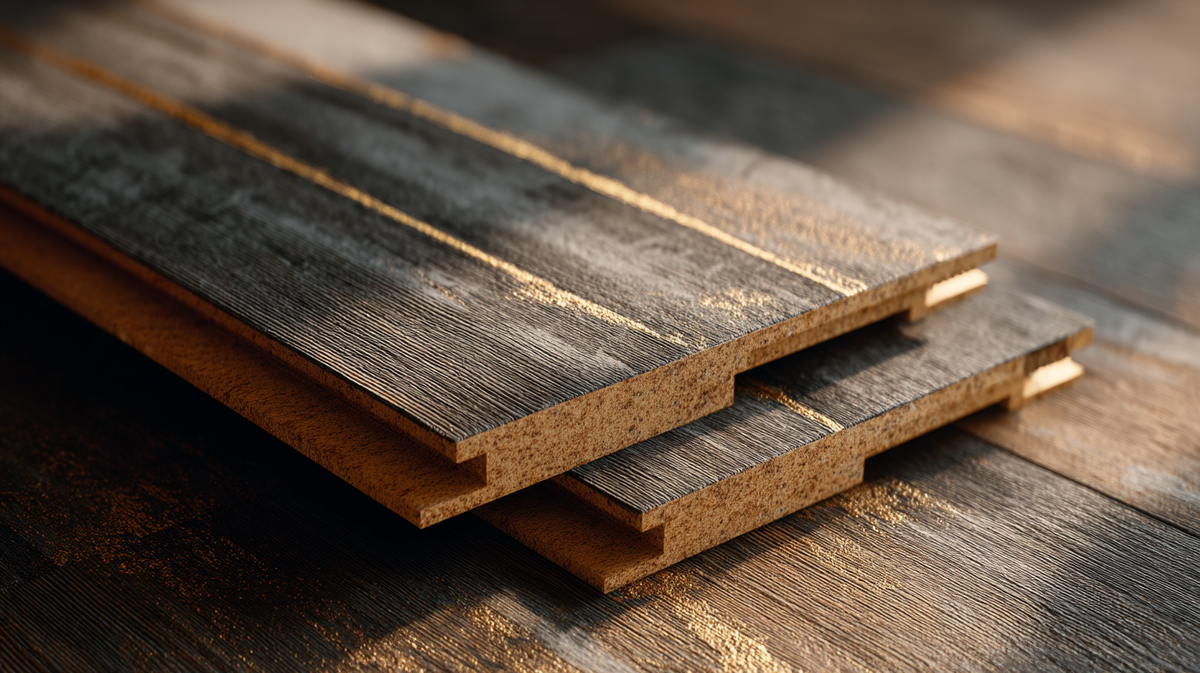
Rigid core flooring is a multi-layer engineered product with a specific structural architecture:
- Wear layer (transparent vinyl), takes the daily abrasion
- Visual layer (high-resolution print), produces the wood, stone, or concrete look
- Rigid core (the differentiator), provides structural stability
- Attached underlayment (foam or cork backing), provides acoustic and thermal performance
The "rigid core" is the differentiator from traditional LVT. Standard LVT is flexible. It conforms to substrate irregularities and shows them through to the surface. Rigid core resists this; the floor stays flat regardless of subtle substrate variation. Two technologies share the rigid-core category.
WPC vs SPC: The Material Science
WPC (Wood Plastic Composite) uses a core blended from PVC, wood flour, and other additives. The wood flour content gives WPC slightly more warmth underfoot, slightly better acoustic performance, and a slightly more forgiving feel. The core is denser than standard LVT but less dense than SPC.
SPC (Stone Plastic Composite) uses a core blended from PVC, calcium carbonate (limestone powder), and stabilizers. The stone-mineral content makes SPC significantly denser than WPC, harder underfoot, more dimensionally stable across temperature swings, and more resistant to denting.
The decision between them turns on three factors:
Acoustic and tactile preference. WPC reads warmer and quieter underfoot. SPC reads firmer and slightly more like tile in feel. Households that want the warmth of wood tend toward WPC; households that prioritize firmness lean SPC.
Substrate conditions. SPC's superior dimensional stability makes it the right choice over heated subfloors, in sunrooms with significant temperature variation, and in basements or other applications where standard rigid core might shift.
Use intensity. SPC's harder core resists denting better than WPC. For households with heavy furniture, frequent dragged objects, or pets with claws, SPC has slight advantage.
For most residential applications, either material works. The visual range across both is broad and overlapping. Browse the waterproof hybrid rigid core collection for the full library.
The Click-Lock Floating Install
Rigid core typically installs via click-lock floating systems, planks lock together along their edges and "float" over the substrate without glue, nails, or fasteners. The advantages compound:
- Faster install than glue-down LVT
- No moisture-cure adhesive required
- Easier removal and replacement of damaged planks
- More forgiving of small substrate irregularities (the rigid core spans them)
- Can install over existing hard floors (ceramic tile, vinyl) with minimal preparation
The float installation requires a few specifications to do correctly:
- Acceptable substrate flatness (typically 3/16 inch over 10 feet for most products)
- Expansion gap at all walls and vertical surfaces (1/4 to 3/8 inch)
- T-molding or transition strips at doorways longer than 30 feet of continuous flooring
- Underlayment (often integrated) appropriate to the application
Where Rigid Core Earns the Specification
Bathrooms and bathroom-adjacent zones
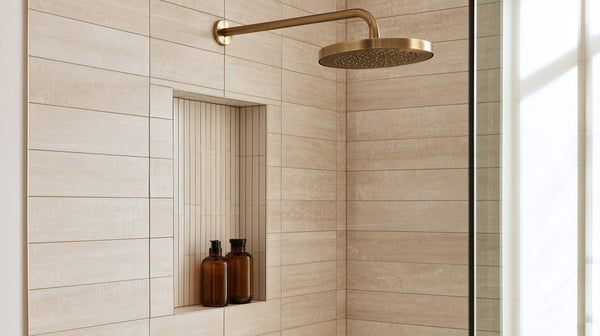
The waterproof property is the single strongest argument. SPC and WPC handle standing water indefinitely without damage; flooring that fails in bathrooms (hardwood, laminate) is excluded by the wet-area requirement. The visual range now covers wood-look, stone-look, and contemporary patterns that read appropriately for bath applications.
Basements
Basement substrates have moisture migration that hardwood can't tolerate and traditional LVT may not handle reliably. SPC specifically excels, the stone-mineral core resists the dimensional changes that moisture-and-temperature cycling produces. The right answer for finished basements.
Heated subfloors
SPC is rated for radiant heat installations where solid hardwood and standard LVT have problems. The dimensional stability across temperature swings makes the heated-floor application work.
Existing hard-floor renovations
Rigid core float-installs over existing ceramic tile, vinyl, or other hard surfaces with minimal preparation. The renovation move is dramatically simpler than tearing out the existing floor, install the new rigid core directly over the existing hard floor, with appropriate transitions at doorways.
Whole-home premium-LVT applications
For projects choosing premium luxury vinyl over hardwood, rigid core is increasingly the right specification. The premium LVT collection carries Nove and similar lines in rigid-core constructions; the Nove Plus and Nove Reserve tiers (see our Nove curator guide) deliver the wide-plank visual with rigid-core performance.
Where Rigid Core Doesn't Fit
Three applications where other materials are usually right.
Living rooms in long-horizon owner homes wanting patina. Hardwood develops character that rigid core doesn't; for buyers specifically wanting that trajectory, rigid core is a missing dimension. See our material aging playbook.
Mountain modern, traditional, or heritage architectural contexts. Where the architectural language specifically wants natural material, rigid core's printed visual reads as the wrong direction regardless of how convincing it is.
High-end real-stone replication applications. Where the brief is "natural stone but easier", rigid core stone-look is convincing but never reads like real stone at close range. For the stone-look intent, real natural stone tile or premium porcelain tile remains better.
The Visual Range
Rigid core's visual library has improved dramatically across the past five years. The 2026 premium products read convincingly natural at viewing distance. Specific categories:
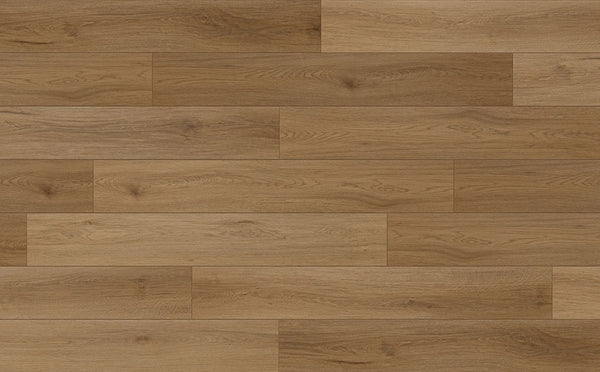
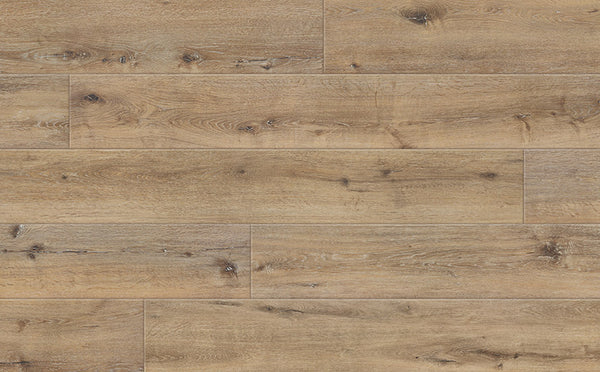
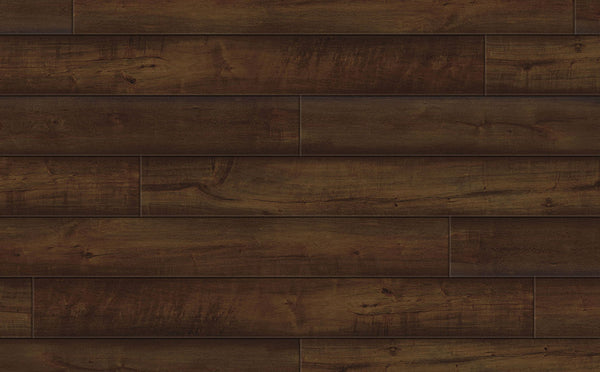
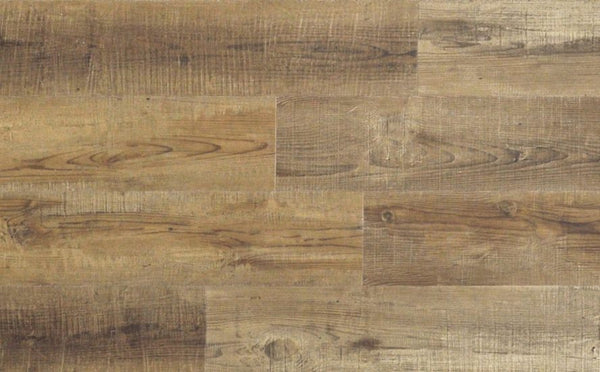
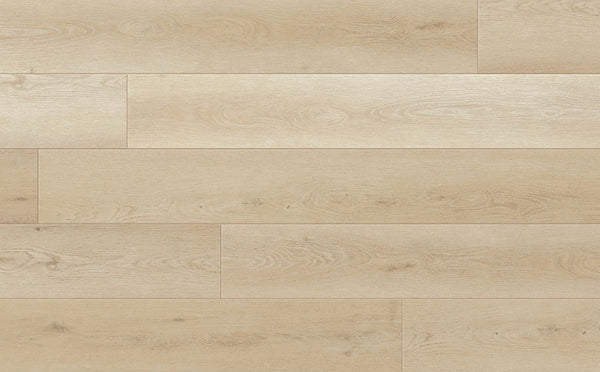
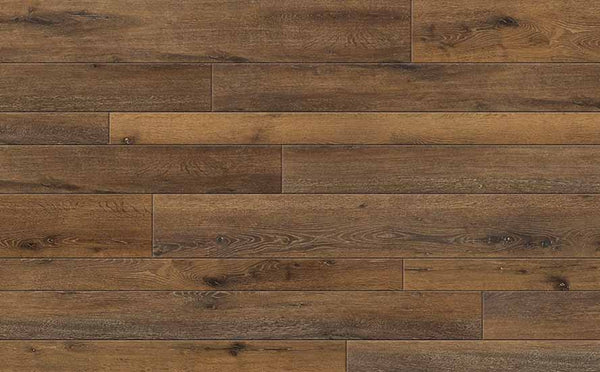
- Wide-plank wood-look, the dominant category. 6 to 9 inch widths in white oak, walnut, hickory, and other species. The Nove line at 9-inch wide plank (see our 9-inch wide-plank LVT guide) is the contemporary premium.
- Stone-look, large-format tile-look products in marble, travertine, and contemporary stone patterns. Strong for kitchen and bath applications.
- Concrete-look, board-formed concrete and polished concrete patterns. Right for contemporary industrial-leaning interiors.
- Specialty patterns, herringbone-pattern, parquet-pattern, and contemporary design colorways without natural-material reference.
Wear Layer and the Service Life Math
Rigid core wear layers measure in mils (thousandths of inch), the same as standard LVT. Premium residential rigid core typically runs 12 to 22 mils, the same range as Nove Plus and Nove Reserve.
Service lives in residential applications:
- 12 mil wear layer: 15-20 years in moderate-traffic residential
- 20 mil wear layer: 20-25 years
- 22+ mil wear layer: 25-30+ years in light to moderate residential, 15-20 years in commercial
Across these horizons, the rigid core surface remains essentially unchanged in dimensional terms; the wear is at the visible surface from foot traffic and abrasion.
Acoustic Performance
WPC and SPC differ slightly in acoustic behavior. WPC's wood-flour content provides some acoustic damping; SPC reads slightly more reflective. For multi-story residential where second-floor flooring affects rooms below, WPC slightly outperforms SPC acoustically. Neither matches the acoustic warmth of carpet, but both perform meaningfully better than tile.
Most premium rigid core ships with attached underlayment that improves acoustic performance further. For applications where acoustics matter most, verify the underlayment specification. We cover the broader acoustic question in our acoustic floors guide.
Installation Tips
Three installation considerations that meaningfully affect the result.
Acclimation. Rigid core wants 24-48 hours acclimating to the install environment before installation, regardless of manufacturer claims. The acclimation reduces post-install dimensional movement.
Substrate preparation. Even rigid core's substrate-forgiveness has limits. Prep the substrate to the manufacturer's flatness requirement; severely irregular substrates can cause click-lock joints to fail.
Expansion gaps. Click-lock floating floors expand and contract slightly with temperature. The expansion gap at perimeter walls and at fixed elements (cabinetry kickplates, doorframe casings) allows the floor to move without buckling. Skipping the expansion gap is one of the most common installation failures.
Where to Start
For projects considering rigid core flooring, start with the substrate and use questions: heated subfloor or basement → SPC; bathroom or wet-area → either WPC or SPC; whole-home premium-LVT direction → Nove or similar wide-plank rigid core. Browse the waterproof hybrid rigid core collection alongside luxury vinyl flooring and luxury vinyl tile. For the broader decision pillar, our flooring decision pillar; for the specific Nove cluster, our Nove curator guide.
When the choice is made, browse luxury vinyl plank and size the order with the flooring and tile coverage calculator.
From the guide
Shop the floors in this guide