Buyer Guide
Travertine: A Quiet Mediterranean Comeback in 2026 Interiors
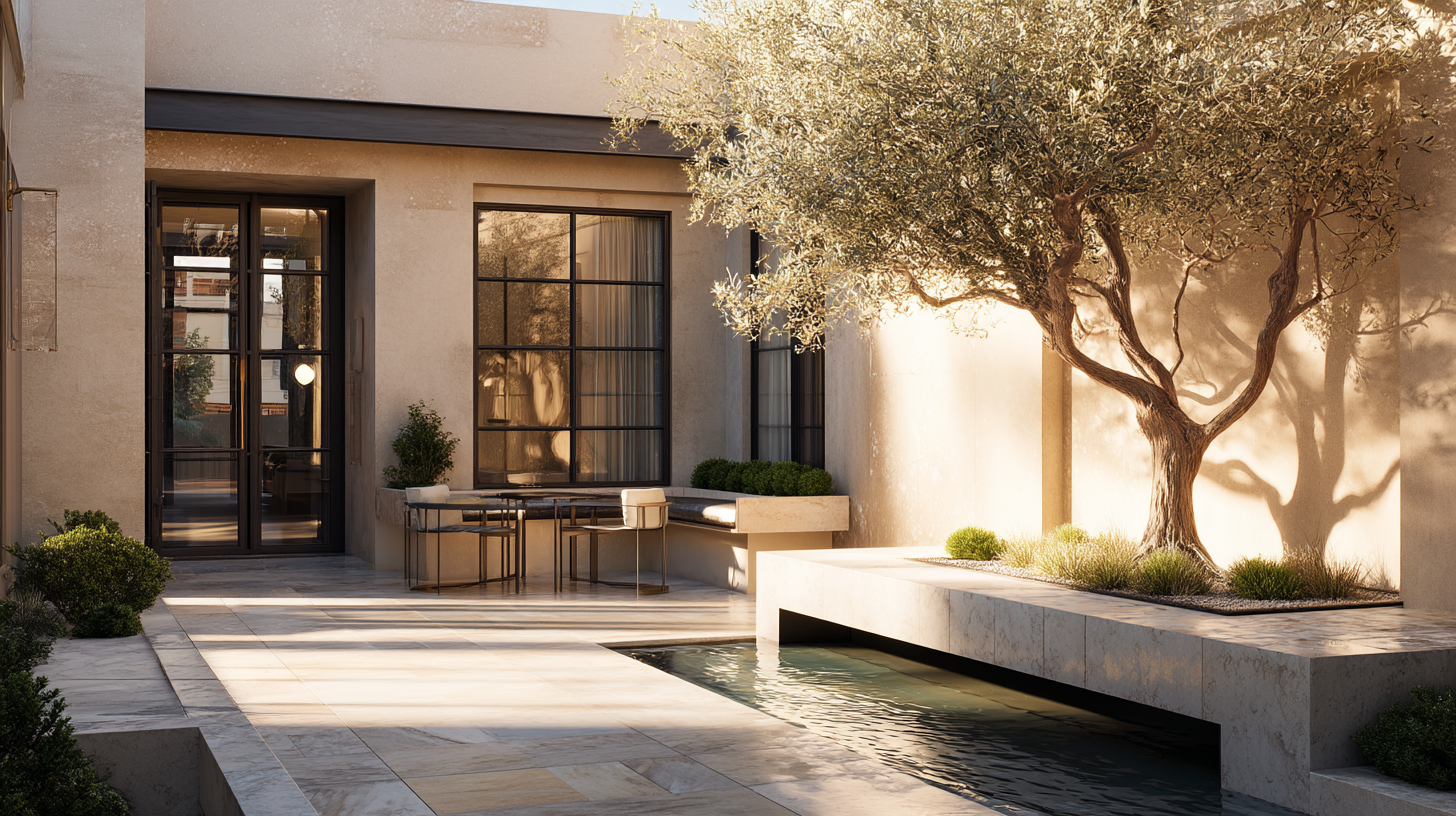
Travertine had a long moment in early-2000s residential, and then a longer absence as the sand-and-cream palette gave way to cooler greys and crisper whites. Mid-decade through 2022, specifying travertine read as either nostalgic or dated. That changed quietly. By 2024, travertine was creeping back into high-end residential through specific entry points: pool decks for warm climates, a single bathroom in an otherwise cool-toned house, exterior elevations on Mediterranean-modern architecture. By 2026, it's a full comeback, and the framing has changed entirely.
The new travertine isn't the heavy, peach-toned, big-block install of the 2000s. It's smaller-format, honed instead of polished, used as accent rather than wall-to-wall, and pulled into interiors that otherwise read contemporary. This guide explains the comeback and how to specify travertine well in 2026.
What Travertine Actually Is
Travertine is a sedimentary stone, formed in mineral-rich freshwater springs as calcium carbonate precipitates from the water and accumulates in layered deposits. The classical sources, Tivoli outside Rome, Denizli in Turkey, certain Iranian quarries, have been quarried continuously for over two thousand years. The Roman Colosseum is travertine. The Bernini colonnade at St. Peter's is travertine. The material has the longest continuous architectural use of any stone in the residential vocabulary.
Geologically, travertine is closely related to limestone, both are calcium carbonate, but travertine carries the characteristic "voids" or porous pockets created by gas escape during the precipitation process. These voids are the visual signature of travertine; they read as small dark spots on the cut surface, varying in density across colorways. They're either left as voids ("unfilled travertine") or filled with color-matched grout at the factory ("filled travertine") for a smoother surface.
The Color Library
Travertine's residential color range is narrower than marble or quartzite, but the colorways have specific personalities.
Ivory and cream travertine, the lightest, warmest, most-classical travertines. Reads warm-Mediterranean and pairs with warm wood, warm cream walls, and unlacquered brass.
Walnut and warm-tan travertines, deeper warm tones, the autumn-leaning subset. Right for traditional and warm-modern architecture.
Silver and grey travertines, the contemporary travertine option. Cooler, less-classical reads; pairs with modern architecture and contemporary palettes. The colorway most responsible for travertine's current comeback in modern interiors.
Noce (chocolate) travertine, deep brown travertine, the dramatic accent option. Used sparingly, feature walls, accent floors, exterior detailing.
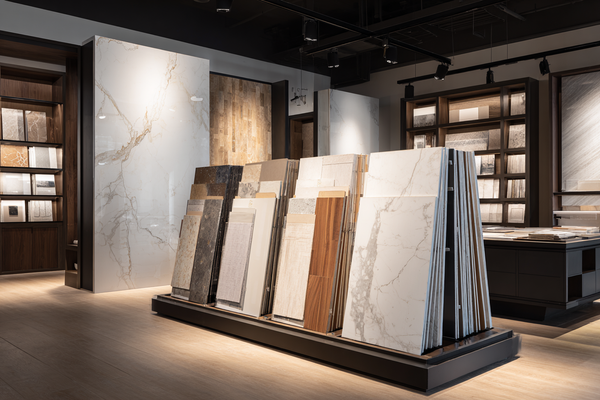
Browse the travertine subset of our natural stone tiles catalog and the travertine slab collection for the larger-format options.
Honed vs Polished vs Tumbled vs Brushed
The finish on a travertine surface decides whether it reads dated or current more than the colorway does.
Polished travertine, high-gloss, reflective. The 2000s-default finish that carries the most baggage. Reads dated in 2026 except in narrow polished-bath applications. Skip it.
Honed travertine, matte, soft, the natural cut-and-polished surface without the high-gloss layer. The 2026 default for nearly all interior applications. Reads contemporary, ages well, forgives wet-area use.
Tumbled travertine, soft rounded edges, slightly weathered surface. Reads warm-rustic, traditional. Right for Mediterranean architecture and exterior applications where the warm-aged read is the design intent.
Brushed (or vein-cut, brushed) travertine, a relatively new finish that uses wire-brushed surface treatment to bring out the stone's natural directional grain while maintaining a matte read. The most contemporary travertine finish currently available; reads strikingly modern even in cream colorways. The finish responsible for much of the comeback.
Where Travertine Earns Its Place in 2026 Interiors
Pool decks and outdoor patios
Travertine has always been the right answer here, and 2026 is rediscovering why. The honed cream travertine paver runs cooler underfoot than dark stones in summer sun, ages with character, and reads warm against blue water and green plantings. We cover the integrated pool deck question in our pool deck trends 2026 guide.
One bathroom in a contemporary house
The strongest 2026 travertine entry point, a single bathroom (typically a primary suite bath or a guest powder room) gets a honed travertine floor, while the rest of the house runs cool-toned tile and marble. The travertine bath becomes a warm refuge, the design move that signals attention to material variety rather than a single-palette monotony.
Mediterranean-modern architecture
Mediterranean-modern is one of the strongest residential architectural directions in 2026, warm whites, exposed beams, low-slope tile roofs, hand-applied plaster, and travertine floors. In this architectural context, travertine isn't a comeback; it's the native material. Honed cream travertine on the floor, travertine sills, travertine pool deck, the material runs through the whole architecture as a vocabulary.
Fireplace hearths and surrounds
A honed travertine hearth pairs particularly well with stacked-stone fireplace surrounds (see our fireplace surrounds guide). The two warm, textured stones reinforce each other.
Exterior facades and accents
Travertine's weather behavior is excellent. It's the stone that built Roman exterior architecture. Modern residential exteriors are using travertine for accent walls, entry surrounds, and lower-third facade banding to ground architecture in warm material.
The Patina Trajectory
Travertine is one of the residential stones with the most visible patina over time. Honed travertine softens, develops slight tonal variation as foot traffic patterns become subtly visible, and acquires the small scrapes and marks that read as character. In a Mediterranean architectural context, the patina is the point, the stone reads more beautiful at year ten than at install.
Travertine in a contemporary context that wants the floor to read identical at year ten as year zero will read as patina-of-failure rather than patina-of-character. If unchanging is the design intent, specify porcelain that visually reads as travertine or one of the quartzite alternatives. Travertine rewards patience with character; it punishes the desire for permanence.
We cover the patina question across material families in our material aging playbook.
Sealing and Care
Travertine is more porous than marble. The voids in the stone, even in filled travertine, accumulate sealer and require thoughtful application. Sealing schedule: at install, again at 6 months, then every 1 to 2 years thereafter depending on use intensity.
Acidic spills react with travertine the way they react with marble, etching is a real risk. The cleaning standard is the same: pH-neutral stone cleaner, fast cleanup of any acidic spill, no exposure to vinegar, lemon, or harsh cleaners. See our sealing natural stone guide for the full protocol.
Where to Start
Specifying travertine in 2026 means refusing the early-2000s defaults, no polished, minimal tumbled, primarily honed and brushed finishes in lighter colorways used as accent rather than wall-to-wall. Browse the travertine subset of our natural stone tiles and the travertine slab collection, and consider how the stone reads against companion materials in our marble tile guide and biophilic design 2026 pieces.